
Cookie preferences
This website uses cookies, which are necessary for the technical operation of the website and are always set. Other cookies, which increase the comfort when using this website, are used for direct advertising or to facilitate interaction with other websites and social networks, are only set with your consent.
Configuration
Technically required
These cookies are necessary for the basic functions of the shop.
"Allow all cookies" cookie
"Decline all cookies" cookie
CSRF token
Cookie preferences
Currency change
Customer-specific caching
FACT-Finder tracking
Individual prices
Selected shop
Session
Comfort functions
These cookies are used to make the shopping experience even more appealing, for example for the recognition of the visitor.
Note
Show the facebook fanpage in the right blod sidebar
Statistics & Tracking
Affiliate program
Conversion and usertracking via Google Tag Manager
Track device being used


If you have any questions, please use our Contact Form.
You can also order by e-mail: info@biomol.com
Larger quantity required? Request bulk
You can also order by e-mail: info@biomol.com
Larger quantity required? Request bulk
This Rat Estrogen Receptor Alpha (rERalpha) assay kit is an all-inclusive firefly luciferase... more
Product information "Rat ERa Reporter Assay System"
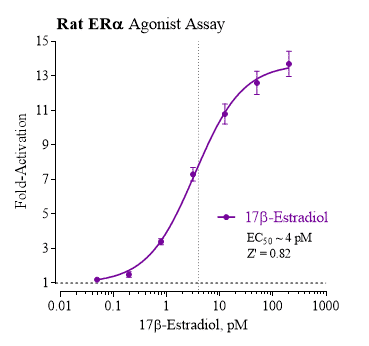
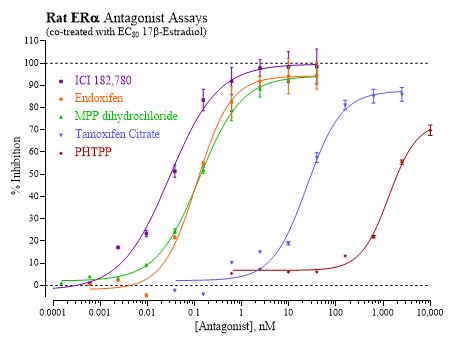
This Rat Estrogen Receptor Alpha (rERalpha) assay kit is an all-inclusive firefly luciferase reporter assay system that includes in addition to rERalpha Reporter Cells, two optimized media for use during cell culture and (optionally) in diluting the test samples, a reference agonist, Luciferase Detection Reagent, a cell culture-ready assay plate, and a detailed protocol. rERalpha Reporter Cells are prepared using INDIGO's proprietary CryoMite(TM) process. This cryo-preservation method yields high cell viability post-thaw, and provides the convenience of immediately dispensing healthy, division-competent reporter cells into assay plates. There is no need for intermediate spin-and-wash steps, viability determinations, or cell titer adjustments. INDIGO's assay kits feature a luciferase detection reagent specially formulated to provide stable light emission between 5 and 90+ minutes after initiating the luciferase reaction. Incorporating a 5-minute reaction-rest period ensures that light emission profiles attain maximal stability, thereby allowing assay plates to be processed in batch. By doing so, the signal output from all sample wells, from one plate to the next, may be directly compared within an experimental set. Kits are offered in different assay formats to accommodate researchers' needs: 3x 32 and 1x 96 assay formats for screening small numbers of test compounds, as well as custom bulk reagents for HTS applications. Protein function: Nuclear hormone receptor. The steroid hormones and their receptors are involved in the regulation of eukaryotic gene expression and affect cellular proliferation and differentiation in target tissues. Ligand-dependent nuclear transactivation involves either direct homodimer binding to a palindromic estrogen response element (ERE) sequence or association with other DNA-binding transcription factors, such as AP-1/c-Jun, c-Fos, ATF-2, Sp1 and Sp3, to mediate ERE- independent signaling. Ligand binding induces a conformational change allowing subsequent or combinatorial association with multiprotein coactivator complexes through LXXLL motifs of their respective components. Mutual transrepression occurs between the estrogen receptor (ER) and NF-kappa-B in a cell-type specific manner. Decreases NF-kappa- B DNA-binding activity and inhibits NF-kappa-B-mediated transcription from the IL6 promoter and displace RELA/p65 and associated coregulators from the promoter. Recruited to the NF-kappa-B response element of the CCL2 and IL8 promoters and can displace CREBBP. Present with NF-kappa-B components RELA/p65 and NFKB1/p50 on ERE sequences. Can also act synergistically with NF-kappa-B to activate transcription involving respective recruitment adjacent response elements, the function involves CREBBP. Can activate the transcriptional activity of TFF1. Also mediates membrane-initiated estrogen signaling involving various kinase cascades. Essential for MTA1-mediated transcriptional regulation of BRCA1 and BCAS3. [The UniProt Consortium]
| Keywords: | ER, Esr, Esr1, ER-alpha, Estrogen receptor, Estradiol receptor, Nuclear receptor subfamily 3 group A member 1 |
| Supplier: | Indigo Biosciences |
| Supplier-Nr: | R00401 |
Properties
| Application: | Functional activity screening |
| Species reactivity: | rat |
| Format: | Solid Phase |
Database Information
| KEGG ID : | K08550 | Matching products |
| UniProt ID : | P06211 | Matching products |
| Gene ID : | GeneID 24890 | Matching products |
Handling & Safety
| Storage: | -80°C |
| Shipping: | -80°C (International: -80°C) |
Caution
Our products are for laboratory research use only: Not for administration to humans!
Our products are for laboratory research use only: Not for administration to humans!
Information about the product reference will follow.
more
You will get a certificate here
Viewed