
Cookie preferences
This website uses cookies, which are necessary for the technical operation of the website and are always set. Other cookies, which increase the comfort when using this website, are used for direct advertising or to facilitate interaction with other websites and social networks, are only set with your consent.
Configuration
Technically required
These cookies are necessary for the basic functions of the shop.
"Allow all cookies" cookie
"Decline all cookies" cookie
CSRF token
Cookie preferences
Currency change
Customer-specific caching
FACT-Finder tracking
Individual prices
Selected shop
Session
Comfort functions
These cookies are used to make the shopping experience even more appealing, for example for the recognition of the visitor.
Note
Show the facebook fanpage in the right blod sidebar
Statistics & Tracking
Affiliate program
Conversion and usertracking via Google Tag Manager
Track device being used



| Item number | Size | Datasheet | Manual | SDS | Delivery time | Quantity | Price |
|---|---|---|---|---|---|---|---|
| NSJ-FY12218 | 100 µl | - | - |
7 - 12 business days* |
790.00€
|
If you have any questions, please use our Contact Form.
You can also order by e-mail: info@biomol.com
Larger quantity required? Request bulk
You can also order by e-mail: info@biomol.com
Larger quantity required? Request bulk
Rabbit IgG in phosphate buffered saline, pH 7.4, 150mM NaCl, 0.02% sodium azide and 50% glycerol,... more
Product information "Anti-phospho-p70 S6 Kinase beta (Ser371), clone 32R04"
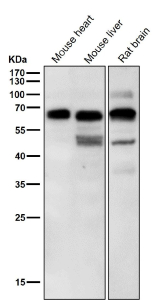
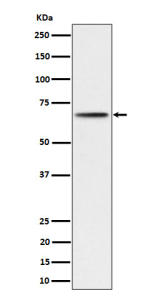
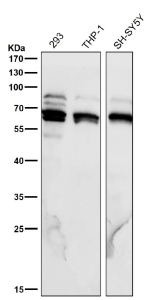
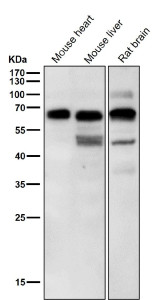
Rabbit IgG in phosphate buffered saline, pH 7.4, 150mM NaCl, 0.02% sodium azide and 50% glycerol, 0.4-0.5mg/ml BSA. Phospho-p70 S6 Kinase beta (Ser371) antibody detects the phosphorylated form of ribosomal protein S6 kinase beta-1 (S6K1) at serine 371. S6K1, also called p70S6K, is a serine/threonine kinase activated downstream of mTORC1 and plays a pivotal role in protein synthesis, cell growth, and metabolism. Phosphorylation at Ser371 is an essential priming event for full kinase activation, enabling subsequent phosphorylation at the hydrophobic motif and activation loop.Research using Phospho-p70 S6 Kinase beta (Ser371) antibody highlights the importance of this modification in cell growth and proliferation. Ser371 phosphorylation enhances kinase activity, promoting phosphorylation of ribosomal protein S6 and translation initiation factors. This activity stimulates protein synthesis, supporting anabolic metabolism and cellular hypertrophy. In cancer, aberrant activation of S6K1 contributes to uncontrolled growth and resistance to apoptosis. Elevated Ser371 phosphorylation has been observed in breast, prostate, and colorectal tumors, where it correlates with mTORC1 hyperactivation.Phosphorylation at Ser371 is also a readout of nutrient and growth factor signaling. Under nutrient-rich conditions, mTORC1 activity drives S6K1 phosphorylation, whereas nutrient deprivation or rapamycin treatment diminishes this event. Monitoring Ser371 phosphorylation provides insight into mTOR pathway regulation in metabolic disease and therapeutic interventions. In insulin resistance and type 2 diabetes, dysregulated S6K1 signaling contributes to feedback inhibition of insulin receptor substrates, linking it to impaired glucose homeostasis.Neurobiology studies show that S6K1 activity influences synaptic plasticity, memory, and neuronal survival. Ser371 phosphorylation may integrate mTOR activity with cognitive functions, while dysregulation is implicated in neurodegenerative disorders. In cardiovascular research, hyperactivation of S6K1 contributes to pathological hypertrophy and vascular remodeling.Antibodies against phospho-S6K1 (Ser371) are validated for western blot, immunohistochemistry, and immunofluorescence. These reagents specifically recognize the phosphorylated form, enabling distinction between active and inactive states. Clone-based antibodies provide reproducibility for studying signaling pathways, drug responses, and disease mechanisms.NSJ Bioreagents supplies this Phospho-p70 S6 Kinase beta (Ser371) antibody for research into mTOR signaling, cancer, and metabolism.
| Keywords: | Anti-phospho-RPS6KB2, Anti-phospho-S6 kinase-related kinase, Anti-phospho-p70 ribosomal S6 kinase beta, Anti-phospho-Ribosomal protein S6 kinase beta-2, Anti-phospho-Serine/threonine-protein kinase 14B, Anti-phospho-70 kDa ribosomal protein S6 kinase 2, P |
| Supplier: | NSJ Bioreagents |
| Supplier-Nr: | FY12218 |
Properties
| Application: | WB |
| Antibody Type: | Monoclonal |
| Clone: | 32R04 |
| Conjugate: | No |
| Host: | Rabbit |
| Species reactivity: | human, mouse, rat |
| Immunogen: | A synthesized peptide derived from human Phospho-P70 S6 Kinase beta (S371) |
| Format: | Purified |
Database Information
| KEGG ID : | K04688 | Matching products |
| UniProt ID : | Q9UBS0 | Matching products |
| Gene ID : | GeneID 6199 | Matching products |
Handling & Safety
| Storage: | -20°C |
| Shipping: | -20°C (International: -20°C) |
Caution
Our products are for laboratory research use only: Not for administration to humans!
Our products are for laboratory research use only: Not for administration to humans!
Information about the product reference will follow.
more
You will get a certificate here
Viewed