
Cookie preferences
This website uses cookies, which are necessary for the technical operation of the website and are always set. Other cookies, which increase the comfort when using this website, are used for direct advertising or to facilitate interaction with other websites and social networks, are only set with your consent.
Configuration
Technically required
These cookies are necessary for the basic functions of the shop.
"Allow all cookies" cookie
"Decline all cookies" cookie
CSRF token
Cookie preferences
Currency change
Customer-specific caching
FACT-Finder tracking
Individual prices
Selected shop
Session
Comfort functions
These cookies are used to make the shopping experience even more appealing, for example for the recognition of the visitor.
Note
Show the facebook fanpage in the right blod sidebar
Statistics & Tracking
Affiliate program
Conversion and usertracking via Google Tag Manager
Track device being used



| Item number | Size | Datasheet | Manual | SDS | Delivery time | Quantity | Price |
|---|---|---|---|---|---|---|---|
| NSJ-FY12650 | 100 µl | - | - |
3 - 10 business days* |
790.00€
|
If you have any questions, please use our Contact Form.
You can also order by e-mail: info@biomol.com
Larger quantity required? Request bulk
You can also order by e-mail: info@biomol.com
Larger quantity required? Request bulk
Rabbit IgG in phosphate buffered saline, pH 7.4, 150mM NaCl, 0.02% sodium azide and 50% glycerol,... more
Product information "Anti-phospho-CDK2/CDK1 (Thr160/Thr161), clone 31C95"
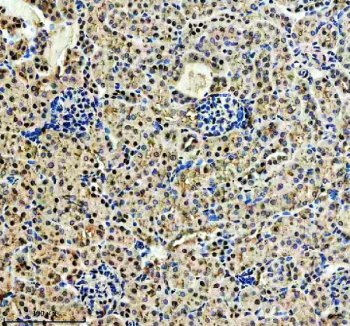
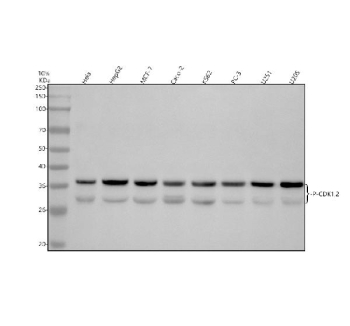
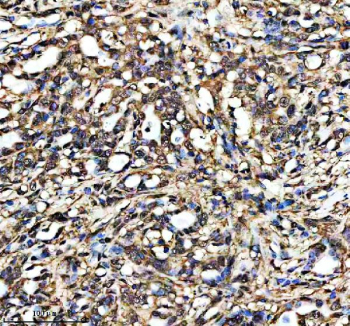
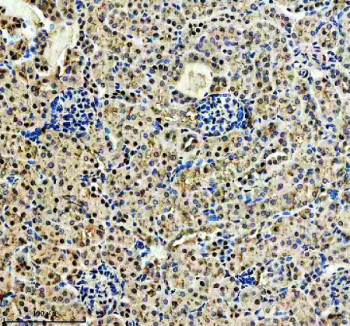
Rabbit IgG in phosphate buffered saline, pH 7.4, 150mM NaCl, 0.02% sodium azide and 50% glycerol, 0.4-0.5mg/ml BSA. Phospho-CDK2/CDK1 (Thr160/Thr161) antibody detects cyclin dependent kinase 2 and cyclin dependent kinase 1 when phosphorylated at their critical threonine residues required for activation. CDK2, encoded by the CDK2 gene, and CDK1, encoded by the CDK1 gene, are central regulators of the eukaryotic cell cycle. Both kinases belong to the cyclin dependent kinase family and function by binding specific cyclins that direct their activity at distinct phases of the cycle. Phosphorylation of CDK2 at threonine 160 and CDK1 at threonine 161 is essential for full catalytic activity and progression through S phase and mitosis.Phospho-CDK2/CDK1 (Thr160/Thr161) antibody is widely applied in cancer biology, cell cycle research, and molecular pharmacology. Detection of phosphorylation at these residues provides a direct measure of CDK activation status. In proliferating cells, CDK2 in complex with cyclin E or cyclin A promotes DNA replication, while CDK1 in complex with cyclin B drives mitotic entry. By monitoring phosphorylation at Thr160 and Thr161, researchers can assess how CDK activation is controlled during the cell cycle and disrupted in disease. In western blot assays, Phospho-CDK2/CDK1 (Thr160/Thr161) antibody detects phosphorylated isoforms distinct from inactive CDK2 and CDK1. Immunohistochemistry highlights nuclear staining in actively cycling cells within tissues, while immunofluorescence reveals subcellular localization of active kinase complexes at replication foci and mitotic structures. These methods provide powerful tools for visualizing CDK activity in situ.CDK2 and CDK1 phosphorylation is regulated by cyclin binding and CDK activating kinase (CAK). In addition to activating phosphorylation, inhibitory phosphorylation at other residues fine tunes kinase activity, ensuring proper timing of cell cycle transitions. Aberrant phosphorylation results in unscheduled proliferation, genomic instability, and oncogenesis. By applying Phospho-CDK2/CDK1 (Thr160/Thr161) antibody, scientists can study how signaling pathways converge on CDK regulation and explore therapeutic strategies that target cell cycle kinases.In oncology, dysregulated CDK2 and CDK1 activity is a hallmark of many tumors. Overexpression of cyclins, loss of CDK inhibitors such as p21 or p27, and altered phosphorylation lead to unchecked proliferation. Small molecule inhibitors of CDKs are under clinical development, and monitoring phosphorylation status provides a biomarker for therapeutic efficacy. This antibody therefore supports translational research linking kinase signaling to cancer therapy.Beyond cancer, CDK2 and CDK1 phosphorylation contributes to developmental biology, stem cell regulation, and tissue regeneration. Phosphorylation at Thr160 and Thr161 ensures fidelity of DNA replication, chromosome segregation, and genome stability. Dysregulation is implicated in infertility, developmental syndromes, and age related decline. The phospho-specific antibody provides a means to evaluate CDK function across diverse biological systems.Phosphorylation dynamics also link CDKs to DNA damage response and stress signaling. Upon genotoxic stress, inhibitory pathways suppress CDK activity to allow repair before replication or division. Conversely, inappropriate activation leads to replication stress and apoptosis. By using Phospho-CDK2/CDK1 (Thr160/Thr161) antibody, researchers can examine how stress signals intersect with cell cycle progression and contribute to disease mechanisms.Phospho-CDK2/CDK1 (Thr160/Thr161) antibody from NSJ Bioreagents delivers dependable specificity for studying these key regulatory phosphorylation events. Its performance across multiple applications supports both mechanistic studies of kinase regulation and translational work in oncology and regenerative medicine. By enabling detection of CDK phosphorylation, the antibody provides insight into the molecular switches that drive cell division and maintain genomic stability.
| Keywords: | Anti-phospho-CDK2, Anti-phospho-p33 protein kinase, Anti-phospho-Cyclin-dependent kinase 2, Anti-phospho-Cell division protein kinase 2, Phospho-CDK2/CDK1 (Thr160/Thr161) Antibody |
| Supplier: | NSJ Bioreagents |
| Supplier-Nr: | FY12650 |
Properties
| Application: | WB, IHC |
| Antibody Type: | Monoclonal |
| Clone: | 31C95 |
| Conjugate: | No |
| Host: | Rabbit |
| Species reactivity: | human, mouse |
| Immunogen: | A synthesized peptide derived from human Phospho-CDK2(T160)+CDK1(T161) |
| Format: | Purified |
Database Information
| KEGG ID : | K02206 | Matching products |
| UniProt ID : | P24941 | Matching products |
| Gene ID : | GeneID 1017 | Matching products |
Handling & Safety
| Storage: | -20°C |
| Shipping: | -20°C (International: -20°C) |
Caution
Our products are for laboratory research use only: Not for administration to humans!
Our products are for laboratory research use only: Not for administration to humans!
Information about the product reference will follow.
more
You will get a certificate here
Viewed