
Cookie preferences
This website uses cookies, which are necessary for the technical operation of the website and are always set. Other cookies, which increase the comfort when using this website, are used for direct advertising or to facilitate interaction with other websites and social networks, are only set with your consent.
Configuration
Technically required
These cookies are necessary for the basic functions of the shop.
"Allow all cookies" cookie
"Decline all cookies" cookie
CSRF token
Cookie preferences
Currency change
Customer-specific caching
FACT-Finder tracking
Individual prices
Selected shop
Session
Comfort functions
These cookies are used to make the shopping experience even more appealing, for example for the recognition of the visitor.
Note
Show the facebook fanpage in the right blod sidebar
Statistics & Tracking
Affiliate program
Conversion and usertracking via Google Tag Manager
Track device being used

| Item number | Size | Datasheet | Manual | SDS | Delivery time | Quantity | Price |
|---|---|---|---|---|---|---|---|
| NSJ-FY12334 | 100 µl | - | - |
3 - 10 business days* |
790.00€
|
If you have any questions, please use our Contact Form.
You can also order by e-mail: info@biomol.com
Larger quantity required? Request bulk
You can also order by e-mail: info@biomol.com
Larger quantity required? Request bulk
Rabbit IgG in phosphate buffered saline, pH 7.4, 150mM NaCl, 0.02% sodium azide and 50% glycerol,... more
Product information "Anti-ULBP1 / UL16-binding protein 1, clone 30U90"
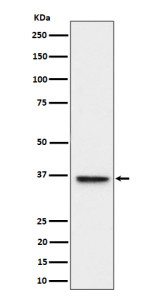
Rabbit IgG in phosphate buffered saline, pH 7.4, 150mM NaCl, 0.02% sodium azide and 50% glycerol, 0.4-0.5mg/ml BSA. ULBP1 antibody is designed to detect UL16-binding protein 1, a stress-induced ligand for the NKG2D receptor on natural killer (NK) cells and certain T cells. ULBP1 is a member of the MHC class I-related family of proteins that are not involved in antigen presentation but instead act as activating ligands for immune recognition. Expression of ULBP1 is upregulated in response to infection, cellular stress, and transformation, making it an important component of immune surveillance.ULBP1 antibody is widely applied in immunology, cancer biology, and infectious disease research. By detecting ULBP1, researchers can investigate how cells communicate danger signals to the immune system and how tumors or viruses evade recognition. In many cancers, ULBP1 expression is altered, leading to reduced activation of NK cells and impaired immune clearance. Similarly, viruses such as cytomegalovirus encode proteins that bind and inhibit ULBP1, preventing immune detection. ULBP1 antibody enables researchers to study these interactions in detail.The antibody is suitable for western blotting, immunohistochemistry, flow cytometry, and immunofluorescence. In flow cytometry, ULBP1 antibody detects cell surface expression, allowing quantitative analysis of NKG2D ligand expression on different cell types. Immunohistochemistry provides localization in tissue sections, while immunofluorescence allows colocalization with other markers of stress response or immune activity. These versatile applications support broad investigations of immune recognition pathways.ULBP1 is particularly important in tumor immunology. Upregulation of ULBP1 on cancer cells should, in principle, trigger immune clearance by NK cells and cytotoxic T lymphocytes. However, many tumors adopt strategies to shed ULBP1 or modulate its expression, thereby escaping immune attack. By employing ULBP1 antibody, researchers can study how these immune evasion strategies develop and assess approaches to restore immune recognition.Beyond cancer, ULBP1 antibody is relevant to infection biology. Viral immune evasion strategies often involve downregulating or inhibiting stress ligands like ULBP1. Monitoring these changes provides insight into how pathogens adapt to host immune defenses. In autoimmune disease, inappropriate expression of ULBP1 may contribute to immune dysregulation, making it a focus of research into pathological inflammation.ULBP1 antibody offered by NSJ Bioreagents is a reliable tool for studying immune surveillance and cellular stress signaling. Its proven specificity across platforms ensures accurate detection of this critical NKG2D ligand in diverse biological contexts.
| Keywords: | Anti-ULBP1, Anti-ALCAN-beta, Anti-NKG2D ligand 1, Anti-UL16-binding protein 1, Anti-Retinoic acid early transcript 1I, ULBP1 Antibody / UL16-binding protein 1 |
| Supplier: | NSJ Bioreagents |
| Supplier-Nr: | FY12334 |
Properties
| Application: | WB |
| Antibody Type: | Monoclonal |
| Clone: | 30U90 |
| Conjugate: | No |
| Host: | Rabbit |
| Species reactivity: | human |
| Immunogen: | A synthesized peptide derived from human ULBP1 |
| Format: | Purified |
Database Information
| KEGG ID : | K07986 | Matching products |
| UniProt ID : | Q9BZM6 | Matching products |
| Gene ID : | GeneID 80329 | Matching products |
Handling & Safety
| Storage: | -20°C |
| Shipping: | -20°C (International: -20°C) |
Caution
Our products are for laboratory research use only: Not for administration to humans!
Our products are for laboratory research use only: Not for administration to humans!
Information about the product reference will follow.
more
You will get a certificate here
Viewed