
Cookie preferences
This website uses cookies, which are necessary for the technical operation of the website and are always set. Other cookies, which increase the comfort when using this website, are used for direct advertising or to facilitate interaction with other websites and social networks, are only set with your consent.
Configuration
Technically required
These cookies are necessary for the basic functions of the shop.
"Allow all cookies" cookie
"Decline all cookies" cookie
CSRF token
Cookie preferences
Currency change
Customer-specific caching
FACT-Finder tracking
Individual prices
Selected shop
Session
Comfort functions
These cookies are used to make the shopping experience even more appealing, for example for the recognition of the visitor.
Note
Show the facebook fanpage in the right blod sidebar
Statistics & Tracking
Affiliate program
Conversion and usertracking via Google Tag Manager
Track device being used

| Item number | Size | Datasheet | Manual | SDS | Delivery time | Quantity | Price |
|---|---|---|---|---|---|---|---|
| NSJ-RQ4572 | 100 µg | - | - |
7 - 12 business days* |
790.00€
|
If you have any questions, please use our Contact Form.
You can also order by e-mail: info@biomol.com
Larger quantity required? Request bulk
You can also order by e-mail: info@biomol.com
Larger quantity required? Request bulk
0.5mg/ml if reconstituted with 0.2ml sterile DI water. TIM1 antibody targets T cell... more
Product information "Anti-TIM1 / KIM-1 / HAVCR1"
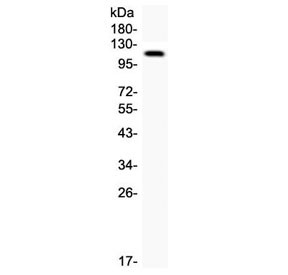
0.5mg/ml if reconstituted with 0.2ml sterile DI water. TIM1 antibody targets T cell immunoglobulin and mucin domain containing protein 1, commonly referred to as KIM-1 and encoded by the HAVCR1 gene. TIM-1 is a type I transmembrane glycoprotein characterized by an extracellular immunoglobulin V-like domain and a mucin-rich region, followed by a single transmembrane segment and a short cytoplasmic tail. The protein is primarily localized to the plasma membrane and intracellular compartments of epithelial and immune cells, where it functions in injury response and immune regulation. Under basal conditions, TIM-1 expression is low in most tissues but becomes markedly induced in epithelial cells following tissue damage, particularly in the kidney.Functionally, T cell immunoglobulin and mucin domain containing protein 1 plays a role in cellular responses to injury by acting as a scavenger receptor and modulator of immune signaling. TIM-1 has been shown to bind phosphatidylserine exposed on apoptotic cells, supporting phagocytic clearance and tissue repair processes. In immune cells, TIM-1 can influence activation and cytokine production, linking epithelial stress signals with adaptive immune responses. A TIM1 antibody supports investigations into injury-associated signaling and immune modulation.Expression of TIM-1 is most prominently associated with proximal tubular epithelial cells in the kidney following injury, reflecting its widespread use as a biomarker for renal damage. Beyond the kidney, inducible expression has been reported in activated T cells and other epithelial tissues under inflammatory or stress-related conditions. This regulated expression pattern underscores a role for TIM-1 in sensing tissue damage and coordinating immune and repair responses rather than maintaining constitutive tissue function.From a disease-relevance perspective, KIM-1 has been extensively studied in acute kidney injury, chronic kidney disease, and toxicological models of renal damage. Elevated HAVCR1 expression correlates with tubular injury severity and disease progression. TIM-1 has also been explored in inflammatory disorders, transplantation biology, and cancer research, where its roles in immune regulation and epithelial cell behavior may contribute to disease mechanisms. These associations make TIM-1 a valuable target for studies of injury-driven pathology and immune responses.At the molecular level, the mucin-rich extracellular region of TIM-1 is subject to extensive glycosylation, which can influence receptor stability, ligand interactions, and apparent migration on SDS-PAGE without altering the underlying amino acid sequence. Regulation of TIM-1 function is further influenced by receptor trafficking and cellular context. TIM1 antibody reagents support research applications focused on kidney injury biology, epithelial stress responses, and immune regulatory pathways, with NSJ Bioreagents providing reagents intended for research use.
| Keywords: | Anti-HAVCR1, Anti-Kidney injury molecule 1, Anti-T-cell membrane protein 1, Anti-Hepatitis A virus cellular receptor 1, Anti-T-cell immunoglobulin mucin receptor 1, Anti-T-cell immunoglobulin and mucin domain-containing protein 1, TIM1 Antibody / KIM-1 / |
| Supplier: | NSJ Bioreagents |
| Supplier-Nr: | RQ4572 |
Properties
| Application: | WB, ELISA (Capture) |
| Antibody Type: | Polyclonal |
| Conjugate: | No |
| Host: | Rabbit |
| Species reactivity: | human, mouse, rat |
| Immunogen: | Amino acids Q58-K289 from the human protein |
| Format: | Purified |
Database Information
| KEGG ID : | K20413 | Matching products |
| UniProt ID : | Q96D42 | Matching products |
| Gene ID : | GeneID 26762 | Matching products |
Handling & Safety
| Storage: | +4°C |
| Shipping: | +4°C (International: +4°C) |
Caution
Our products are for laboratory research use only: Not for administration to humans!
Our products are for laboratory research use only: Not for administration to humans!
Information about the product reference will follow.
more
You will get a certificate here



Viewed