
Cookie preferences
This website uses cookies, which are necessary for the technical operation of the website and are always set. Other cookies, which increase the comfort when using this website, are used for direct advertising or to facilitate interaction with other websites and social networks, are only set with your consent.
Configuration
Technically required
These cookies are necessary for the basic functions of the shop.
"Allow all cookies" cookie
"Decline all cookies" cookie
CSRF token
Cookie preferences
Currency change
Customer-specific caching
FACT-Finder tracking
Individual prices
Selected shop
Session
Comfort functions
These cookies are used to make the shopping experience even more appealing, for example for the recognition of the visitor.
Note
Show the facebook fanpage in the right blod sidebar
Statistics & Tracking
Affiliate program
Conversion and usertracking via Google Tag Manager
Track device being used


| Item number | Size | Datasheet | Manual | SDS | Delivery time | Quantity | Price |
|---|---|---|---|---|---|---|---|
| NSJ-V6012-20UG | 20 µg | - | - |
3 - 10 business days* |
375.00€
|
||
| NSJ-V6012-100UG | 100 µg | - | - |
3 - 10 business days* |
810.00€
|
If you have any questions, please use our Contact Form.
You can also order by e-mail: info@biomol.com
Larger quantity required? Request bulk
You can also order by e-mail: info@biomol.com
Larger quantity required? Request bulk
0.2 mg/ml in 1X PBS with 0.05% BSA, 0.05% sodium azide. Transforming growth factor beta 1... more
Product information "Anti-TGFB1 / Transforming growth factor beta 1, clone rTGFB17"
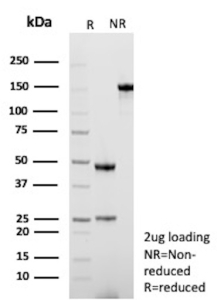
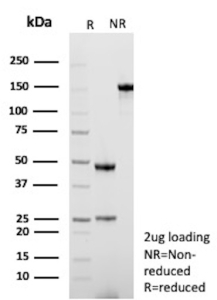
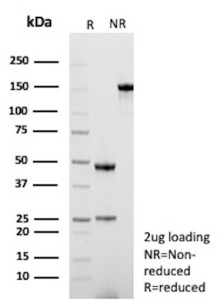
0.2 mg/ml in 1X PBS with 0.05% BSA, 0.05% sodium azide. Transforming growth factor beta 1 antibody, also known as TGFB1 antibody, recognizes Transforming growth factor beta 1, a secreted cytokine encoded by the TGFB1 gene and a central member of the TGF beta superfamily. Transforming growth factor beta 1 is synthesized as a precursor protein that undergoes proteolytic processing to generate a mature, biologically active homodimer. This cytokine is broadly expressed in immune cells, epithelial cells, endothelial cells, and stromal tissues, where it regulates cell proliferation, differentiation, apoptosis, and extracellular matrix production. The recombinant mouse monoclonal antibody clone rTGFB17 is designed to detect TGFB1 in research applications focused on cytokine signaling and tissue remodeling.Transforming growth factor beta 1 is secreted in a latent complex that requires activation prior to receptor engagement. Once activated, TGFB1 binds to the type II TGF beta receptor, which recruits and phosphorylates the type I receptor, initiating intracellular signaling primarily through SMAD2 and SMAD3. These phosphorylated SMAD proteins associate with SMAD4 and translocate to the nucleus to regulate transcription of genes involved in immune modulation, fibrosis, and cellular differentiation. In addition to canonical SMAD dependent signaling, TGFB1 can activate non canonical pathways including MAPK and PI3K-AKT signaling cascades, expanding its functional impact across multiple biological systems.Physiologically, Transforming growth factor beta 1 plays critical roles in embryonic development, angiogenesis, and maintenance of immune tolerance. It promotes differentiation of regulatory T cells and suppresses excessive inflammatory responses. During wound healing, TGFB1 stimulates fibroblast activation and collagen deposition, contributing to tissue repair. Dysregulation of TGFB1 signaling has been strongly linked to fibrotic diseases of the liver, lung, and kidney, as well as autoimmune disorders and cancer progression. In early stages of tumorigenesis, TGFB1 may act as a growth inhibitor, whereas in advanced malignancies it can promote epithelial to mesenchymal transition, invasion, metastasis, and immune evasion within the tumor microenvironment.Transforming growth factor beta 1 is primarily localized to the extracellular space as a secreted cytokine, although intracellular precursor forms may be detectable in producing cells. Transforming growth factor beta 1 antibody, including clone rTGFB17, is suitable for research applications aimed at evaluating TGFB1 expression in normal physiology and disease related contexts.
| Keywords: | Anti-TGFB1, Anti-Transforming growth factor beta-1 proprotein, TGFB1 Antibody / Transforming growth factor beta 1 |
| Supplier: | NSJ Bioreagents |
| Supplier-Nr: | V6012 |
Properties
| Application: | IHC |
| Antibody Type: | Monoclonal |
| Clone: | rTGFB17 |
| Conjugate: | No |
| Host: | Mouse |
| Species reactivity: | human |
| Immunogen: | Prokaryotic recombinant protein corresponding to the full length mature transforming growth factor beta1 molecule |
| Format: | Purified |
Database Information
| KEGG ID : | K13375 | Matching products |
| UniProt ID : | P01137 | Matching products |
| Gene ID : | GeneID 7040 | Matching products |
Handling & Safety
| Storage: | -20°C |
| Shipping: | -20°C (International: -20°C) |
Caution
Our products are for laboratory research use only: Not for administration to humans!
Our products are for laboratory research use only: Not for administration to humans!
Information about the product reference will follow.
more
You will get a certificate here
Viewed