
Cookie preferences
This website uses cookies, which are necessary for the technical operation of the website and are always set. Other cookies, which increase the comfort when using this website, are used for direct advertising or to facilitate interaction with other websites and social networks, are only set with your consent.
Configuration
Technically required
These cookies are necessary for the basic functions of the shop.
"Allow all cookies" cookie
"Decline all cookies" cookie
CSRF token
Cookie preferences
Currency change
Customer-specific caching
FACT-Finder tracking
Individual prices
Selected shop
Session
Comfort functions
These cookies are used to make the shopping experience even more appealing, for example for the recognition of the visitor.
Note
Show the facebook fanpage in the right blod sidebar
Statistics & Tracking
Affiliate program
Conversion and usertracking via Google Tag Manager
Track device being used

NEW
| Item number | Size | Datasheet | Manual | SDS | Delivery time | Quantity | Price |
|---|---|---|---|---|---|---|---|
| E-AN303045L.50 | 50 µl | - | - |
10 - 15 business days* |
171.00€
|
||
| E-AN303045L.100 | 100 µl | - | - |
10 - 15 business days* |
259.00€
|
If you have any questions, please use our Contact Form.
You can also order by e-mail: info@biomol.com
Larger quantity required? Request bulk
You can also order by e-mail: info@biomol.com
Larger quantity required? Request bulk
Protein function: Ligand-activated transcription factor that enables cells to adapt to changing... more
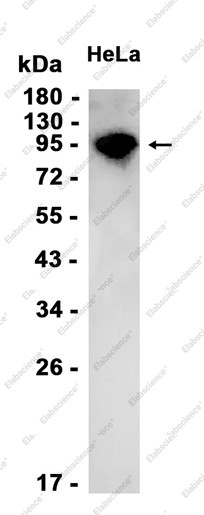
Product information "Anti-Recombinant Aryl Hydrocarbon Receptor, clone C372665"
Protein function: Ligand-activated transcription factor that enables cells to adapt to changing conditions by sensing compounds from the environment, diet, microbiome and cellular metabolism, and which plays important roles in development, immunity and cancer (PubMed:23275542, PubMed:30373764, PubMed:32818467, PubMed:7961644). Upon ligand binding, translocates into the nucleus, where it heterodimerizes with ARNT and induces transcription by binding to xenobiotic response elements (XRE) (PubMed:23275542, PubMed:30373764, PubMed:7961644). Regulates a variety of biological processes, including angiogenesis, hematopoiesis, drug and lipid metabolism, cell motility and immune modulation (PubMed:12213388). Xenobiotics can act as ligands: upon xenobiotic-binding, activates the expression of multiple phase I and II xenobiotic chemical metabolizing enzyme genes (such as the CYP1A1 gene) (PubMed:7961644, PubMed:33193710). Mediates biochemical and toxic effects of halogenated aromatic hydrocarbons (PubMed:34521881, PubMed:7961644). Next to xenobiotics, natural ligands derived from plants, microbiota, and endogenous metabolism are potent AHR agonists (PubMed:18076143). Tryptophan (Trp) derivatives constitute an important class of endogenous AHR ligands (PubMed:32818467, PubMed:32866000). Acts as a negative regulator of anti-tumor immunity: indoles and kynurenic acid generated by Trp catabolism act as ligand and activate AHR, thereby promoting AHR-driven cancer cell motility and suppressing adaptive immunity (PubMed:32818467). Regulates the circadian clock by inhibiting the basal and circadian expression of the core circadian component PER1 (PubMed:28602820). Inhibits PER1 by repressing the CLOCK-BMAL1 heterodimer mediated transcriptional activation of PER1 (PubMed:28602820). The heterodimer ARNT:AHR binds to core DNA sequence 5'-TGCGTG-3' within the dioxin response element (DRE) of target gene promoters and activates their transcription (PubMed:28602820) [The UniProt Consortium]
| Keywords: | Anti-AHR, Anti-Aryl hydrocarbon receptor, Anti-Class E basic helix-loop-helix protein 76, Recombinant Aryl Hydrocarbon Receptor Monoclonal Antibody |
| Supplier: | Elabscience |
| Supplier-Nr: | E-AN303045L |
Properties
| Application: | WB, ICC/IF |
| Antibody Type: | Monoclonal |
| Clone: | C372665 |
| Conjugate: | No |
| Host: | Rabbit |
| Species reactivity: | human |
| Format: | Purified |
Database Information
| KEGG ID : | K09093 | Matching products |
| UniProt ID : | P35869 | Matching products |
| Gene ID : | GeneID 196 | Matching products |
Handling & Safety
| Storage: | -20°C |
| Shipping: | -20°C (International: -20°C) |
Caution
Our products are for laboratory research use only: Not for administration to humans!
Our products are for laboratory research use only: Not for administration to humans!
Information about the product reference will follow.
more
You will get a certificate here
Viewed