
Cookie preferences
This website uses cookies, which are necessary for the technical operation of the website and are always set. Other cookies, which increase the comfort when using this website, are used for direct advertising or to facilitate interaction with other websites and social networks, are only set with your consent.
Configuration
Technically required
These cookies are necessary for the basic functions of the shop.
"Allow all cookies" cookie
"Decline all cookies" cookie
CSRF token
Cookie preferences
Currency change
Customer-specific caching
FACT-Finder tracking
Individual prices
Selected shop
Session
Comfort functions
These cookies are used to make the shopping experience even more appealing, for example for the recognition of the visitor.
Note
Show the facebook fanpage in the right blod sidebar
Statistics & Tracking
Affiliate program
Conversion and usertracking via Google Tag Manager
Track device being used



| Item number | Size | Datasheet | Manual | SDS | Delivery time | Quantity | Price |
|---|---|---|---|---|---|---|---|
| NSJ-FY12088 | 100 µg | - | - |
3 - 10 business days* |
790.00€
|
If you have any questions, please use our Contact Form.
You can also order by e-mail: info@biomol.com
Larger quantity required? Request bulk
You can also order by e-mail: info@biomol.com
Larger quantity required? Request bulk
Adding 0.2 ml of distilled water will yield a concentration of 500 ug/ml. PHGDH antibody detects... more
Product information "Anti-PHGDH / D-3-phosphoglycerate dehydrogenase"
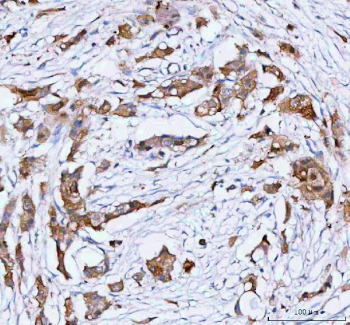
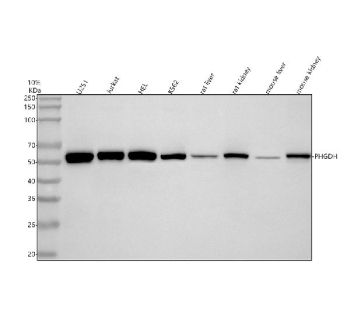
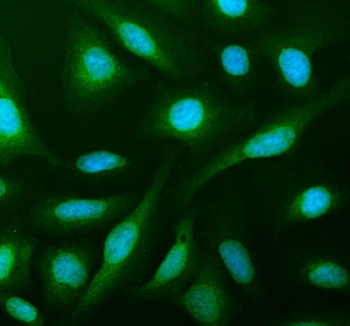
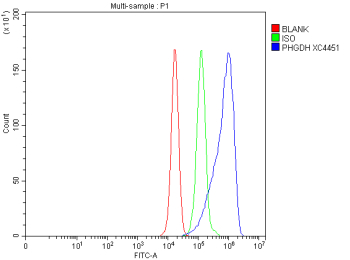
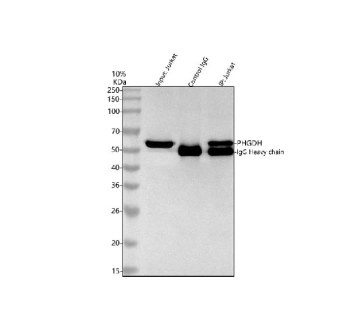
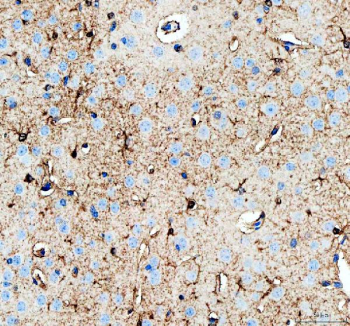
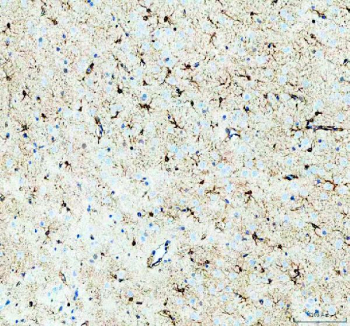
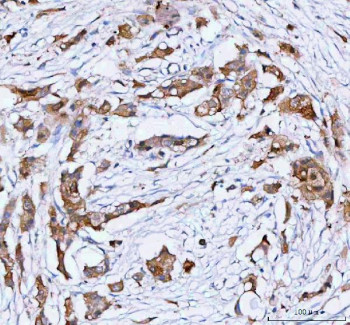
Adding 0.2 ml of distilled water will yield a concentration of 500 ug/ml. PHGDH antibody detects D-3-phosphoglycerate dehydrogenase, encoded by the PHGDH gene. D-3-phosphoglycerate dehydrogenase is a key enzyme in the serine biosynthesis pathway, catalyzing the conversion of 3-phosphoglycerate to 3-phosphohydroxypyruvate. PHGDH antibody provides researchers with a critical reagent for studying amino acid metabolism, cancer metabolism, and neurological disease.D-3-phosphoglycerate dehydrogenase is the first and rate-limiting enzyme of the phosphorylated pathway of serine biosynthesis. Research using PHGDH antibody has shown that it links glycolysis to serine and glycine production, supporting nucleotide, lipid, and redox metabolism. This central role in metabolic reprogramming makes PHGDH particularly important in rapidly dividing cells and cancer biology.Studies with PHGDH antibody have revealed that amplification and overexpression occur in multiple cancers, including melanoma, breast cancer, and glioma. Increased PHGDH expression enhances serine synthesis, fueling biosynthetic pathways that support tumor growth. Targeting PHGDH has therefore emerged as a potential therapeutic approach in oncology.Beyond cancer, research using PHGDH antibody has highlighted roles in neurodevelopment and inherited metabolic disorders. Mutations in PHGDH cause serine deficiency disorders, leading to microcephaly, psychomotor retardation, and seizures. These findings demonstrate the dual clinical relevance of PHGDH in both metabolic disease and cancer.Dysregulation of D-3-phosphoglycerate dehydrogenase has also been linked to immune function, as serine metabolism influences lymphocyte proliferation and differentiation. Research using PHGDH antibody continues to uncover links between metabolism, immune responses, and disease progression.PHGDH antibody is widely used in western blotting, immunohistochemistry, and enzymatic activity assays. Western blotting quantifies enzyme expression in tumors and metabolic tissues, immunohistochemistry highlights localization in brain and cancer sections, and activity assays confirm catalytic function. These applications make PHGDH antibody indispensable for metabolic and cancer research.By supplying validated PHGDH antibody reagents, NSJ Bioreagents supports studies into serine metabolism, cancer biology, and neurological disease. Detection of D-3-phosphoglycerate dehydrogenase provides researchers with insight into how amino acid metabolism supports physiology and pathology.
| Keywords: | Anti-PHGDH, Anti-Malate dehydrogenase, Anti-2-oxoglutarate reductase, Anti-D-3-phosphoglycerate dehydrogenase, PHGDH Antibody / D-3-phosphoglycerate dehydrogenase |
| Supplier: | NSJ Bioreagents |
| Supplier-Nr: | FY12088 |
Properties
| Application: | ELISA, FC, IP, IF, IHC, ICC, WB |
| Antibody Type: | Polyclonal |
| Conjugate: | No |
| Host: | Rabbit |
| Species reactivity: | human, mouse, rat |
| Immunogen: | E.coli-derived human PHGDH recombinant protein (Position: L15-F533) |
| Format: | Purified |
Database Information
| KEGG ID : | K00058 | Matching products |
| UniProt ID : | O43175 | Matching products |
| Gene ID : | GeneID 26227 | Matching products |
Handling & Safety
| Storage: | +4°C |
| Shipping: | +4°C (International: +4°C) |
Caution
Our products are for laboratory research use only: Not for administration to humans!
Our products are for laboratory research use only: Not for administration to humans!
Information about the product reference will follow.
more
You will get a certificate here
Viewed