
Cookie preferences
This website uses cookies, which are necessary for the technical operation of the website and are always set. Other cookies, which increase the comfort when using this website, are used for direct advertising or to facilitate interaction with other websites and social networks, are only set with your consent.
Configuration
Technically required
These cookies are necessary for the basic functions of the shop.
"Allow all cookies" cookie
"Decline all cookies" cookie
CSRF token
Cookie preferences
Currency change
Customer-specific caching
FACT-Finder tracking
Individual prices
Selected shop
Session
Comfort functions
These cookies are used to make the shopping experience even more appealing, for example for the recognition of the visitor.
Note
Show the facebook fanpage in the right blod sidebar
Statistics & Tracking
Affiliate program
Conversion and usertracking via Google Tag Manager
Track device being used


| Item number | Size | Datasheet | Manual | SDS | Delivery time | Quantity | Price |
|---|---|---|---|---|---|---|---|
| NSJ-FY12835 | 100 µl | - | - |
3 - 10 business days* |
790.00€
|
If you have any questions, please use our Contact Form.
You can also order by e-mail: info@biomol.com
Larger quantity required? Request bulk
You can also order by e-mail: info@biomol.com
Larger quantity required? Request bulk
Rabbit IgG in phosphate buffered saline, pH 7.4, 150mM NaCl, 0.02% sodium azide and 50% glycerol,... more
Product information "Anti-Pan-PKC / PRKCA/PRKCB/PRKCZ, clone 32P76"
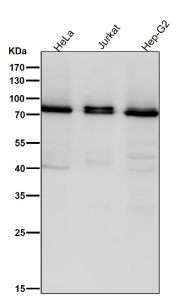
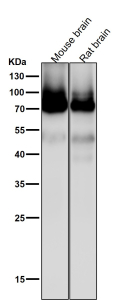
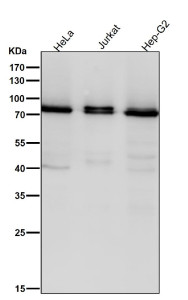
Rabbit IgG in phosphate buffered saline, pH 7.4, 150mM NaCl, 0.02% sodium azide and 50% glycerol, 0.4-0.5mg/ml BSA. Pan-PKC antibody detects protein kinase C isoforms alpha, beta, and zeta, encoded by the PRKCA, PRKCB, and PRKCZ genes. PKC proteins are a family of serine/threonine kinases activated by diacylglycerol, calcium, and phospholipids. They regulate diverse processes including proliferation, apoptosis, migration, and secretion. The PKC family is divided into conventional, novel, and atypical subgroups based on activation requirements. PKC alpha belongs to the conventional subgroup requiring both calcium and diacylglycerol, PKC beta has two splice variants beta I and beta II, while PKC zeta is atypical and functions independently of calcium and diacylglycerol. By detecting multiple isoforms simultaneously, Pan-PKC antibody provides a broad tool for studying PKC biology.Pan-PKC antibody is widely applied in cancer biology, immunology, and neuroscience. PKC alpha regulates proliferation and apoptosis in many cell types, PKC beta is critical for B cell receptor signaling, and PKC zeta participates in NF-kappaB signaling and polarity regulation. Together, these isoforms integrate signaling from growth factors, immune receptors, and stress pathways. By applying Pan-PKC antibody, researchers can examine global PKC expression and activity across diverse systems.Applications for Pan-PKC antibody include western blotting, immunohistochemistry, immunofluorescence, and ELISA. Western blot assays detect multiple PKC isoforms in cell and tissue lysates, immunohistochemistry maps distribution in tumors and immune organs, and immunofluorescence reveals subcellular localization at membranes, cytoskeleton, and nuclei. These approaches allow characterization of PKC biology at multiple levels.Dysregulation of PKC isoforms contributes to cancer, autoimmunity, diabetes, and cardiovascular disease. Overactivation of PKC promotes tumor growth, invasion, and angiogenesis, while loss of function impairs immune signaling and metabolic regulation. By detecting PKC isoforms broadly, Pan-PKC antibody supports research into how kinase networks contribute to disease. In leukemia, aberrant PKC activity modulates drug sensitivity, while in diabetes, PKC activation contributes to vascular complications.PKC isoforms also play roles in neuronal signaling, where they regulate neurotransmitter release and plasticity. By applying Pan-PKC antibody, scientists can study PKC activity in synaptic function and memory. Therapeutically, PKC inhibitors are under investigation for oncology and metabolic disorders. Monitoring PKC expression with antibody-based assays provides biomarkers for drug development and clinical research.NSJ Bioreagents provides Pan-PKC antibody with validated specificity for multiple isoforms. Its performance supports reliable detection of PKC alpha, beta, and zeta across cancer, immunology, and neuroscience applications.
| Keywords: | Anti-PRKCZ, Anti-nPKC-zeta, Anti-Protein kinase C zeta type, Pan-PKC Antibody / PRKCA/PRKCB/PRKCZ |
| Supplier: | NSJ Bioreagents |
| Supplier-Nr: | FY12835 |
Properties
| Application: | WB, IHC, ICC, IF, IP, FC |
| Antibody Type: | Monoclonal |
| Clone: | 32P76 |
| Conjugate: | No |
| Host: | Rabbit |
| Species reactivity: | human, mouse, rat |
| Immunogen: | A synthesized peptide derived from human PKC |
| Format: | Purified |
Database Information
| KEGG ID : | K18952 | Matching products |
| UniProt ID : | Q05513 | Matching products |
| Gene ID : | GeneID 5590 | Matching products |
Handling & Safety
| Storage: | -20°C |
| Shipping: | -20°C (International: -20°C) |
Caution
Our products are for laboratory research use only: Not for administration to humans!
Our products are for laboratory research use only: Not for administration to humans!
Information about the product reference will follow.
more
You will get a certificate here
Viewed