
Cookie preferences
This website uses cookies, which are necessary for the technical operation of the website and are always set. Other cookies, which increase the comfort when using this website, are used for direct advertising or to facilitate interaction with other websites and social networks, are only set with your consent.
Configuration
Technically required
These cookies are necessary for the basic functions of the shop.
"Allow all cookies" cookie
"Decline all cookies" cookie
CSRF token
Cookie preferences
Currency change
Customer-specific caching
FACT-Finder tracking
Individual prices
Selected shop
Session
Comfort functions
These cookies are used to make the shopping experience even more appealing, for example for the recognition of the visitor.
Note
Show the facebook fanpage in the right blod sidebar
Statistics & Tracking
Affiliate program
Conversion and usertracking via Google Tag Manager
Track device being used



| Item number | Size | Datasheet | Manual | SDS | Delivery time | Quantity | Price |
|---|---|---|---|---|---|---|---|
| NSJ-FY12839 | 100 µl | - | - |
3 - 10 business days* |
790.00€
|
If you have any questions, please use our Contact Form.
You can also order by e-mail: info@biomol.com
Larger quantity required? Request bulk
You can also order by e-mail: info@biomol.com
Larger quantity required? Request bulk
Rabbit IgG in phosphate buffered saline, pH 7.4, 150mM NaCl, 0.02% sodium azide and 50% glycerol,... more
Product information "Anti-NKR1 / Neurokinin 1 Receptor / TACR1, clone AFBH-20"
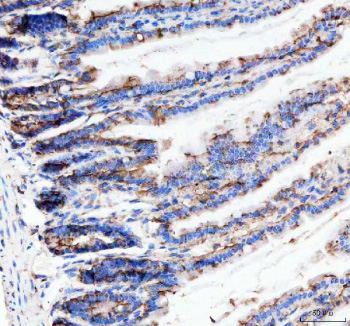
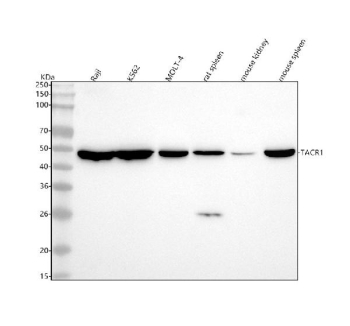
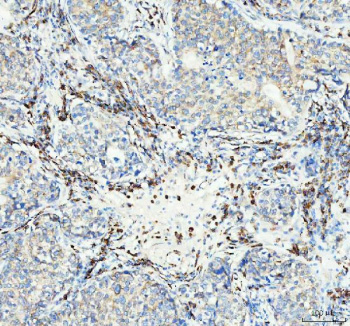
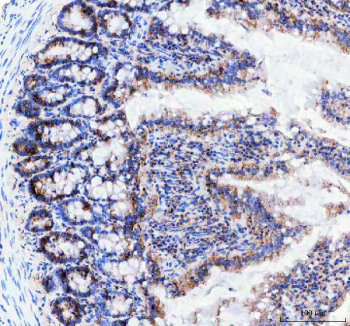
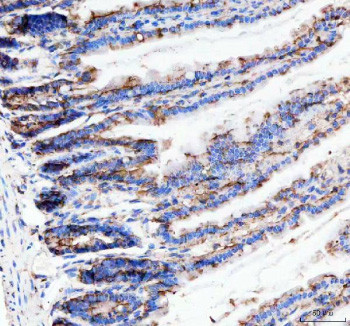
Rabbit IgG in phosphate buffered saline, pH 7.4, 150mM NaCl, 0.02% sodium azide and 50% glycerol, 0.4-0.5mg/ml BSA. NKR1 antibody detects Neurokinin 1 receptor, a G protein-coupled receptor (GPCR) encoded by the TACR1 gene on chromosome 2p12 that mediates the biological effects of the neuropeptide Substance P. This receptor plays a central role in neurotransmission, pain perception, inflammation, and stress responses. Neurokinin 1 receptor belongs to the tachykinin receptor family, characterized by seven transmembrane helices, extracellular ligand-binding loops, and cytoplasmic regions that couple to G proteins for intracellular signaling.Binding of Substance P to the Neurokinin 1 receptor triggers activation of phospholipase C (PLC), leading to inositol trisphosphate (IP3) production, calcium release, and activation of protein kinase C (PKC). Downstream pathways include MAPK, ERK, and NF-kB signaling cascades that regulate neuronal excitability, cytokine production, and vascular permeability. This receptor is broadly expressed in the central nervous system-particularly in pain-processing regions such as the dorsal horn of the spinal cord-and in peripheral tissues including smooth muscle, endothelial cells, and immune cells.The NKR1 antibody is widely used in neuroscience, pharmacology, and inflammation research to study Substance P signaling, pain transmission, and GPCR-mediated pathways. Western blot analysis detects a 46 kilodalton band corresponding to the receptor, while immunohistochemistry reveals strong membrane and cytoplasmic staining in neurons and smooth muscle cells. This antibody supports investigations into tachykinin signaling and receptor modulation across different tissues.Pharmacologically, Neurokinin 1 receptor antagonists such as aprepitant and fosaprepitant are used clinically to treat nausea, vomiting, and depression, underscoring the receptor's therapeutic relevance. Dysregulation of TACR1 signaling contributes to chronic pain, anxiety, inflammatory bowel disease, and certain cancers, where Substance P promotes cell proliferation and angiogenesis. The NKR1 antibody provides a valuable tool for characterizing receptor expression, ligand binding, and intracellular signaling dynamics under physiological and pathological conditions.At the molecular level, Neurokinin 1 receptor undergoes desensitization and internalization following ligand binding, a process mediated by beta-arrestins and receptor phosphorylation. It can recycle back to the plasma membrane or undergo degradation depending on signal intensity. The NKR1 antibody facilitates the study of receptor trafficking, desensitization, and GPCR signaling integration. NSJ Bioreagents validates this antibody for its applications, ensuring reliable detection for neuroscience and inflammation research.
| Keywords: | Anti-TACR1, Anti-NK-1 receptor, Anti-Substance-P receptor, Anti-Tachykinin receptor 1, NKR1 Antibody / Neurokinin 1 Receptor / TACR1 |
| Supplier: | NSJ Bioreagents |
| Supplier-Nr: | FY12839 |
Properties
| Application: | IP, IHC, WB |
| Antibody Type: | Monoclonal |
| Clone: | AFBH-20 |
| Conjugate: | No |
| Host: | Rabbit |
| Species reactivity: | human, mouse, rat |
| Immunogen: | A synthesized peptide derived from human Neurokinin 1 Receptor |
| Format: | Purified |
Database Information
| KEGG ID : | K04222 | Matching products |
| UniProt ID : | P25103 | Matching products |
| Gene ID : | GeneID 6869 | Matching products |
Handling & Safety
| Storage: | -20°C |
| Shipping: | -20°C (International: -20°C) |
Caution
Our products are for laboratory research use only: Not for administration to humans!
Our products are for laboratory research use only: Not for administration to humans!
Information about the product reference will follow.
more
You will get a certificate here
Viewed