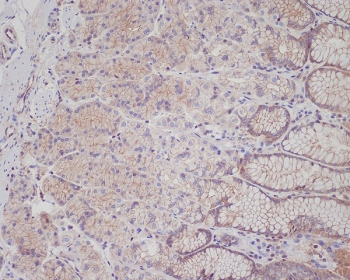
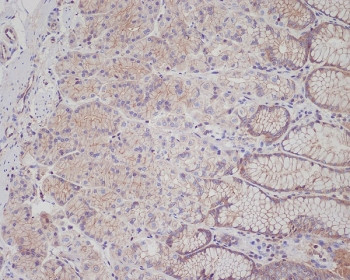
Anti-MET / c-Met / HGFR, clone BFA-13
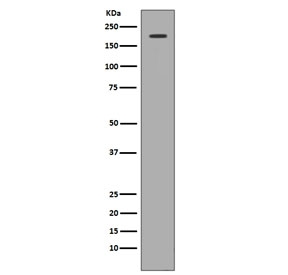
Item number Size Datasheet Manual SDS Delivery time Quantity Price
NSJ-RQ5243 100 µl - -

3 - 10 business days*

790.00€
 
Antibody in PBS with 0.02% sodium azide, 50% glycerol and 0.4-0.5mg/ml BSA. This gene encodes a... more
Product information "Anti-MET / c-Met / HGFR, clone BFA-13"
Antibody in PBS with 0.02% sodium azide, 50% glycerol and 0.4-0.5mg/ml BSA. This gene encodes a member of the receptor tyrosine kinase family of proteins and the product of the proto-oncogene MET. The encoded preproprotein is proteolytically processed to generate alpha and beta subunits that are linked via disulfide bonds to form the mature receptor. Further processing of the beta subunit results in the formation of the M10 peptide, which has been shown to reduce lung fibrosis. Binding of its ligand, hepatocyte growth factor, induces dimerization and activation of the receptor, which plays a role in cellular survival, embryogenesis, and cellular migration and invasion. [RefSeq] Protein function: Receptor tyrosine kinase that transduces signals from the extracellular matrix into the cytoplasm by binding to hepatocyte growth factor/HGF ligand. Regulates many physiological processes including proliferation, scattering, morphogenesis and survival. Ligand binding at the cell surface induces autophosphorylation of MET on its intracellular domain that provides docking sites for downstream signaling molecules. Following activation by ligand, interacts with the PI3-kinase subunit PIK3R1, PLCG1, SRC, GRB2, STAT3 or the adapter GAB1. Recruitment of these downstream effectors by MET leads to the activation of several signaling cascades including the RAS-ERK, PI3 kinase-AKT, or PLCgamma-PKC. The RAS-ERK activation is associated with the morphogenetic effects while PI3K/AKT coordinates prosurvival effects. During embryonic development, MET signaling plays a role in gastrulation, development and migration of neuronal precursors, angiogenesis and kidney formation. During skeletal muscle development, it is crucial for the migration of muscle progenitor cells and for the proliferation of secondary myoblasts. In adults, participates in wound healing as well as organ regeneration and tissue remodeling. Promotes also differentiation and proliferation of hematopoietic cells. May regulate cortical bone osteogenesis. [The UniProt Consortium]
Keywords: Anti-MET, Anti-SF receptor, EC=2.7.10.1, Anti-HGF receptor, Anti-HGF/SF receptor, Anti-Proto-oncogene c-Met, Anti-Scatter factor receptor, Anti-Tyrosine-protein kinase Met, Anti-Hepatocyte growth factor receptor, MET Antibody / c-Met / HGFR
Supplier: NSJ Bioreagents
Supplier-Nr: RQ5243

Properties

Application: IHC (paraffin), WB, IF
Antibody Type: Monoclonal
Clone: BFA-13
Conjugate: No
Host: Rabbit
Species reactivity: human
Immunogen: A synthetic peptide specific to human c-Met / MET
Format: Purified

Handling & Safety

Storage: -20°C
Shipping: -20°C (International: -20°C)
Caution
Our products are for laboratory research use only: Not for administration to humans!
You will get a certificate here
or to request a certificate of analysis.
Read, write and discuss reviews... more
Customer review for "Anti-MET / c-Met / HGFR, clone BFA-13"
Write a review
or to review a product.
Viewed