
Cookie preferences
This website uses cookies, which are necessary for the technical operation of the website and are always set. Other cookies, which increase the comfort when using this website, are used for direct advertising or to facilitate interaction with other websites and social networks, are only set with your consent.
Configuration
Technically required
These cookies are necessary for the basic functions of the shop.
"Allow all cookies" cookie
"Decline all cookies" cookie
CSRF token
Cookie preferences
Currency change
Customer-specific caching
FACT-Finder tracking
Individual prices
Selected shop
Session
Comfort functions
These cookies are used to make the shopping experience even more appealing, for example for the recognition of the visitor.
Note
Show the facebook fanpage in the right blod sidebar
Statistics & Tracking
Affiliate program
Conversion and usertracking via Google Tag Manager
Track device being used




| Item number | Size | Datasheet | Manual | SDS | Delivery time | Quantity | Price |
|---|---|---|---|---|---|---|---|
| NSJ-RQ6494 | 100 µg | - | - |
7 - 12 business days* |
790.00€
|
If you have any questions, please use our Contact Form.
You can also order by e-mail: info@biomol.com
Larger quantity required? Request bulk
You can also order by e-mail: info@biomol.com
Larger quantity required? Request bulk
0.5mg/ml if reconstituted with 0.2ml sterile DI water. KCNQ2, also called kv7.2, is a potassium... more
Product information "Anti-KCNQ2"
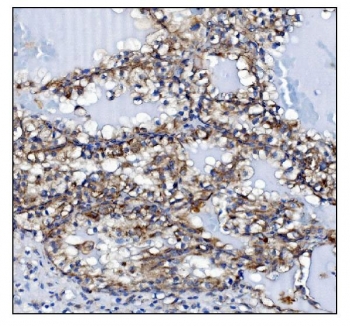
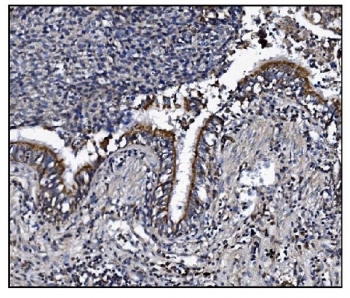
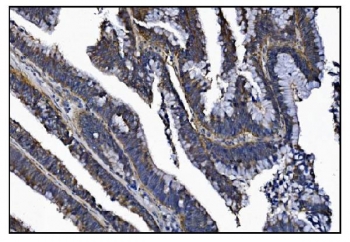
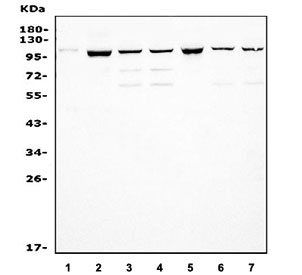
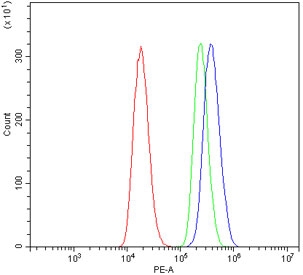
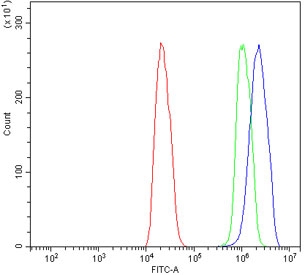
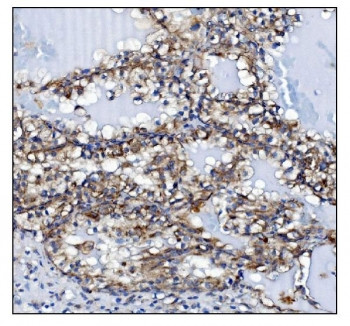
0.5mg/ml if reconstituted with 0.2ml sterile DI water. KCNQ2, also called kv7.2, is a potassium channel protein coded for by the gene KCNQ2. It is mapped to 20q13.33. The KCNQ2 gene encodes a voltage-gated potassium channel that is expressed in the brain. Expression of human KCNQ2 in Xenopus laevis oocytes led to potassium-selective currents that activated slowly with depolarization. Defects in this gene are a cause of benign familial neonatal convulsions type 1 (BFNC), also known as epilepsy, benign neonatal type 1(EBN1). At least five transcript variants encoding five different isoforms have been found for this gene. Protein function: Associates with KCNQ3 to form a potassium channel with essentially identical properties to the channel underlying the native M-current, a slowly activating and deactivating potassium conductance which plays a critical role in determining the subthreshold electrical excitability of neurons as well as the responsiveness to synaptic inputs. Therefore, it is important in the regulation of neuronal excitability. KCNQ2/KCNQ3 current is blocked by linopirdine and XE991, and activated by the anticonvulsant retigabine (PubMed:9836639, PubMed:11572947, PubMed:14534157, PubMed:12742592, PubMed:17872363). As the native M-channel, the potassium channel composed of KCNQ2 and KCNQ3 is also suppressed by activation of the muscarinic acetylcholine receptor CHRM1 (PubMed:10684873). [The UniProt Consortium]
| Keywords: | Anti-KQT-like 2, Anti-Voltage-gated potassium channel subunit Kv7.2, Anti-Potassium voltage-gated channel subfamily KQT member 2, Anti-Neuroblastoma-specific potassium channel subunit alpha KvLQT2, KCNQ2 Antibody |
| Supplier: | NSJ Bioreagents |
| Supplier-Nr: | RQ6494 |
Properties
| Application: | WB, IHC (paraffin), FC, Direct ELISA |
| Antibody Type: | Polyclonal |
| Conjugate: | No |
| Host: | Rabbit |
| Species reactivity: | human, mouse, rat |
| Immunogen: | An E. coli-derived human protein (amino acids M371-D408) |
| Format: | Neuro & Channel Proteins |
Database Information
| KEGG ID : | K04927 | Matching products |
| UniProt ID : | O43526 | Matching products |
| Gene ID : | GeneID 3785 | Matching products |
Handling & Safety
| Storage: | +4°C |
| Shipping: | +4°C (International: +4°C) |
Caution
Our products are for laboratory research use only: Not for administration to humans!
Our products are for laboratory research use only: Not for administration to humans!
Information about the product reference will follow.
more
You will get a certificate here
Viewed