
Cookie preferences
This website uses cookies, which are necessary for the technical operation of the website and are always set. Other cookies, which increase the comfort when using this website, are used for direct advertising or to facilitate interaction with other websites and social networks, are only set with your consent.
Configuration
Technically required
These cookies are necessary for the basic functions of the shop.
"Allow all cookies" cookie
"Decline all cookies" cookie
CSRF token
Cookie preferences
Currency change
Customer-specific caching
FACT-Finder tracking
Individual prices
Selected shop
Session
Comfort functions
These cookies are used to make the shopping experience even more appealing, for example for the recognition of the visitor.
Note
Show the facebook fanpage in the right blod sidebar
Statistics & Tracking
Affiliate program
Conversion and usertracking via Google Tag Manager
Track device being used



| Item number | Size | Datasheet | Manual | SDS | Delivery time | Quantity | Price |
|---|---|---|---|---|---|---|---|
| NSJ-FY12648 | 100 µg | - | - |
3 - 10 business days* |
790.00€
|
If you have any questions, please use our Contact Form.
You can also order by e-mail: info@biomol.com
Larger quantity required? Request bulk
You can also order by e-mail: info@biomol.com
Larger quantity required? Request bulk
Adding 0.2 ml of distilled water will yield a concentration of 500 ug/ml. GPD1 antibody detects... more
Product information "Anti-GPD1 / Glycerol-3-phosphate dehydrogenase 1"
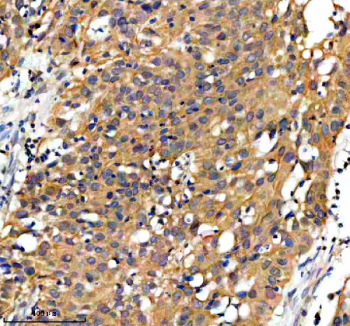
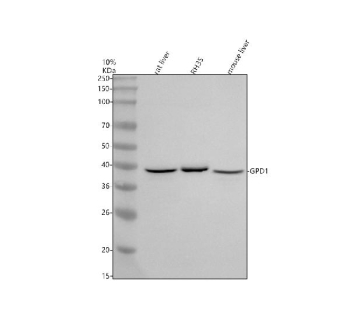
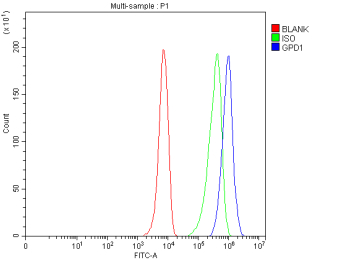
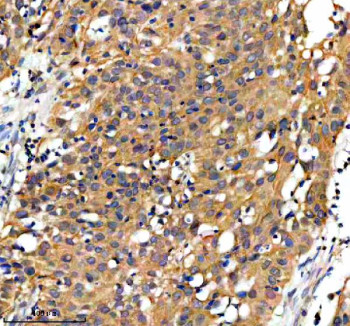
Adding 0.2 ml of distilled water will yield a concentration of 500 ug/ml. GPD1 antibody detects Glycerol-3-phosphate dehydrogenase 1, a cytosolic enzyme that catalyzes the reversible conversion of dihydroxyacetone phosphate to glycerol-3-phosphate, linking carbohydrate metabolism with lipid biosynthesis and energy regulation. GPD1 plays a crucial role in maintaining redox balance and metabolic flexibility. The GPD1 antibody is widely used in metabolic, biochemical, and endocrinological research to study lipid metabolism, redox cycling, and adipocyte differentiation.GPD1 is encoded by the GPD1 gene located on human chromosome 12q13.12. The protein is approximately 349 amino acids long and localizes primarily in the cytoplasm. GPD1 functions in concert with its mitochondrial counterpart, GPD2, as part of the glycerophosphate shuttle that transfers reducing equivalents from NADH in the cytosol to the mitochondria for oxidative phosphorylation.The GPD1 antibody detects a 37 kilodalton protein by western blot and shows cytosolic localization under immunofluorescence microscopy. GPD1 activity supports triglyceride synthesis in adipocytes and provides glycerol-3-phosphate as a substrate for lipid esterification. In muscle and liver, GPD1 contributes to energy metabolism by linking glycolysis to oxidative phosphorylation. Its regulation is sensitive to hormonal cues, including insulin and glucagon, and is modulated by redox state and nutrient availability.Deficiency of GPD1 results in transient hypertriglyceridemia and hepatic steatosis due to impaired lipid processing. Genetic mutations have been associated with congenital lipodystrophy and metabolic syndrome. Increased GPD1 expression in adipose tissue correlates with obesity and insulin resistance, highlighting its importance in metabolic homeostasis.Beyond energy metabolism, GPD1 influences cell signaling through regulation of NAD+/NADH balance and oxidative stress. It plays roles in thermogenesis, adipocyte differentiation, and lipid droplet biogenesis. NSJ Bioreagents provides a validated GPD1 antibody optimized for its applications, supporting studies into redox regulation, lipid metabolism, and energy homeostasis.
| Keywords: | Anti-GPD1, Anti-Glycerol-3-phosphate dehydrogenase [NAD(+)], cytoplasmic, GPD1 Antibody / Glycerol-3-phosphate dehydrogenase 1 |
| Supplier: | NSJ Bioreagents |
| Supplier-Nr: | FY12648 |
Properties
| Application: | WB, IHC, FC |
| Antibody Type: | Polyclonal |
| Conjugate: | No |
| Host: | Rabbit |
| Species reactivity: | human, mouse, rat |
| Immunogen: | A synthetic peptide corresponding to a sequence at the N-terminus of human GPD1 |
| Format: | Purified |
Database Information
| KEGG ID : | K00006 | Matching products |
| UniProt ID : | P21695 | Matching products |
| Gene ID : | GeneID 2819 | Matching products |
Handling & Safety
| Storage: | +4°C |
| Shipping: | +4°C (International: +4°C) |
Caution
Our products are for laboratory research use only: Not for administration to humans!
Our products are for laboratory research use only: Not for administration to humans!
Information about the product reference will follow.
more
You will get a certificate here
Viewed