
Cookie preferences
This website uses cookies, which are necessary for the technical operation of the website and are always set. Other cookies, which increase the comfort when using this website, are used for direct advertising or to facilitate interaction with other websites and social networks, are only set with your consent.
Configuration
Technically required
These cookies are necessary for the basic functions of the shop.
"Allow all cookies" cookie
"Decline all cookies" cookie
CSRF token
Cookie preferences
Currency change
Customer-specific caching
FACT-Finder tracking
Individual prices
Selected shop
Session
Comfort functions
These cookies are used to make the shopping experience even more appealing, for example for the recognition of the visitor.
Note
Show the facebook fanpage in the right blod sidebar
Statistics & Tracking
Affiliate program
Conversion and usertracking via Google Tag Manager
Track device being used



| Item number | Size | Datasheet | Manual | SDS | Delivery time | Quantity | Price |
|---|---|---|---|---|---|---|---|
| NSJ-FY13046 | 100 µg | - | - |
3 - 10 business days* |
790.00€
|
If you have any questions, please use our Contact Form.
You can also order by e-mail: info@biomol.com
Larger quantity required? Request bulk
You can also order by e-mail: info@biomol.com
Larger quantity required? Request bulk
Adding 0.2 ml of distilled water will yield a concentration of 500 ug/ml. ATP1A2 antibody detects... more
Product information "Anti-ATP1A2 / ATPase subunit alpha-2"
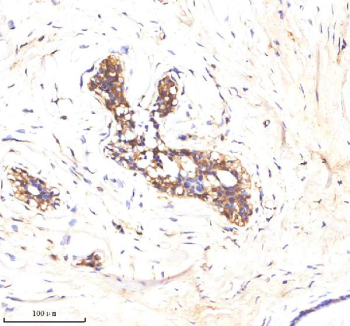
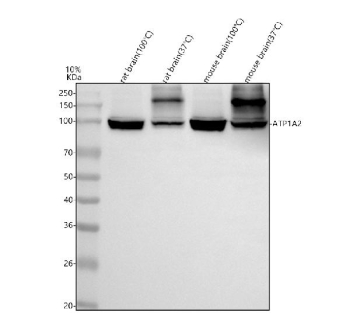
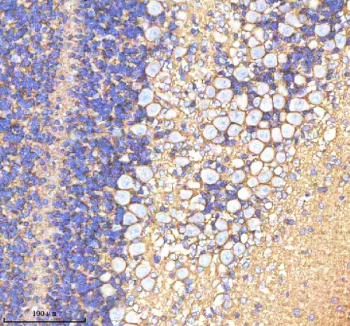
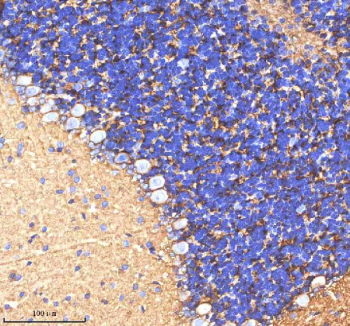
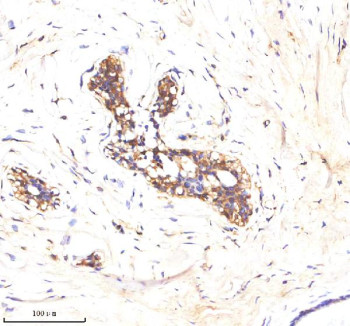
Adding 0.2 ml of distilled water will yield a concentration of 500 ug/ml. ATP1A2 antibody detects Sodium/potassium-transporting ATPase subunit alpha-2, a membrane enzyme responsible for maintaining electrochemical gradients across the plasma membrane. The UniProt recommended name is Sodium/potassium-transporting ATPase subunit alpha-2 (ATP1A2). This catalytic subunit is part of the Na+/K+-ATPase complex, which hydrolyzes ATP to exchange intracellular sodium ions for extracellular potassium ions, a process fundamental to neuronal excitability and muscle contraction.Functionally, ATP1A2 antibody identifies a 1,003-amino-acid integral membrane protein that forms the catalytic core of the Na+/K+-ATPase. The enzyme functions as a heterodimer composed of an alpha catalytic subunit and a beta regulatory subunit, cycling through phosphorylated and dephosphorylated states to transport ions against their concentration gradients. This active transport maintains membrane potential, osmotic balance, and secondary transport systems that depend on sodium gradients.The ATP1A2 gene is located on chromosome 1q23.2 and encodes the alpha-2 isoform of the Na+/K+-ATPase, which is predominantly expressed in glial cells, cardiac muscle, and smooth muscle. The alpha-2 isoform differs from the alpha-1 isoform (ATP1A1) in its tissue distribution and kinetic properties, playing a critical role in regulating extracellular potassium buffering and membrane repolarization. In neurons, ATP1A2 contributes to the reuptake of potassium following action potentials, thereby preventing hyperexcitability.Clinically, mutations in ATP1A2 are associated with familial hemiplegic migraine type 2 (FHM2), alternating hemiplegia of childhood, and other neurological disorders characterized by disturbed ion homeostasis. These mutations can impair ATPase activity, leading to abnormal ionic gradients, cortical spreading depression, and susceptibility to seizures. In cardiac physiology, ATP1A2 supports rhythmic contraction by maintaining proper ion exchange between cytoplasm and extracellular space.ATP1A2 antibody is widely used in neuroscience, muscle physiology, and ion transport research. It is suitable for immunohistochemistry, western blotting, and immunofluorescence to detect ATP1A2 expression in excitable tissues. This antibody supports studies of membrane transport, neuronal signaling, and electrochemical regulation. In disease research, it aids in evaluating Na+/K+-ATPase dysfunction in migraine, epilepsy, and cardiovascular disorders.Structurally, ATP1A2 contains ten transmembrane helices, a cytoplasmic ATP-binding site, and a phosphorylation domain that drives conformational cycling. It interacts with regulatory proteins including phospholemman and FXYD family members. NSJ Bioreagents provides ATP1A2 antibody reagents validated for use in ion transport, membrane biology, and neurological research.
| Keywords: | Anti-ATP1A2, Anti-Sodium pump subunit alpha-2, Anti-Sodium/potassium-transporting ATPase subunit alpha-2, ATP1A2 Antibody / ATPase subunit alpha-2 |
| Supplier: | NSJ Bioreagents |
| Supplier-Nr: | FY13046 |
Properties
| Application: | WB, IHC, ELISA |
| Antibody Type: | Polyclonal |
| Conjugate: | No |
| Host: | Rabbit |
| Species reactivity: | human, mouse, rat |
| Immunogen: | E.coli-derived human ATP1A2 recombinant protein (Position: L46-L580) |
| Format: | Purified |
Database Information
| KEGG ID : | K01539 | Matching products |
| UniProt ID : | P50993 | Matching products |
| Gene ID : | GeneID 477 | Matching products |
Handling & Safety
| Storage: | +4°C |
| Shipping: | +4°C (International: +4°C) |
Caution
Our products are for laboratory research use only: Not for administration to humans!
Our products are for laboratory research use only: Not for administration to humans!
Information about the product reference will follow.
more
You will get a certificate here
Viewed