
Cookie preferences
This website uses cookies, which are necessary for the technical operation of the website and are always set. Other cookies, which increase the comfort when using this website, are used for direct advertising or to facilitate interaction with other websites and social networks, are only set with your consent.
Configuration
Technically required
These cookies are necessary for the basic functions of the shop.
"Allow all cookies" cookie
"Decline all cookies" cookie
CSRF token
Cookie preferences
Currency change
Customer-specific caching
FACT-Finder tracking
Individual prices
Selected shop
Session
Comfort functions
These cookies are used to make the shopping experience even more appealing, for example for the recognition of the visitor.
Note
Show the facebook fanpage in the right blod sidebar
Statistics & Tracking
Affiliate program
Conversion and usertracking via Google Tag Manager
Track device being used



| Item number | Size | Datasheet | Manual | SDS | Delivery time | Quantity | Price |
|---|---|---|---|---|---|---|---|
| NSJ-FY13058 | 100 µg | - | - |
3 - 10 business days* |
790.00€
|
If you have any questions, please use our Contact Form.
You can also order by e-mail: info@biomol.com
Larger quantity required? Request bulk
You can also order by e-mail: info@biomol.com
Larger quantity required? Request bulk
Adding 0.2 ml of distilled water will yield a concentration of 500 ug/ml. ACE antibody detects... more
Product information "Anti-ACE / Angiotensin I Converting Enzyme"
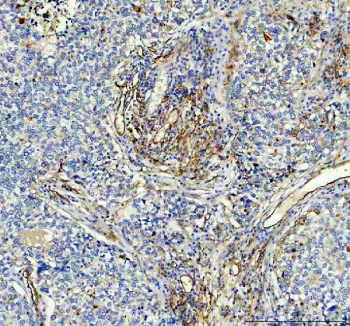
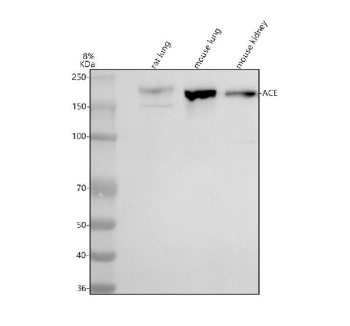
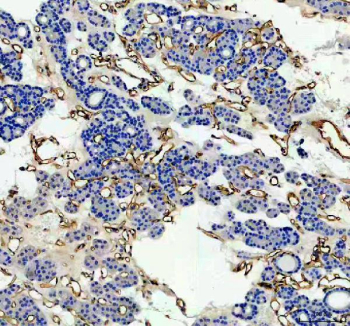
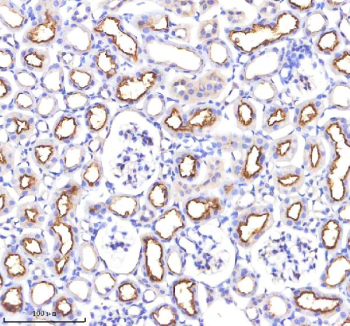
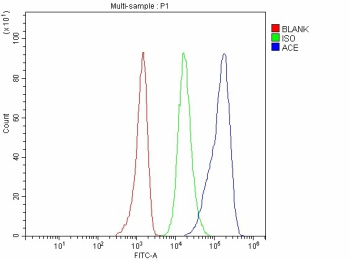
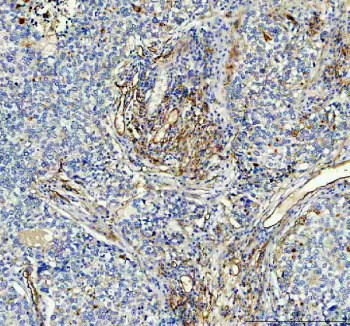
Adding 0.2 ml of distilled water will yield a concentration of 500 ug/ml. ACE antibody detects Angiotensin I converting enzyme, a zinc-dependent peptidase that plays a pivotal role in blood pressure regulation and electrolyte balance. The UniProt recommended name is Angiotensin I converting enzyme (ACE). This membrane-bound enzyme catalyzes the conversion of angiotensin I to the potent vasoconstrictor angiotensin II and degrades bradykinin, thereby modulating vascular tone and fluid homeostasis.Functionally, ACE antibody identifies a 1,306-amino-acid type I membrane glycoprotein composed of two homologous catalytic domains (N- and C-domains) and a short cytoplasmic tail. ACE is expressed in endothelial cells, epithelial cells, and kidney proximal tubules, where it acts as a key enzyme of the renin-angiotensin system (RAS). By generating angiotensin II, ACE promotes vasoconstriction, sodium retention, and aldosterone secretion, contributing to blood pressure regulation.The ACE gene is located on chromosome 17q23.3 and encodes multiple isoforms, including somatic ACE and testis-specific ACE (tACE). Somatic ACE is primarily found on the luminal surface of endothelial cells in lungs, heart, and kidneys, whereas tACE functions in sperm maturation and fertility. ACE expression is regulated by inflammatory cytokines, hormonal signaling, and mechanical stress on vascular endothelium.Clinically, dysregulation of ACE activity is linked to hypertension, heart failure, diabetic nephropathy, and atherosclerosis. ACE inhibitors, which block enzyme activity, are among the most effective therapeutics for cardiovascular disease management. Beyond cardiovascular roles, ACE contributes to immune function by degrading inflammatory peptides and influencing hematopoietic stem cell mobilization. Elevated ACE levels are also diagnostic for sarcoidosis and other granulomatous disorders.ACE antibody is widely used in cardiovascular, renal, and molecular physiology research. It is suitable for immunohistochemistry, western blotting, and flow cytometry to detect ACE expression and distribution in tissues. This antibody supports studies of vascular biology, RAS signaling, and peptide metabolism. In clinical and translational settings, ACE serves as a biomarker for endothelial activation and inflammatory vascular disease.Structurally, ACE consists of two catalytic domains containing zinc-binding motifs (HEMGH sequence) that coordinate enzymatic hydrolysis of peptide bonds. Its extracellular domain is heavily glycosylated, conferring stability and resistance to proteolysis. NSJ Bioreagents provides ACE antibody reagents validated for use in cardiovascular physiology, renin-angiotensin system, and molecular enzyme research.
| Keywords: | Anti-ACE, Anti-Kininase II, Anti-Angiotensin-converting enzyme, Anti-Dipeptidyl carboxypeptidase I, ACE Antibody / Angiotensin I Converting Enzyme |
| Supplier: | NSJ Bioreagents |
| Supplier-Nr: | FY13058 |
Properties
| Application: | WB, IHC, ELISA |
| Antibody Type: | Polyclonal |
| Conjugate: | No |
| Host: | Rabbit |
| Species reactivity: | human, mouse, rat |
| Immunogen: | E.coli-derived human ACE recombinant protein (Position: R149-C545) |
| Format: | Purified |
Database Information
| KEGG ID : | K01283 | Matching products |
| UniProt ID : | P12821 | Matching products |
| Gene ID : | GeneID 1636 | Matching products |
Handling & Safety
| Storage: | +4°C |
| Shipping: | +4°C (International: +4°C) |
Caution
Our products are for laboratory research use only: Not for administration to humans!
Our products are for laboratory research use only: Not for administration to humans!
Information about the product reference will follow.
more
You will get a certificate here
Viewed