
Cookie preferences
This website uses cookies, which are necessary for the technical operation of the website and are always set. Other cookies, which increase the comfort when using this website, are used for direct advertising or to facilitate interaction with other websites and social networks, are only set with your consent.
Configuration
Technically required
These cookies are necessary for the basic functions of the shop.
"Allow all cookies" cookie
"Decline all cookies" cookie
CSRF token
Cookie preferences
Currency change
Customer-specific caching
FACT-Finder tracking
Individual prices
Selected shop
Session
Comfort functions
These cookies are used to make the shopping experience even more appealing, for example for the recognition of the visitor.
Note
Show the facebook fanpage in the right blod sidebar
Statistics & Tracking
Affiliate program
Conversion and usertracking via Google Tag Manager
Track device being used

| Item number | Size | Datasheet | Manual | SDS | Delivery time | Quantity | Price |
|---|---|---|---|---|---|---|---|
| NSJ-FY12271 | 100 µl | - | - |
3 - 10 business days* |
790.00€
|
If you have any questions, please use our Contact Form.
You can also order by e-mail: info@biomol.com
Larger quantity required? Request bulk
You can also order by e-mail: info@biomol.com
Larger quantity required? Request bulk
Rabbit IgG in phosphate buffered saline, pH 7.4, 150mM NaCl, 0.02% sodium azide and 50% glycerol,... more
Product information "Anti-phospho-VASP (Ser156) / Vasodilator-stimulated phosphoprotein, clone 32V43"
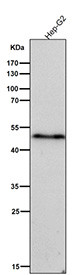
Rabbit IgG in phosphate buffered saline, pH 7.4, 150mM NaCl, 0.02% sodium azide and 50% glycerol, 0.4-0.5mg/ml BSA. Phospho-VASP (Ser156) antibody is designed to recognize vasodilator-stimulated phosphoprotein (VASP) when phosphorylated at the serine 156 residue. VASP is a member of the Ena/VASP protein family, which plays a central role in regulating actin cytoskeleton dynamics. This protein localizes to focal adhesions, lamellipodia, and filopodia, where it contributes to actin filament elongation and cell motility. Phosphorylation of VASP at serine 156 by protein kinase A (PKA) or protein kinase G (PKG) reduces its ability to bind actin filaments and modulates cytoskeletal remodeling, thereby influencing cell adhesion and migration.Phospho-VASP (Ser156) antibody is widely used to study endothelial cell signaling, vascular tone regulation, and platelet activation. VASP phosphorylation is often used as a biomarker for nitric oxide and cGMP-dependent signaling pathways, making this antibody highly relevant for cardiovascular and vascular biology research. In platelets, phosphorylation at serine 156 is associated with inhibition of platelet aggregation, linking this protein to thrombotic and hemostatic processes.This antibody provides specificity for the phosphorylated serine 156 residue, allowing researchers to distinguish activated signaling states from total VASP levels. It has proven valuable in applications such as western blot, immunohistochemistry, immunofluorescence, and flow cytometry, where phosphorylation-dependent changes in protein activity are key to understanding cellular responses.Beyond vascular biology, VASP phosphorylation is also studied in cancer research. Altered cytoskeletal regulation contributes to tumor cell invasion and metastasis, and VASP activity is linked to actin-driven protrusions in malignant cells. Monitoring phosphorylation states using phospho-specific antibodies allows scientists to assess signaling cascades that contribute to disease progression.Phospho-VASP (Ser156) antibody is a reliable reagent for dissecting nitric oxide-mediated signaling and cytoskeletal control. Its specificity for phosphorylation status ensures that researchers can accurately track pathway activation in different cellular contexts. NSJ Bioreagents offers this antibody for investigators focused on cardiovascular biology, oncology, and platelet research.
| Keywords: | Anti-phospho-VASP, Anti-phospho-Vasodilator-stimulated phosphoprotein, Phospho-VASP (Ser156) Antibody / Vasodilator-stimulated phosphoprotein |
| Supplier: | NSJ Bioreagents |
| Supplier-Nr: | FY12271 |
Properties
| Application: | WB, IHC |
| Antibody Type: | Monoclonal |
| Clone: | 32V43 |
| Conjugate: | No |
| Host: | Rabbit |
| Species reactivity: | human |
| Immunogen: | A synthesized peptide derived from human Phospho-VASP (S156) |
| Format: | Purified |
Database Information
| KEGG ID : | K06274 | Matching products |
| UniProt ID : | P50552 | Matching products |
| Gene ID : | GeneID 7408 | Matching products |
Handling & Safety
| Storage: | -20°C |
| Shipping: | -20°C (International: -20°C) |
Caution
Our products are for laboratory research use only: Not for administration to humans!
Our products are for laboratory research use only: Not for administration to humans!
Information about the product reference will follow.
more
You will get a certificate here
Viewed