
Cookie preferences
This website uses cookies, which are necessary for the technical operation of the website and are always set. Other cookies, which increase the comfort when using this website, are used for direct advertising or to facilitate interaction with other websites and social networks, are only set with your consent.
Configuration
Technically required
These cookies are necessary for the basic functions of the shop.
"Allow all cookies" cookie
"Decline all cookies" cookie
CSRF token
Cookie preferences
Currency change
Customer-specific caching
FACT-Finder tracking
Individual prices
Selected shop
Session
Comfort functions
These cookies are used to make the shopping experience even more appealing, for example for the recognition of the visitor.
Note
Show the facebook fanpage in the right blod sidebar
Statistics & Tracking
Affiliate program
Conversion and usertracking via Google Tag Manager
Track device being used



| Item number | Size | Datasheet | Manual | SDS | Delivery time | Quantity | Price |
|---|---|---|---|---|---|---|---|
| NSJ-FY12850 | 100 µl | - | - |
7 - 12 business days* |
790.00€
|
If you have any questions, please use our Contact Form.
You can also order by e-mail: info@biomol.com
Larger quantity required? Request bulk
You can also order by e-mail: info@biomol.com
Larger quantity required? Request bulk
Rabbit IgG in phosphate buffered saline, pH 7.4, 150mM NaCl, 0.02% sodium azide and 50% glycerol,... more
Product information "Anti-phospho-PRAS40 (Thr246) / AKT1S1, clone 32A68"
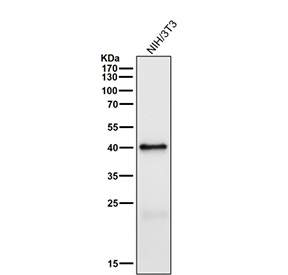
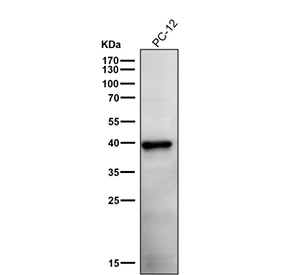
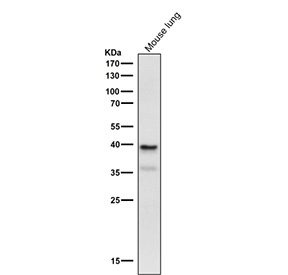
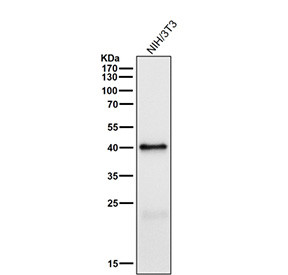
Rabbit IgG in phosphate buffered saline, pH 7.4, 150mM NaCl, 0.02% sodium azide and 50% glycerol, 0.4-0.5mg/ml BSA. Phospho-PRAS40 (Thr246) antibody recognizes a phosphorylated form of the proline-rich AKT substrate of 40 kDa, encoded by the AKT1S1 gene. PRAS40 is a critical signaling adaptor that links the AKT pathway with the mechanistic target of rapamycin complex 1 (mTORC1). Under normal conditions, PRAS40 binds to mTORC1 and functions as an inhibitor, but phosphorylation of PRAS40 at threonine 246 by AKT reduces this inhibitory effect. This phosphorylation event facilitates activation of mTORC1, which drives protein synthesis, cell growth, and metabolic reprogramming. Because of this central role, detection with Phospho-PRAS40 (Thr246) antibody is important for studies exploring insulin signaling, cancer progression, and metabolic regulation.PRAS40 phosphorylation is tightly regulated by upstream PI3K-AKT activation. Following growth factor stimulation, AKT phosphorylates PRAS40 at Thr246, creating a binding site for 14-3-3 proteins. The resulting complex alters PRAS40 localization and diminishes its inhibitory function on mTORC1. Dysregulated phosphorylation at this site has been observed in multiple cancers, including breast and prostate carcinoma, where increased AKT signaling is a hallmark. Phospho-PRAS40 (Thr246) antibody therefore provides a valuable tool for researchers assessing therapeutic inhibitors of the PI3K-AKT-mTOR pathway.Beyond oncology, Thr246 phosphorylation has been linked to metabolic diseases. In insulin-resistant states, abnormal AKT-PRAS40 signaling alters glucose uptake and lipid metabolism. Detecting this modification with Phospho-PRAS40 (Thr246) antibody can clarify molecular mechanisms underlying type 2 diabetes and obesity. It has also been used to monitor experimental therapies designed to restore insulin sensitivity.Phospho-PRAS40 (Thr246) antibody is widely applied in western blotting, immunohistochemistry, and ELISA-based studies. In western blotting, phosphorylation-specific detection distinguishes the activated protein from the unmodified form, providing precise pathway analysis. Immunohistochemistry enables visualization of phosphorylated PRAS40 within tissue architecture, revealing spatial relationships with other signaling components. ELISA or bead-based assays further allow quantitative comparisons of phosphorylation across experimental conditions.PRAS40 phosphorylation often occurs alongside other AKT targets, such as GSK3, FOXO, and TSC2. Using Phospho-PRAS40 (Thr246) antibody in parallel with other phospho-specific antibodies allows comprehensive mapping of AKT activity in cellular models. NSJ Bioreagents provides this antibody to support laboratories conducting pathway analysis, biomarker development, and drug discovery in areas ranging from oncology to metabolic research.
| Keywords: | Anti-phospho-AKT1S1, Anti-phospho-Proline-rich AKT1 substrate 1, Anti-phospho-40 kDa proline-rich AKT substrate, Phospho-PRAS40 (Thr246) Antibody / AKT1S1 |
| Supplier: | NSJ Bioreagents |
| Supplier-Nr: | FY12850 |
Properties
| Application: | WB |
| Antibody Type: | Monoclonal |
| Clone: | 32A68 |
| Conjugate: | No |
| Host: | Rabbit |
| Species reactivity: | human |
| Immunogen: | A synthesized peptide derived from human Phospho-PRAS40 (T246) |
| Format: | Affinity Purified |
Database Information
| KEGG ID : | K16184 | Matching products |
| UniProt ID : | Q96B36 | Matching products |
| Gene ID : | GeneID 84335 | Matching products |
Handling & Safety
| Storage: | -20°C |
| Shipping: | -20°C (International: -20°C) |
Caution
Our products are for laboratory research use only: Not for administration to humans!
Our products are for laboratory research use only: Not for administration to humans!
Information about the product reference will follow.
more
You will get a certificate here
Viewed