
Cookie preferences
This website uses cookies, which are necessary for the technical operation of the website and are always set. Other cookies, which increase the comfort when using this website, are used for direct advertising or to facilitate interaction with other websites and social networks, are only set with your consent.
Configuration
Technically required
These cookies are necessary for the basic functions of the shop.
"Allow all cookies" cookie
"Decline all cookies" cookie
CSRF token
Cookie preferences
Currency change
Customer-specific caching
FACT-Finder tracking
Individual prices
Selected shop
Session
Comfort functions
These cookies are used to make the shopping experience even more appealing, for example for the recognition of the visitor.
Note
Show the facebook fanpage in the right blod sidebar
Statistics & Tracking
Affiliate program
Conversion and usertracking via Google Tag Manager
Track device being used

| Item number | Size | Datasheet | Manual | SDS | Delivery time | Quantity | Price |
|---|---|---|---|---|---|---|---|
| NSJ-FY12250 | 100 µl | - | - |
3 - 10 business days* |
790.00€
|
If you have any questions, please use our Contact Form.
You can also order by e-mail: info@biomol.com
Larger quantity required? Request bulk
You can also order by e-mail: info@biomol.com
Larger quantity required? Request bulk
Rabbit IgG in phosphate buffered saline, pH 7.4, 150mM NaCl, 0.02% sodium azide and 50% glycerol,... more
Product information "Anti-phospho-PLCB3 (Ser537) / Phospholipase C beta 3, clone 32P57"
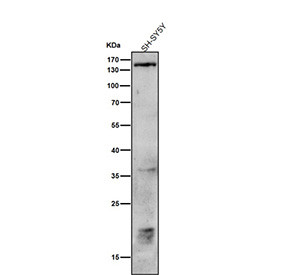
Rabbit IgG in phosphate buffered saline, pH 7.4, 150mM NaCl, 0.02% sodium azide and 50% glycerol, 0.4-0.5mg/ml BSA. Phospho-PLCB3 (Ser537) antibody detects phospholipase C beta 3 (PLCB3) phosphorylated at serine 537, a modification that regulates enzyme activity and signaling. PLCB3 is a member of the phospholipase C family of enzymes, which hydrolyze phosphatidylinositol 4,5-bisphosphate (PIP2) to generate second messengers inositol trisphosphate (IP3) and diacylglycerol (DAG). These messengers mobilize intracellular calcium and activate protein kinase C, driving pathways involved in cell growth, differentiation, and immune responses.Research using Phospho-PLCB3 (Ser537) antibody has shown that phosphorylation at this site enhances or modulates enzyme activity depending on cellular context. Kinases including PKC and CaMKII target Ser537, linking feedback regulation to receptor-mediated signaling. This modification influences G protein-coupled receptor (GPCR) and receptor tyrosine kinase pathways, where PLCB3 acts as a critical mediator of calcium signaling.In immune cells, PLCB3 phosphorylation at Ser537 regulates lymphocyte activation, cytokine production, and inflammatory responses. Dysregulated PLCB3 activity contributes to autoimmune disease, chronic inflammation, and impaired host defense. In cardiovascular research, PLCB3 is implicated in vascular smooth muscle contraction, hypertension, and cardiac hypertrophy. Aberrant PLCB3 signaling has also been linked to tumorigenesis, where altered calcium signaling drives proliferation and survival.Neurobiology studies show that PLCB3 contributes to synaptic plasticity and neurotransmitter release, with Ser537 phosphorylation fine-tuning neuronal calcium dynamics. This role connects PLCB3 to learning, memory, and neurological disorders. In endocrine systems, PLCB3 signaling regulates hormone secretion and metabolic processes.Antibodies against phospho-PLCB3 (Ser537) are validated for western blot, immunohistochemistry, and immunofluorescence. These reagents allow detection of phosphorylation-dependent activation, supporting studies in signaling pathways and disease models.NSJ Bioreagents supplies this Phospho-PLCB3 (Ser537) antibody for research into calcium signaling, immunity, and cancer biology.
| Keywords: | Anti-phospho-PLCB3, Anti-phospho-Phospholipase C-beta-3, Anti-phospho-Phosphoinositide phospholipase C-beta-3, Anti-phospho-1-phosphatidylinositol 4,5-bisphosphate phosphodiesterase beta-3, Phospho-PLCB3 (Ser537) Antibody / Phospholipase C beta 3 |
| Supplier: | NSJ Bioreagents |
| Supplier-Nr: | FY12250 |
Properties
| Application: | WB |
| Antibody Type: | Monoclonal |
| Clone: | 32P57 |
| Conjugate: | No |
| Host: | Rabbit |
| Species reactivity: | human |
| Immunogen: | A synthesized peptide derived from human Phospho-PLCB3 (S537) |
| Format: | Purified |
Database Information
| KEGG ID : | K05858 | Matching products |
| UniProt ID : | Q01970 | Matching products |
| Gene ID : | GeneID 5331 | Matching products |
Handling & Safety
| Storage: | -20°C |
| Shipping: | -20°C (International: -20°C) |
Caution
Our products are for laboratory research use only: Not for administration to humans!
Our products are for laboratory research use only: Not for administration to humans!
Information about the product reference will follow.
more
You will get a certificate here
Viewed