
Cookie preferences
This website uses cookies, which are necessary for the technical operation of the website and are always set. Other cookies, which increase the comfort when using this website, are used for direct advertising or to facilitate interaction with other websites and social networks, are only set with your consent.
Configuration
Technically required
These cookies are necessary for the basic functions of the shop.
"Allow all cookies" cookie
"Decline all cookies" cookie
CSRF token
Cookie preferences
Currency change
Customer-specific caching
FACT-Finder tracking
Individual prices
Selected shop
Session
Comfort functions
These cookies are used to make the shopping experience even more appealing, for example for the recognition of the visitor.
Note
Show the facebook fanpage in the right blod sidebar
Statistics & Tracking
Affiliate program
Conversion and usertracking via Google Tag Manager
Track device being used

| Item number | Size | Datasheet | Manual | SDS | Delivery time | Quantity | Price |
|---|---|---|---|---|---|---|---|
| NSJ-FY12683 | 100 µl | - | - |
3 - 10 business days* |
790.00€
|
If you have any questions, please use our Contact Form.
You can also order by e-mail: info@biomol.com
Larger quantity required? Request bulk
You can also order by e-mail: info@biomol.com
Larger quantity required? Request bulk
Rabbit IgG in phosphate buffered saline, pH 7.4, 150mM NaCl, 0.02% sodium azide and 50% glycerol,... more
Product information "Anti-phospho-PKC (Ser729) / PRKCA/PRKCB/PRKCE, clone 32P75"
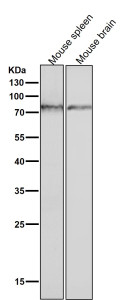
Rabbit IgG in phosphate buffered saline, pH 7.4, 150mM NaCl, 0.02% sodium azide and 50% glycerol, 0.4-0.5mg/ml BSA. Phospho-PKC (Ser729) antibody detects protein kinase C when phosphorylated at serine 729. Protein kinase C belongs to a family of serine threonine kinases encoded by multiple genes including PRKCA, PRKCB, and PRKCG. Phosphorylation at Ser729 occurs within the hydrophobic motif of PKC alpha and related isoforms, a modification essential for stability and full catalytic activity. This phosphorylation is typically mediated by kinases such as PDK1 and mTORC2, which regulate PKC maturation and downstream signaling capacity.Phospho-PKC (Ser729) antibody is widely applied in cancer biology, signal transduction, and neuroscience. PKC enzymes regulate cell proliferation, differentiation, apoptosis, and cytoskeletal remodeling. Phosphorylation at Ser729 serves as a marker for mature active PKC isoforms and is required for proper subcellular localization and substrate phosphorylation. By detecting phospho Ser729, researchers can measure activation status of PKC pathways and how they change in disease states. Western blot assays reveal distinct phospho PKC bands corresponding to activated isoforms. Immunohistochemistry maps Ser729 phosphorylation in tissues such as brain, heart, and tumors. Immunofluorescence highlights dynamic translocation of PKC from cytosol to plasma membrane or other compartments upon stimulation. These methods allow precise characterization of PKC activation at the molecular and cellular level.PKC activity is critical for oncogenic signaling. Dysregulation of phosphorylation at Ser729 is associated with altered PKC stability and oncogenic transformation. Certain cancers show reduced PKC activity due to mutations preventing proper phosphorylation, while others display hyperactivation that promotes tumor growth. By applying Phospho-PKC (Ser729) antibody, scientists can study how phosphorylation events regulate tumor biology and therapeutic response.PKC enzymes are also central to neuronal signaling and plasticity. Phosphorylation at Ser729 supports synaptic transmission, long term potentiation, and memory formation. Altered PKC activity has been implicated in neurodegenerative diseases such as Alzheimer disease and Parkinson disease. With phospho specific antibody tools, researchers can dissect how PKC phosphorylation influences brain function and pathology.In cardiology, PKC phosphorylation regulates cardiac hypertrophy, contractility, and response to ischemia. The Ser729 site provides a biomarker for assessing PKC function in cardiac stress and adaptation. This makes Phospho-PKC (Ser729) antibody relevant not only for molecular signaling studies but also for translational research into heart disease.Phospho-PKC (Ser729) antibody from NSJ Bioreagents provides strong specificity for detecting active phosphorylated PKC isoforms. Its reliable performance across multiple applications ensures accurate monitoring of kinase activity in health and disease.
| Keywords: | Anti-phospho-PRKCE, Anti-phospho-nPKC-epsilon, Anti-phospho-Protein kinase C epsilon type, Phospho-PKC (Ser729) Antibody / PRKCA/PRKCB/PRKCE |
| Supplier: | NSJ Bioreagents |
| Supplier-Nr: | FY12683 |
Properties
| Application: | WB |
| Antibody Type: | Monoclonal |
| Clone: | 32P75 |
| Conjugate: | No |
| Host: | Rabbit |
| Species reactivity: | human, rat |
| Immunogen: | A synthesized peptide derived from human Phospho-PKC (S729) |
| Format: | Purified |
Database Information
| KEGG ID : | K18050 | Matching products |
| UniProt ID : | Q02156 | Matching products |
| Gene ID : | GeneID 5581 | Matching products |
Handling & Safety
| Storage: | -20°C |
| Shipping: | -20°C (International: -20°C) |
Caution
Our products are for laboratory research use only: Not for administration to humans!
Our products are for laboratory research use only: Not for administration to humans!
Information about the product reference will follow.
more
You will get a certificate here
Viewed