
Cookie preferences
This website uses cookies, which are necessary for the technical operation of the website and are always set. Other cookies, which increase the comfort when using this website, are used for direct advertising or to facilitate interaction with other websites and social networks, are only set with your consent.
Configuration
Technically required
These cookies are necessary for the basic functions of the shop.
"Allow all cookies" cookie
"Decline all cookies" cookie
CSRF token
Cookie preferences
Currency change
Customer-specific caching
FACT-Finder tracking
Individual prices
Selected shop
Session
Comfort functions
These cookies are used to make the shopping experience even more appealing, for example for the recognition of the visitor.
Note
Show the facebook fanpage in the right blod sidebar
Statistics & Tracking
Affiliate program
Conversion and usertracking via Google Tag Manager
Track device being used

| Item number | Size | Datasheet | Manual | SDS | Delivery time | Quantity | Price |
|---|---|---|---|---|---|---|---|
| ELK-ES6739.50 | 50 µl | - | - |
10 - 14 business days* |
173.00€
|
||
| ELK-ES6739.100 | 100 µl | - | - |
10 - 14 business days* |
290.00€
|
If you have any questions, please use our Contact Form.
You can also order by e-mail: info@biomol.com
Larger quantity required? Request bulk
You can also order by e-mail: info@biomol.com
Larger quantity required? Request bulk
This gene encodes one of the catalytic subunits of protein kinase A, which exists as a tetrameric... more
Product information "Anti-phospho-PKAalpha cat (Ser338)"
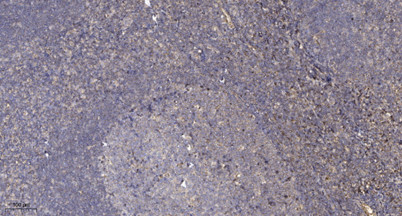
This gene encodes one of the catalytic subunits of protein kinase A, which exists as a tetrameric holoenzyme with two regulatory subunits and two catalytic subunits, in its inactive form. cAMP causes the dissociation of the inactive holoenzyme into a dimer of regulatory subunits bound to four cAMP and two free monomeric catalytic subunits. Four different regulatory subunits and three catalytic subunits have been identified in humans. cAMP-dependent phosphorylation of proteins by protein kinase A is important to many cellular processes, including differentiation, proliferation, and apoptosis. Constitutive activation of this gene caused either by somatic mutations, or genomic duplications of regions that include this gene, have been associated with hyperplasias and adenomas of the adrenal cortex and are linked to corticotropin-independent Cushing's syndrome. Altern Protein function: Phosphorylates a large number of substrates in the cytoplasm and the nucleus (PubMed:15642694, PubMed:15905176, PubMed:16387847, PubMed:17333334, PubMed:17565987, PubMed:17693412, PubMed:18836454, PubMed:19949837, PubMed:20356841, PubMed:21085490, PubMed:21514275, PubMed:21812984, PubMed:31112131). Phosphorylates CDC25B, ABL1, NFKB1, CLDN3, PSMC5/RPT6, PJA2, RYR2, RORA, SOX9 and VASP (PubMed:15642694, PubMed:15905176, PubMed:16387847, PubMed:17333334, PubMed:17565987, PubMed:17693412, PubMed:18836454, PubMed:19949837, PubMed:20356841, PubMed:21085490, PubMed:21514275, PubMed:21812984). Regulates the abundance of compartmentalized pools of its regulatory subunits through phosphorylation of PJA2 which binds and ubiquitinates these subunits, leading to their subsequent proteolysis (PubMed:21423175). RORA is activated by phosphorylation (PubMed:21514275). Required for glucose- mediated adipogenic differentiation increase and osteogenic differentiation inhibition from osteoblasts (PubMed:19949837). Involved in chondrogenesis by mediating phosphorylation of SOX9. Involved in the regulation of platelets in response to thrombin and collagen, maintains circulating platelets in a resting state by phosphorylating proteins in numerous platelet inhibitory pathways when in complex with NF-kappa-B (NFKB1 and NFKB2) and I-kappa-B-alpha (NFKBIA), but thrombin and collagen disrupt these complexes and free active PRKACA stimulates platelets and leads to platelet aggregation by phosphorylating VASP (PubMed:15642694, PubMed:20356841). Prevents the antiproliferative and anti-invasive effects of alpha- difluoromethylornithine in breast cancer cells when activated (PubMed:17333334). RYR2 channel activity is potentiated by phosphorylation in presence of luminal Ca(2+), leading to reduced amplitude and increased frequency of store overload-induced Ca(2+) release (SOICR) characterized by an increased rate of Ca(2+) release and propagation velocity of spontaneous Ca(2+) waves, despite reduced wave amplitude and resting cytosolic Ca(2+) (PubMed:17693412). PSMC5/RPT6 activation by phosphorylation stimulates proteasome (PubMed:17565987). Negatively regulates tight junctions (TJs) in ovarian cancer cells via CLDN3 phosphorylation (PubMed:15905176). NFKB1 phosphorylation promotes NF-kappa-B p50-p50 DNA binding (PubMed:15642694). Required for phosphorylation of GLI transcription factors which inhibits them and prevents transcriptional activation of Hedgehog signaling pathway target genes. GLI transcription factor phosphorylation is inhibited by interaction of PRKACA with SMO which sequesters PRKACA at the cell membrane. Involved in embryonic development by down-regulating the Hedgehog (Hh) signaling pathway that determines embryo pattern formation and morphogenesis most probably through the regulation of OFD1 in ciliogenesis (PubMed:33934390). Prevents meiosis resumption in prophase-arrested oocytes via CDC25B inactivation by phosphorylation. May also regulate rapid eye movement (REM) sleep in the pedunculopontine tegmental (PPT). Phosphorylates APOBEC3G and AICDA (PubMed:16387847, PubMed:18836454). Phosphorylates HSF1, this phosphorylation promotes HSF1 nuclear localization and transcriptional activity upon heat shock (PubMed:21085490). Acts as a negative regulator of mTORC1 by mediating phosphorylation of RPTOR (PubMed:31112131). [The UniProt Consortium] Recommended dilutions: Immunohistochemistry: 1/100 - 1/300. ELISA: 1/5000. Not yet tested in other applications.. Cellular localization: Cytoplasm. Cell membrane. Nucleus . Mitochondrion . Membrane , Lipid-anchor . Translocates into the nucleus (monomeric catalytic subunit). The inactive holoenzyme is found in the cytoplasm. Distributed throughout the cytoplasm in meiotically incompetent oocytes. Associated to mitochondrion as meiotic competence is acquired. Aggregates around the germinal vesicles (GV) at the immature GV stage oocytes (By similarity). Colocalizes with HSF1 in nuclear stress bodies (nSBs) upon heat shock (PubMed:21085490). ., [Isoform 2]: Cell projection, cilium, flagellum . Cytoplasmic vesicle, secretory vesicle, acrosome . Expressed in the midpiece region of the sperm flagellum (PubMed:10906071). Colocalizes with MROH2B and TCP11 on the acrosome and tail regions in round spermatids and spermatozoa regardle
| Keywords: | Anti-phospho-PKACA, Anti-phospho-PRKACA, Anti-phospho-PKA C-alpha, Anti-phospho-cAMP-dependent protein kinase catalytic subunit alpha, PKAalpha cat (phospho Ser338) rabbit pAb |
| Supplier: | ELK Biotechnology |
| Supplier-Nr: | ES6739 |
Properties
| Application: | IHC, IF, ELISA |
| Antibody Type: | Polyclonal |
| Conjugate: | No |
| Host: | Rabbit |
| Species reactivity: | human, mouse, rat |
| Immunogen: | Synthesized phospho-peptide around the phosphorylation site of human PKAalpha cat (phospho Ser338) |
| Format: | Purified |
Database Information
| KEGG ID : | K04345 | Matching products |
| UniProt ID : | P17612 | Matching products |
| Gene ID : | GeneID 5566 | Matching products |
Handling & Safety
| Storage: | -20°C |
| Shipping: | +4°C (International: +4°C) |
Caution
Our products are for laboratory research use only: Not for administration to humans!
Our products are for laboratory research use only: Not for administration to humans!
You will get a certificate here
Viewed