
Cookie preferences
This website uses cookies, which are necessary for the technical operation of the website and are always set. Other cookies, which increase the comfort when using this website, are used for direct advertising or to facilitate interaction with other websites and social networks, are only set with your consent.
Configuration
Technically required
These cookies are necessary for the basic functions of the shop.
"Allow all cookies" cookie
"Decline all cookies" cookie
CSRF token
Cookie preferences
Currency change
Customer-specific caching
FACT-Finder tracking
Individual prices
Selected shop
Session
Comfort functions
These cookies are used to make the shopping experience even more appealing, for example for the recognition of the visitor.
Note
Show the facebook fanpage in the right blod sidebar
Statistics & Tracking
Affiliate program
Conversion and usertracking via Google Tag Manager
Track device being used


| Item number | Size | Datasheet | Manual | SDS | Delivery time | Quantity | Price |
|---|---|---|---|---|---|---|---|
| NSJ-F48726-0.08ML | 80 µl | - | - |
3 - 10 business days* |
361.00€
|
||
| NSJ-F48726-0.4ML | 400 µl | - | - |
3 - 10 business days* |
772.00€
|
If you have any questions, please use our Contact Form.
You can also order by e-mail: info@biomol.com
Larger quantity required? Request bulk
You can also order by e-mail: info@biomol.com
Larger quantity required? Request bulk
In 1X PBS, pH 7.4, with 0.09% sodium azide. Poly [ADP-ribose] polymerase 1 (PARP1) is a nuclear... more
Product information "Anti-phospho-PARP1 (Ser177)"
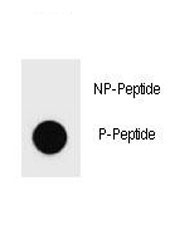
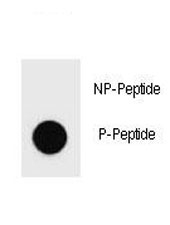
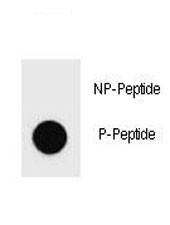
In 1X PBS, pH 7.4, with 0.09% sodium azide. Poly [ADP-ribose] polymerase 1 (PARP1) is a nuclear DNA damage response enzyme encoded by the PARP1 gene that plays essential roles in chromatin remodeling, DNA repair, genomic stability, transcriptional regulation, and cellular stress signaling. Phospho-PARP1 (Ser177) Antibody / DNA Damage Response Marker Antibody is designed to support investigation of phosphorylation-dependent PARP1 signaling associated with oxidative stress, DNA strand break responses, and chromatin-associated repair mechanisms. Phospho-PARP1 (Ser177) antibody, also referred to as PARP1 pS177 antibody, Phospho PARP antibody, or DNA repair phosphoprotein antibody in the literature, recognizes PARP1 phosphorylated at serine 177, a regulatory phosphorylation site implicated in stress-responsive signaling pathways linked to PARP1 activation and cellular injury responses.PARP1 functions as a DNA damage sensor that rapidly binds DNA strand breaks and catalyzes poly-ADP ribosylation of target proteins involved in chromatin relaxation and DNA repair complex recruitment. Upon activation, PARP1 regulates multiple cellular pathways associated with base excision repair, transcriptional control, replication stress adaptation, apoptosis, and inflammatory signaling. PARP1 activity is tightly regulated through post-translational modifications including phosphorylation, acetylation, SUMOylation, ubiquitination, and PARylation. Ser177 phosphorylation has been associated with stress-responsive kinase signaling mechanisms that influence PARP1 functional activity and downstream DNA repair responses.Phosphorylation-dependent PARP1 signaling has been implicated in oxidative stress injury, ischemia-reperfusion damage, endothelial dysfunction, metabolic stress responses, inflammation, and cancer-associated genomic instability. Studies have linked PARP1 Ser177 phosphorylation to AMP-activated protein kinase (AMPK)-associated signaling pathways that regulate endothelial nitric oxide synthase activity, reactive oxygen species generation, and vascular stress adaptation. Because PARP1 integrates metabolic sensing with DNA damage signaling, phospho-specific PARP1 antibodies are valuable tools for investigating cellular stress signaling networks and chromatin-associated repair mechanisms.Aberrant PARP1 activation contributes to numerous disease processes including neurodegeneration, cardiovascular disease, inflammatory disorders, ischemic injury, and tumor progression. PARP1 signaling is also highly relevant in oncology because tumor cells frequently depend on DNA repair adaptation pathways to survive replication stress and genomic instability. PARP inhibitors are now widely used in targeted cancer therapy, particularly in tumors with homologous recombination repair defects. Phosphorylation-specific PARP1 reagents therefore provide additional insight into upstream regulatory signaling events that modulate PARP1 activity during stress and DNA repair responses.At the cellular level, phosphorylated PARP1 is predominantly localized within the nucleus where it associates with chromatin and DNA repair complexes. Stress-induced phospho-PARP1 signaling may increase following oxidative injury, genotoxic stress, inflammatory stimulation, or metabolic dysfunction. This rabbit polyclonal phospho-PARP1 (Ser177) antibody is designed to support research applications investigating phosphorylation-dependent regulation of PARP1 signaling, chromatin-associated DNA repair biology, and cellular stress response pathways.Additional PARP1 pathway and chromatin-associated DNA repair studies may benefit from our PARP1 antibody page featuring recombinant rabbit monoclonal clone CFD-16 with knockdown-validated target recognition.
| Keywords: | Anti-phospho-PARP1, Anti-phospho-Poly[ADP-ribose] synthase 1, Anti-phospho-Poly [ADP-ribose] polymerase 1, Anti-phospho-NAD(+) ADP-ribosyltransferase 1, Anti-phospho-DNA ADP-ribosyltransferase PARP1, Anti-phospho-Protein poly-ADP-ribosyltransferase PARP1, |
| Supplier: | NSJ Bioreagents |
| Supplier-Nr: | F48726 |
Properties
| Application: | DB, ELISA |
| Antibody Type: | Polyclonal |
| Conjugate: | No |
| Host: | Rabbit |
| Species reactivity: | human |
| Immunogen: | KLH conjugated synthetic phosphopeptide corresponding to amino acid residues surrounding pS177 of human PARP1 |
| Format: | Purified |
Database Information
| KEGG ID : | K24070 | Matching products |
| UniProt ID : | P09874 | Matching products |
| Gene ID : | GeneID 142 | Matching products |
Handling & Safety
| Storage: | -20°C |
| Shipping: | -20°C (International: -20°C) |
Caution
Our products are for laboratory research use only: Not for administration to humans!
Our products are for laboratory research use only: Not for administration to humans!
Information about the product reference will follow.
more
You will get a certificate here
Viewed