
Cookie preferences
This website uses cookies, which are necessary for the technical operation of the website and are always set. Other cookies, which increase the comfort when using this website, are used for direct advertising or to facilitate interaction with other websites and social networks, are only set with your consent.
Configuration
Technically required
These cookies are necessary for the basic functions of the shop.
"Allow all cookies" cookie
"Decline all cookies" cookie
CSRF token
Cookie preferences
Currency change
Customer-specific caching
FACT-Finder tracking
Individual prices
Selected shop
Session
Comfort functions
These cookies are used to make the shopping experience even more appealing, for example for the recognition of the visitor.
Note
Show the facebook fanpage in the right blod sidebar
Statistics & Tracking
Affiliate program
Conversion and usertracking via Google Tag Manager
Track device being used



| Item number | Size | Datasheet | Manual | SDS | Delivery time | Quantity | Price |
|---|---|---|---|---|---|---|---|
| NSJ-FY13010 | 100 µl | - | - |
3 - 10 business days* |
790.00€
|
If you have any questions, please use our Contact Form.
You can also order by e-mail: info@biomol.com
Larger quantity required? Request bulk
You can also order by e-mail: info@biomol.com
Larger quantity required? Request bulk
Rabbit IgG in phosphate buffered saline, pH 7.4, 150mM NaCl, 0.02% sodium azide and 50% glycerol,... more
Product information "Anti-phospho-Nucleophosmin (Ser125) / NPM1, clone 32N71"
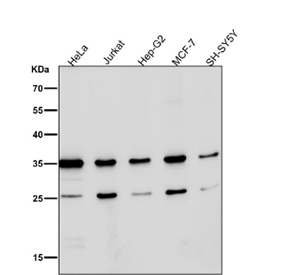
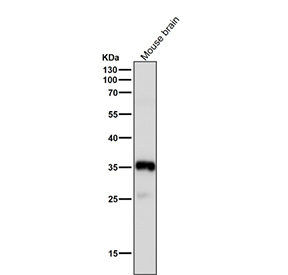
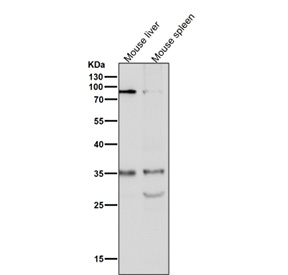
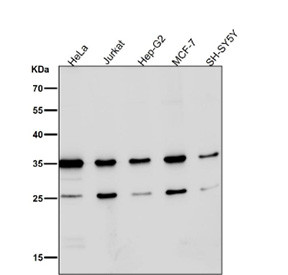
Rabbit IgG in phosphate buffered saline, pH 7.4, 150mM NaCl, 0.02% sodium azide and 50% glycerol, 0.4-0.5mg/ml BSA. Phospho-Nucleophosmin (Ser125) antibody detects Nucleophosmin when phosphorylated at serine 125, encoded by the NPM1 gene. Nucleophosmin is a multifunctional phosphoprotein that shuttles between the nucleolus, nucleus, and cytoplasm. It is involved in ribosome biogenesis, centrosome duplication, DNA repair, and regulation of tumor suppressors such as ARF and p53. Phosphorylation of Nucleophosmin at serine 125 plays a critical role in controlling its subcellular localization and activity, making Phospho-Nucleophosmin (Ser125) antibody a valuable reagent for studies of cell cycle progression, oncogenesis, and stress response.Nucleophosmin is abundant in the nucleolus, where it functions in ribosomal RNA processing and assembly of ribosomal subunits. Phosphorylation at serine 125 occurs during mitosis, and research with Phospho-Nucleophosmin (Ser125) antibody has revealed that this modification promotes centrosome separation and spindle formation. By regulating Nucleophosmin function, phosphorylation ensures faithful chromosome segregation and prevents aneuploidy. Disruption of this modification impairs mitotic progression and contributes to genomic instability, highlighting its importance in cell division control.NPM1 is also a key player in hematological malignancies. Mutations in NPM1, particularly frame-shift mutations in exon 12, are among the most frequent genetic alterations in acute myeloid leukemia. These mutations cause aberrant cytoplasmic localization of Nucleophosmin, altering its regulatory functions. Research using Phospho-Nucleophosmin (Ser125) antibody has shown that phosphorylation state influences localization and protein interactions, potentially modulating leukemogenesis. Furthermore, phosphorylation may interact with mutational effects, making it an area of interest in understanding leukemia biology and therapy.Beyond cancer, Nucleophosmin phosphorylation contributes to stress responses, DNA repair, and apoptosis regulation. Phospho-Nucleophosmin (Ser125) antibody has been used to demonstrate that cellular stress induces phosphorylation at this site, altering interactions with ARF and p53. These findings suggest a broader role for Nucleophosmin phosphorylation in tumor suppression and cell fate decisions. Since Nucleophosmin participates in chromatin remodeling, this modification may also influence transcription and epigenetic regulation.Phospho-Nucleophosmin (Ser125) antibody is widely applied in western blotting, immunofluorescence, and immunohistochemistry. Western blotting distinguishes phosphorylated from unmodified forms, while immunofluorescence visualizes dynamic localization changes during the cell cycle. Immunohistochemistry allows detection of phosphorylation patterns in tumor tissue, linking biochemical modification to disease phenotype. These experimental approaches provide insights into the regulation of Nucleophosmin in health and disease.By supplying validated Phospho-Nucleophosmin (Ser125) antibody reagents, NSJ Bioreagents supports research into cancer biology, mitosis, and stress response. Detection of Nucleophosmin phosphorylation at serine 125 provides a precise tool to explore how this critical protein coordinates cell cycle regulation and tumor suppression.
| Keywords: | Anti-phospho-NPM1, Anti-phospho-Numatrin, Anti-phospho-Nucleophosmin, Anti-phospho-Nucleolar protein NO38, Anti-phospho-Nucleolar phosphoprotein B23, Phospho-Nucleophosmin (Ser125) Antibody / NPM1 |
| Supplier: | NSJ Bioreagents |
| Supplier-Nr: | FY13010 |
Properties
| Application: | WB, IHC |
| Antibody Type: | Monoclonal |
| Clone: | 32N71 |
| Conjugate: | No |
| Host: | Rabbit |
| Species reactivity: | human, mouse, rat |
| Immunogen: | A synthesized peptide derived from human Phospho-Nucleophosmin (S125) |
| Format: | Affinity Purified |
Database Information
| KEGG ID : | K11276 | Matching products |
| UniProt ID : | P06748 | Matching products |
| Gene ID : | GeneID 4869 | Matching products |
Handling & Safety
| Storage: | -20°C |
| Shipping: | -20°C (International: -20°C) |
Caution
Our products are for laboratory research use only: Not for administration to humans!
Our products are for laboratory research use only: Not for administration to humans!
Information about the product reference will follow.
more
You will get a certificate here
Viewed