
Cookie preferences
This website uses cookies, which are necessary for the technical operation of the website and are always set. Other cookies, which increase the comfort when using this website, are used for direct advertising or to facilitate interaction with other websites and social networks, are only set with your consent.
Configuration
Technically required
These cookies are necessary for the basic functions of the shop.
"Allow all cookies" cookie
"Decline all cookies" cookie
CSRF token
Cookie preferences
Currency change
Customer-specific caching
FACT-Finder tracking
Individual prices
Selected shop
Session
Comfort functions
These cookies are used to make the shopping experience even more appealing, for example for the recognition of the visitor.
Note
Show the facebook fanpage in the right blod sidebar
Statistics & Tracking
Affiliate program
Conversion and usertracking via Google Tag Manager
Track device being used


| Item number | Size | Datasheet | Manual | SDS | Delivery time | Quantity | Price |
|---|---|---|---|---|---|---|---|
| NSJ-FY13404 | 100 µl | - | - |
3 - 10 business days* |
790.00€
|
If you have any questions, please use our Contact Form.
You can also order by e-mail: info@biomol.com
Larger quantity required? Request bulk
You can also order by e-mail: info@biomol.com
Larger quantity required? Request bulk
Rabbit IgG in phosphate buffered saline, pH 7.4, 150mM NaCl, 0.02% sodium azide and 50% glycerol,... more
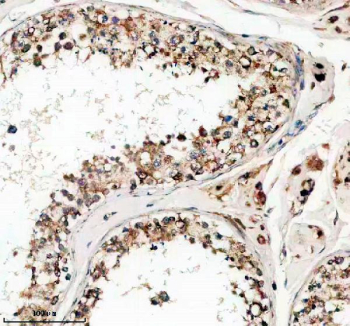
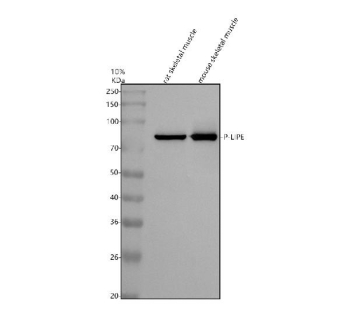
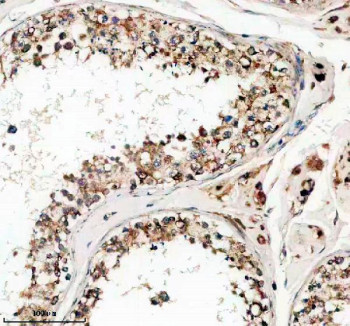
Product information "Anti-phospho-LIPE (pSer853) / Hormone-sensitive lipase / HSL, clone FDO-12"
Rabbit IgG in phosphate buffered saline, pH 7.4, 150mM NaCl, 0.02% sodium azide and 50% glycerol, 0.4-0.5mg/ml BSA. Phospho-LIPE (pSer853) antibody targets the phosphorylated form of Hormone-sensitive lipase (LIPE), also known as HSL, at serine 853, a well-characterized regulatory phosphorylation site associated with activation of lipolytic function. LIPE is a cytoplasmic neutral lipase that plays a central role in lipid mobilization by hydrolyzing triglycerides, diacylglycerols, and cholesteryl esters stored within lipid droplets. In metabolic cells, LIPE localizes primarily to the cytoplasm and lipid droplet surface, with phosphorylation-dependent activation in response to hormonal and signaling cues. Detection of phospho-LIPE provides insight into the activated, signal-responsive pool of HSL rather than total protein abundance.Functionally, phosphorylation of LIPE at serine 853 is linked to kinase-driven signaling pathways that regulate lipolysis during periods of increased energy demand. This modification promotes enzymatic activation and facilitates interaction with lipid droplets, enabling efficient release of free fatty acids. Hormonal stimulation, such as catecholamine signaling, enhances LIPE phosphorylation, while opposing pathways suppress phosphorylation and favor lipid storage. A Phospho-LIPE (pSer853) antibody supports studies examining dynamic regulation of lipolysis and metabolic signaling pathways.Phosphorylated LIPE plays an important role in adipocytes, skeletal muscle, and steroidogenic tissues, where controlled lipid mobilization is essential for energy production and biosynthetic processes. In adipose tissue, LIPE phosphorylation coordinates lipid breakdown during fasting or stress, while in muscle it contributes to fuel availability during energy demand. Monitoring phospho-LIPE levels enables assessment of pathway activation states rather than total enzyme expression, providing a functional readout of lipid metabolic regulation.From a biological and disease-relevance perspective, dysregulation of LIPE phosphorylation is associated with altered lipid handling, insulin resistance, and metabolic disease. Aberrant signaling that affects LIPE activation can lead to impaired fatty acid release or excessive lipid accumulation. Phospho-LIPE therefore represents a valuable marker for studying signaling pathways that control lipid metabolism, metabolic flexibility, and hormone-responsive energy balance.At the molecular level, LIPE is encoded by the LIPE gene and produces a cytoplasmic enzyme that migrates at approximately 80-90 kDa on SDS-PAGE under reducing conditions. Phosphorylation-dependent regulation of LIPE occurs in response to cellular metabolic state and upstream kinase activity. A Phospho-LIPE (pSer853) antibody supports research applications focused on lipid signaling, metabolic regulation, and post-translational control of hormone-sensitive lipase, with NSJ Bioreagents providing reagents intended for research use.
| Keywords: | Anti-phospho-LIPE, Anti-phospho-Retinyl ester hydrolase, Anti-phospho-Hormone-sensitive lipase, Anti-phospho-Monoacylglycerol lipase LIPE, Phospho-LIPE (pSer853) Antibody / Hormone-sensitive lipase / HSL |
| Supplier: | NSJ Bioreagents |
| Supplier-Nr: | FY13404 |
Properties
| Application: | WB, IHC |
| Antibody Type: | Monoclonal |
| Clone: | FDO-12 |
| Conjugate: | No |
| Host: | Rabbit |
| Species reactivity: | human, mouse, rat |
| Immunogen: | Synthesized peptide derived from human Phospho-Hormone-sensitive lipase (pS853) |
| Format: | Affinity Purified |
Database Information
| KEGG ID : | K07188 | Matching products |
| UniProt ID : | Q05469 | Matching products |
| Gene ID : | GeneID 3991 | Matching products |
Handling & Safety
| Storage: | -20°C |
| Shipping: | -20°C (International: -20°C) |
Caution
Our products are for laboratory research use only: Not for administration to humans!
Our products are for laboratory research use only: Not for administration to humans!
Information about the product reference will follow.
more
You will get a certificate here
Viewed