
Cookie preferences
This website uses cookies, which are necessary for the technical operation of the website and are always set. Other cookies, which increase the comfort when using this website, are used for direct advertising or to facilitate interaction with other websites and social networks, are only set with your consent.
Configuration
Technically required
These cookies are necessary for the basic functions of the shop.
"Allow all cookies" cookie
"Decline all cookies" cookie
CSRF token
Cookie preferences
Currency change
Customer-specific caching
FACT-Finder tracking
Individual prices
Selected shop
Session
Comfort functions
These cookies are used to make the shopping experience even more appealing, for example for the recognition of the visitor.
Note
Show the facebook fanpage in the right blod sidebar
Statistics & Tracking
Affiliate program
Conversion and usertracking via Google Tag Manager
Track device being used


| Item number | Size | Datasheet | Manual | SDS | Delivery time | Quantity | Price |
|---|---|---|---|---|---|---|---|
| NSJ-FY13239 | 100 µl | - | - |
3 - 10 business days* |
790.00€
|
If you have any questions, please use our Contact Form.
You can also order by e-mail: info@biomol.com
Larger quantity required? Request bulk
You can also order by e-mail: info@biomol.com
Larger quantity required? Request bulk
Rabbit IgG in phosphate buffered saline, pH 7.4, 150mM NaCl, 0.02% sodium azide and 50% glycerol,... more
Product information "Anti-phospho-Beta Arrestin 1 (Ser412) / ARRB1, clone 32A60"
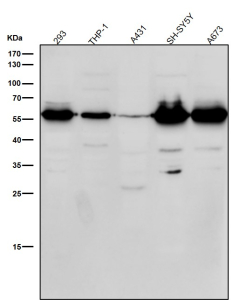
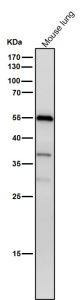
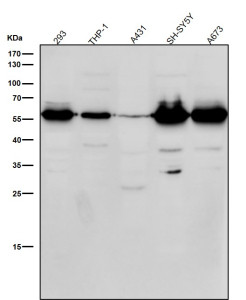
Rabbit IgG in phosphate buffered saline, pH 7.4, 150mM NaCl, 0.02% sodium azide and 50% glycerol, 0.4-0.5mg/ml BSA. Phospho-Beta Arrestin 1 (Ser412) antibody detects Beta arrestin 1 phosphorylated at serine 412, encoded by the ARRB1 gene. Beta arrestin 1 is a multifunctional adaptor protein best known for its role in G protein coupled receptor desensitization and internalization. Phosphorylation at serine 412 represents a key regulatory modification that influences receptor trafficking, signaling scaffolds, and cellular responses to extracellular stimuli. Phospho-Beta Arrestin 1 (Ser412) antibody provides a highly specific tool for dissecting the dynamic regulation of G protein coupled receptor signaling and arrestin mediated pathways.Beta arrestin 1 functions by binding activated, phosphorylated G protein coupled receptors, preventing further coupling to heterotrimeric G proteins while simultaneously recruiting clathrin and adaptor proteins to promote endocytosis. Research using Phospho-Beta Arrestin 1 (Ser412) antibody has demonstrated that phosphorylation at serine 412 modulates the strength and duration of this interaction, acting as a molecular switch between receptor desensitization and alternative signaling functions. This modification influences the balance between canonical and non canonical pathways initiated at the plasma membrane.Beyond receptor internalization, Beta arrestin 1 acts as a scaffold for signaling cascades including MAPK, AKT, and NF kappa B pathways. Studies with Phospho-Beta Arrestin 1 (Ser412) antibody have shown that phosphorylation at serine 412 alters scaffold assembly, thereby regulating downstream signaling specificity. This makes it an essential modification for determining cellular outcomes in response to hormones, neurotransmitters, and growth factors.Dysregulation of Beta arrestin 1 phosphorylation has been linked to disease. Research using Phospho-Beta Arrestin 1 (Ser412) antibody has revealed that altered phosphorylation patterns contribute to cardiovascular disease, neurological disorders, and cancer. In heart failure, aberrant phosphorylation disrupts receptor regulation, while in cancer, changes in Beta arrestin 1 signaling affect cell proliferation and metastasis. These observations underscore the importance of precise phosphorylation control in health and pathology.Phospho-Beta Arrestin 1 (Ser412) antibody is widely applied in western blotting, immunohistochemistry, and immunofluorescence. Western blotting confirms phosphorylation status, immunohistochemistry highlights tissue specific activation patterns, and immunofluorescence demonstrates subcellular localization of phosphorylated arrestin in endosomes and receptor complexes. These experimental approaches make the antibody indispensable for signal transduction research.By providing validated Phospho-Beta Arrestin 1 (Ser412) antibody reagents, NSJ Bioreagents supports research into receptor regulation, scaffold signaling, and disease mechanisms. Detection of phosphorylation at Ser412 provides precise insight into how Beta arrestin 1 controls G protein coupled receptor function.
| Keywords: | Anti-phospho-ARRB1, Anti-phospho-Arrestin beta-1, Anti-phospho-Beta-arrestin-1, Anti-phospho-Non-visual arrestin-2, Phospho-Beta Arrestin 1 (Ser412) Antibody / ARRB1 |
| Supplier: | NSJ Bioreagents |
| Supplier-Nr: | FY13239 |
Properties
| Application: | WB |
| Antibody Type: | Monoclonal |
| Clone: | 32A60 |
| Conjugate: | No |
| Host: | Rabbit |
| Species reactivity: | human |
| Immunogen: | A synthesized peptide derived from human Phospho-beta Arrestin 1 (S412) |
| Format: | Affinity Purified |
Database Information
| KEGG ID : | K04439 | Matching products |
| UniProt ID : | P49407 | Matching products |
| Gene ID : | GeneID 408 | Matching products |
Handling & Safety
| Storage: | -20°C |
| Shipping: | -20°C (International: -20°C) |
Caution
Our products are for laboratory research use only: Not for administration to humans!
Our products are for laboratory research use only: Not for administration to humans!
Information about the product reference will follow.
more
You will get a certificate here
Viewed