
Cookie preferences
This website uses cookies, which are necessary for the technical operation of the website and are always set. Other cookies, which increase the comfort when using this website, are used for direct advertising or to facilitate interaction with other websites and social networks, are only set with your consent.
Configuration
Technically required
These cookies are necessary for the basic functions of the shop.
"Allow all cookies" cookie
"Decline all cookies" cookie
CSRF token
Cookie preferences
Currency change
Customer-specific caching
FACT-Finder tracking
Individual prices
Selected shop
Session
Comfort functions
These cookies are used to make the shopping experience even more appealing, for example for the recognition of the visitor.
Note
Show the facebook fanpage in the right blod sidebar
Statistics & Tracking
Affiliate program
Conversion and usertracking via Google Tag Manager
Track device being used

| Item number | Size | Datasheet | Manual | SDS | Delivery time | Quantity | Price |
|---|---|---|---|---|---|---|---|
| NSJ-FY12844 | 100 µl | - | - |
3 - 10 business days* |
790.00€
|
If you have any questions, please use our Contact Form.
You can also order by e-mail: info@biomol.com
Larger quantity required? Request bulk
You can also order by e-mail: info@biomol.com
Larger quantity required? Request bulk
Rabbit IgG in phosphate buffered saline, pH 7.4, 150mM NaCl, 0.02% sodium azide and 50% glycerol,... more
Product information "Anti-phospho-AS160 (Thr642) / TBC1D4, clone 31T47"
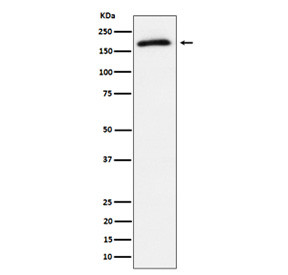
Rabbit IgG in phosphate buffered saline, pH 7.4, 150mM NaCl, 0.02% sodium azide and 50% glycerol, 0.4-0.5mg/ml BSA. Phospho-AS160 (Thr642) antibody detects TBC1 domain family member 4 when phosphorylated at threonine 642. This protein is encoded by the TBC1D4 gene and is commonly referred to as AS160, Akt substrate of 160 kDa, and insulin-regulated Rab GTPase-activating protein. TBC1D4 functions as a Rab GAP that regulates trafficking of GLUT4 vesicles in response to insulin signaling. Phosphorylation at Thr642 by Akt relieves its inhibitory GAP activity, allowing Rab GTPases to promote translocation of GLUT4 to the plasma membrane, a critical event in glucose uptake by adipocytes and muscle cells.Phospho-AS160 (Thr642) antibody is widely applied in metabolism, endocrinology, and diabetes research. Detecting phosphorylation at Thr642 provides a direct readout of insulin-stimulated Akt signaling and GLUT4 trafficking. This makes the antibody valuable for studies of insulin resistance, obesity, and type 2 diabetes. In addition, TBC1D4 is expressed in other tissues, linking it to energy homeostasis beyond classical insulin-responsive cells.Applications for Phospho-AS160 (Thr642) antibody include western blotting, immunohistochemistry, immunofluorescence, and ELISA. Western blot assays detect phosphorylation changes in response to insulin or exercise, immunohistochemistry maps expression in metabolic tissues, and immunofluorescence highlights vesicle trafficking events. These methods allow researchers to connect molecular signaling to physiological glucose uptake.Dysregulation of TBC1D4 phosphorylation is linked to insulin resistance and diabetes. Reduced phosphorylation impairs GLUT4 trafficking, while mutations in TBC1D4 cause severe postprandial hyperinsulinemia and muscle glycogen storage abnormalities. By applying Phospho-AS160 (Thr642) antibody, scientists can study both common and rare metabolic disorders.Beyond metabolism, TBC1D4 regulates vesicle trafficking in immune cells, neurons, and other systems. Phosphorylation-dependent regulation highlights its integration with Akt signaling in multiple contexts. NSJ Bioreagents provides Phospho-AS160 (Thr642) antibody with validated specificity, ensuring accurate detection of this phosphorylation event in insulin and trafficking research.
| Keywords: | Anti-phospho-TBC1D4, Anti-phospho-Akt substrate of 160 kDa, Anti-phospho-TBC1 domain family member 4, Phospho-AS160 (Thr642) Antibody / TBC1D4 |
| Supplier: | NSJ Bioreagents |
| Supplier-Nr: | FY12844 |
Properties
| Application: | WB |
| Antibody Type: | Monoclonal |
| Clone: | 31T47 |
| Conjugate: | No |
| Host: | Rabbit |
| Species reactivity: | human |
| Immunogen: | A synthesized peptide derived from human Phospho-AS160 (T642) |
| Format: | Purified |
Database Information
| KEGG ID : | K17902 | Matching products |
| UniProt ID : | O60343 | Matching products |
| Gene ID : | GeneID 9882 | Matching products |
Handling & Safety
| Storage: | -20°C |
| Shipping: | -20°C (International: -20°C) |
Caution
Our products are for laboratory research use only: Not for administration to humans!
Our products are for laboratory research use only: Not for administration to humans!
Information about the product reference will follow.
more
You will get a certificate here
Viewed