
Cookie preferences
This website uses cookies, which are necessary for the technical operation of the website and are always set. Other cookies, which increase the comfort when using this website, are used for direct advertising or to facilitate interaction with other websites and social networks, are only set with your consent.
Configuration
Technically required
These cookies are necessary for the basic functions of the shop.
"Allow all cookies" cookie
"Decline all cookies" cookie
CSRF token
Cookie preferences
Currency change
Customer-specific caching
FACT-Finder tracking
Individual prices
Selected shop
Session
Comfort functions
These cookies are used to make the shopping experience even more appealing, for example for the recognition of the visitor.
Note
Show the facebook fanpage in the right blod sidebar
Statistics & Tracking
Affiliate program
Conversion and usertracking via Google Tag Manager
Track device being used


| Item number | Size | Datasheet | Manual | SDS | Delivery time | Quantity | Price |
|---|---|---|---|---|---|---|---|
| NSJ-FY12183 | 100 µl | - | - |
3 - 10 business days* |
790.00€
|
If you have any questions, please use our Contact Form.
You can also order by e-mail: info@biomol.com
Larger quantity required? Request bulk
You can also order by e-mail: info@biomol.com
Larger quantity required? Request bulk
Rabbit IgG in phosphate buffered saline, pH 7.4, 150mM NaCl, 0.02% sodium azide and 50% glycerol,... more
Product information "Anti-phospho-AMPA Receptor 1 (Ser831), clone 32G40"
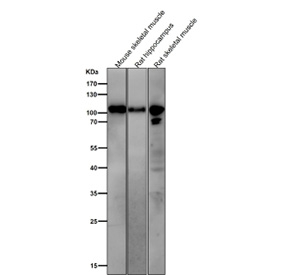
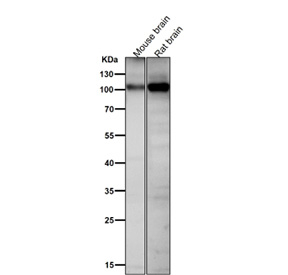
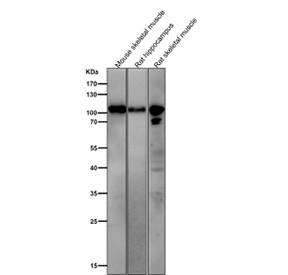
Rabbit IgG in phosphate buffered saline, pH 7.4, 150mM NaCl, 0.02% sodium azide and 50% glycerol, 0.4-0.5mg/ml BSA. Phospho-AMPA Receptor 1 (Ser831) antibody detects AMPA receptor subunit GluA1 when phosphorylated at serine 831, a modification critical for synaptic plasticity. AMPA receptors are glutamate-gated ion channels that mediate fast excitatory neurotransmission in the central nervous system. Phosphorylation of GluA1 at Ser831 by CaMKII or PKC increases channel conductance, strengthening synaptic transmission during processes such as long-term potentiation (LTP).Research using Phospho-AMPA Receptor 1 (Ser831) antibody has shown that this modification plays a key role in learning and memory. Ser831 phosphorylation enhances calcium permeability and receptor function, promoting LTP in hippocampal neurons. Disruption of this phosphorylation event impairs memory consolidation and cognitive performance in animal models. It is therefore a crucial target for studies of synaptic plasticity and higher-order brain function.Dysregulation of Ser831 phosphorylation has been implicated in neurodegenerative diseases, psychiatric disorders, and addiction. In Alzheimer's disease models, impaired AMPA receptor phosphorylation contributes to synaptic dysfunction and memory loss. Abnormal regulation of GluA1 phosphorylation has also been observed in schizophrenia and depression, linking it to disrupted glutamatergic signaling. In addiction research, Ser831 phosphorylation is modulated by repeated drug exposure, altering synaptic plasticity and reward circuitry.Antibodies against phospho-AMPA receptor 1 (Ser831) are validated for immunohistochemistry, immunofluorescence, and western blot. These reagents allow selective detection of the phosphorylated receptor, supporting studies of neuronal signaling, synaptic strength, and disease-related changes. Clone-based antibodies ensure specificity to the Ser831 site, avoiding cross-reactivity with unmodified AMPA receptors.NSJ Bioreagents offers this Phospho-AMPA Receptor 1 (Ser831) antibody for neuroscience research focused on learning, memory, and synaptic disorders.
| Keywords: | Anti-phospho-GRIA1, Anti-phospho-GluR-A, Anti-phospho-GluR-K1, Anti-phospho-Glutamate receptor 1, Anti-phospho-AMPA-selective glutamate receptor 1, Anti-phospho-Glutamate receptor ionotropic, AMPA 1, Phospho-AMPA Receptor 1 (Ser831) Antibody |
| Supplier: | NSJ Bioreagents |
| Supplier-Nr: | FY12183 |
Properties
| Application: | WB |
| Antibody Type: | Monoclonal |
| Clone: | 32G40 |
| Conjugate: | No |
| Host: | Rabbit |
| Species reactivity: | human, mouse, rat |
| Immunogen: | A synthesized peptide derived from human Phospho-AMPA Receptor 1 (S831) |
| Format: | Purified |
Database Information
| KEGG ID : | K05197 | Matching products |
| UniProt ID : | P42261 | Matching products |
| Gene ID : | GeneID 2890 | Matching products |
Handling & Safety
| Storage: | -20°C |
| Shipping: | -20°C (International: -20°C) |
Caution
Our products are for laboratory research use only: Not for administration to humans!
Our products are for laboratory research use only: Not for administration to humans!
Information about the product reference will follow.
more
You will get a certificate here
Viewed