
This website uses cookies, which are necessary for the technical operation of the website and are always set. Other cookies, which increase the comfort when using this website, are used for direct advertising or to facilitate interaction with other websites and social networks, are only set with your consent.
Configuration
Technically required
These cookies are necessary for the basic functions of the shop.
"Allow all cookies" cookie
"Decline all cookies" cookie
CSRF token
Cookie preferences
Currency change
Customer-specific caching
FACT-Finder tracking
Individual prices
Selected shop
Session
Comfort functions
These cookies are used to make the shopping experience even more appealing, for example for the recognition of the visitor.
Note
Show the facebook fanpage in the right blod sidebar
Statistics & Tracking
Affiliate program
Conversion and usertracking via Google Tag Manager
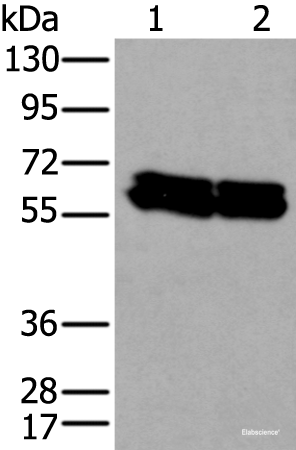
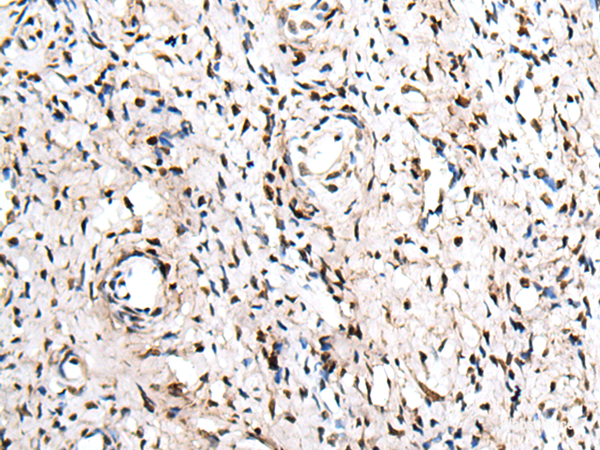
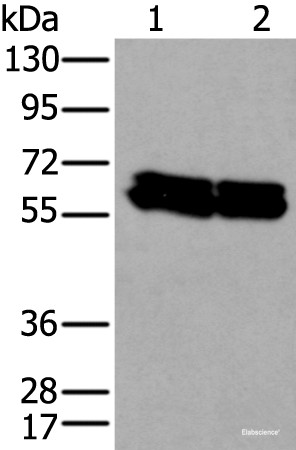
Zinc-finger proteins contain DNA-binding domains and have a wide variety of functions, most of which encompass some form of transcriptional activation or repression. The majority of zinc-finger proteins contain a Krüppel-type DNA binding domain and a KRAB domain, which is thought to interact with KAP1, thereby recruiting histone modifying proteins. ZNF207 (zinc finger protein 207) is a 478 amino acid protein that localizes to the nucleus and contains two C2H2-type zinc fingers. Expressed ubiquitously, ZNF207 may function as a transcription factor. Three isoforms of ZNF207 are expressed due to alternative splicing events. Protein function: Kinetochore- and microtubule-binding protein that plays a key role in spindle assembly (PubMed:24462186, PubMed:24462187, PubMed:26388440). ZNF207/BuGZ is mainly composed of disordered low- complexity regions and undergoes phase transition or coacervation to form temperature-dependent liquid droplets. Coacervation promotes microtubule bundling and concentrates tubulin, promoting microtubule polymerization and assembly of spindle and spindle matrix by concentrating its building blocks (PubMed:26388440). Also acts as a regulator of mitotic chromosome alignment by mediating the stability and kinetochore loading of BUB3 (PubMed:24462186, PubMed:24462187). Mechanisms by which BUB3 is protected are unclear: according to a first report, ZNF207/BuGZ may act by blocking ubiquitination and proteasomal degradation of BUB3 (PubMed:24462186). According to another report, the stabilization is independent of the proteasome (PubMed:24462187). [The UniProt Consortium]
Keywords:
Anti-BuGZ, Anti-hBuGZ, Anti-Zinc finger protein 207, Anti-BUB3-interacting and GLEBS motif-containing protein ZNF207, ZNF207 Polyclonal Antibody
This website uses cookies, which are necessary for the technical operation of the website and are always set. Other cookies, which increase the usability of this website, serve for direct advertising or simplify interaction with other websites and social networks, will only be used with your consent.
More information