
This website uses cookies, which are necessary for the technical operation of the website and are always set. Other cookies, which increase the comfort when using this website, are used for direct advertising or to facilitate interaction with other websites and social networks, are only set with your consent.
Configuration
Technically required
These cookies are necessary for the basic functions of the shop.
"Allow all cookies" cookie
"Decline all cookies" cookie
CSRF token
Cookie preferences
Currency change
Customer-specific caching
FACT-Finder tracking
Individual prices
Selected shop
Session
Comfort functions
These cookies are used to make the shopping experience even more appealing, for example for the recognition of the visitor.
Note
Show the facebook fanpage in the right blod sidebar
Statistics & Tracking
Affiliate program
Conversion and usertracking via Google Tag Manager
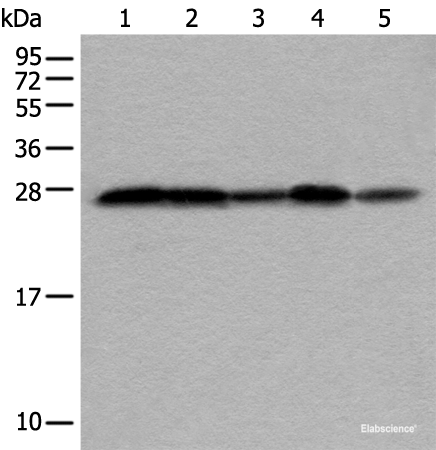
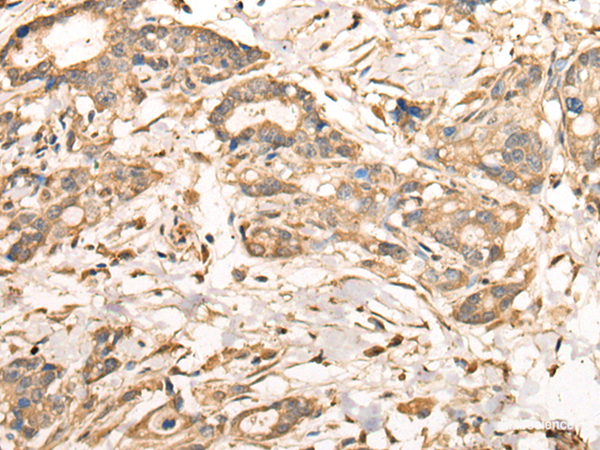
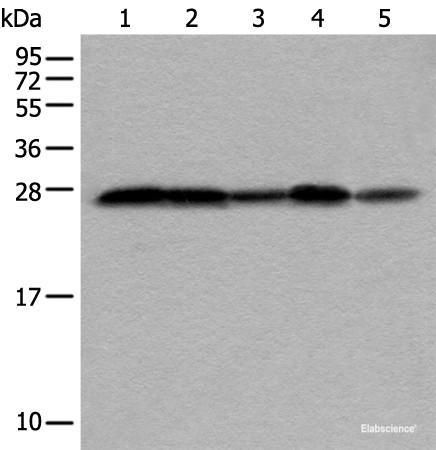
The protein encoded by this gene is a member of the family of soluble N-ethylmaleimide-sensitive fusion protein-attachment protein receptors (SNAREs) that function in intracellular trafficking. This family member is involved in vesicular transport between endosomes and the trans-Golgi network. It is a vesicle-associated SNARE (v-SNARE) that interacts with target membrane SNAREs (t-SNAREs). Polymorphisms in this gene have been associated with binocular function, and also with susceptibility to colorectal and lung cancers. A recurrent rearrangement has been found between this gene and the transcription factor 7-like 2 (TCF7L2) gene in colorectal cancers. Alternative splicing results in multiple transcript variants. Protein function: V-SNARE that mediates vesicle transport pathways through interactions with t-SNAREs on the target membrane. These interactions are proposed to mediate aspects of the specificity of vesicle trafficking and to promote fusion of the lipid bilayers. Involved in vesicular transport from the late endosomes to the trans-Golgi network. Along with VAMP7, involved in an non-conventional RAB1-dependent traffic route to the cell surface used by KCNIP1 and KCND2. May be involved in increased cytokine secretion associated with cellular senescence. [The UniProt Consortium]
Keywords:
Anti-VTI1A, Anti-Vti1-rp2, Anti-Vesicle transport v-SNARE protein Vti1-like 2, Anti-Vesicle transport through interaction with t-SNAREs homolog 1A, VTI1A Polyclonal Antibody
This website uses cookies, which are necessary for the technical operation of the website and are always set. Other cookies, which increase the usability of this website, serve for direct advertising or simplify interaction with other websites and social networks, will only be used with your consent.
More information