
Cookie preferences
This website uses cookies, which are necessary for the technical operation of the website and are always set. Other cookies, which increase the comfort when using this website, are used for direct advertising or to facilitate interaction with other websites and social networks, are only set with your consent.
Configuration
Technically required
These cookies are necessary for the basic functions of the shop.
"Allow all cookies" cookie
"Decline all cookies" cookie
CSRF token
Cookie preferences
Currency change
Customer-specific caching
FACT-Finder tracking
Individual prices
Selected shop
Session
Comfort functions
These cookies are used to make the shopping experience even more appealing, for example for the recognition of the visitor.
Note
Show the facebook fanpage in the right blod sidebar
Statistics & Tracking
Affiliate program
Conversion and usertracking via Google Tag Manager
Track device being used



| Item number | Size | Datasheet | Manual | SDS | Delivery time | Quantity | Price |
|---|---|---|---|---|---|---|---|
| NSJ-V6015-20UG | 20 µg | - | - |
7 - 12 business days* |
375.00€
|
||
| NSJ-V6015-100UG | 100 µg | - | - |
7 - 12 business days* |
810.00€
|
If you have any questions, please use our Contact Form.
You can also order by e-mail: info@biomol.com
Larger quantity required? Request bulk
You can also order by e-mail: info@biomol.com
Larger quantity required? Request bulk
0.2 mg/ml in 1X PBS with 0.05% BSA, 0.05% sodium azide. UBB antibody recognizes Ubiquitin, a... more
Product information "Anti-Ubiquitin, clone rFPM1"
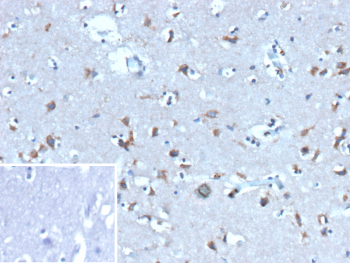
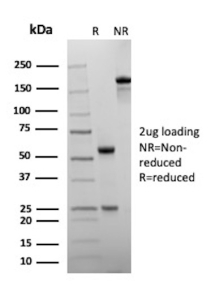
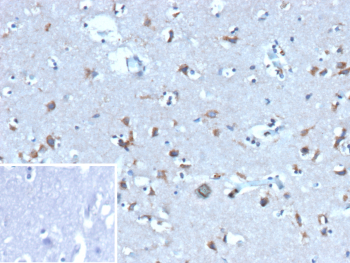
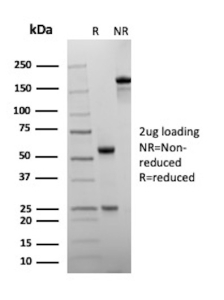
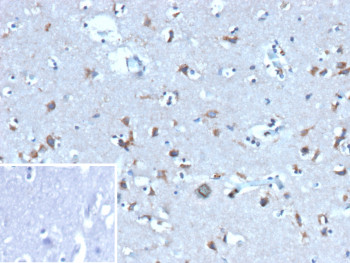
0.2 mg/ml in 1X PBS with 0.05% BSA, 0.05% sodium azide. UBB antibody recognizes Ubiquitin, a highly conserved regulatory protein encoded by the UBB gene and other ubiquitin precursor genes that is essential for intracellular protein homeostasis. Ubiquitin is a 76 amino acid polypeptide that becomes covalently attached to substrate proteins through an enzymatic cascade involving E1 activating enzymes, E2 conjugating enzymes, and E3 ligases. This post translational modification, termed ubiquitination, controls protein degradation, cellular signaling, trafficking, and stress responses.Ubiquitin functions through the formation of mono ubiquitin modifications or polyubiquitin chains. Polyubiquitin chains linked through lysine 48 commonly target proteins for degradation by the 26S proteasome, ensuring removal of misfolded or damaged proteins and regulating turnover of key cell cycle and signaling proteins. In contrast, alternative linkages such as lysine 63 chains participate in non degradative signaling pathways including DNA damage repair, inflammatory signaling, and receptor internalization. Through these structurally distinct chain types, Ubiquitin acts as a versatile modifier that influences numerous cellular processes.The UBB gene encodes polyubiquitin precursor proteins that are processed to generate functional ubiquitin monomers. Because ubiquitin mediated regulation is fundamental to nearly all cell types, Ubiquitin is broadly expressed in normal tissues. Disruption of ubiquitin pathways has been implicated in neurodegenerative diseases characterized by accumulation of ubiquitinated protein aggregates, as well as in cancer, where altered ubiquitin dependent degradation of tumor suppressors and oncogenic proteins contributes to malignant progression.Ubiquitin localizes to both the cytoplasm and nucleus, reflecting its involvement in proteasomal degradation, chromatin regulation, and transcriptional control. UBB antibody can detect free ubiquitin and ubiquitin conjugated proteins depending on experimental conditions. The recombinant mouse monoclonal antibody clone rFPM1 is designed to detect Ubiquitin expression in research applications focused on proteasome biology, protein turnover, cellular stress responses, and ubiquitin signaling pathways. As a recombinant monoclonal antibody, clone rFPM1 supports consistent evaluation of UBB associated ubiquitin protein in diverse biological samples.
| Keywords: | Anti-UBB, Anti-Polyubiquitin-B, Ubiquitin Antibody |
| Supplier: | NSJ Bioreagents |
| Supplier-Nr: | V6015 |
Properties
| Application: | IHC |
| Antibody Type: | Monoclonal |
| Clone: | rFPM1 |
| Conjugate: | No |
| Host: | Mouse |
| Species reactivity: | human |
| Immunogen: | Ubiquitin conjugated with glutaraldehyde crosslinked to keyhole limpet hemocyanin (KLH) |
| Format: | Purified |
Database Information
| KEGG ID : | K04551 | Matching products |
| UniProt ID : | P0CG47 | Matching products |
| Gene ID : | GeneID 7314 | Matching products |
Handling & Safety
| Storage: | -20°C |
| Shipping: | -20°C (International: -20°C) |
Caution
Our products are for laboratory research use only: Not for administration to humans!
Our products are for laboratory research use only: Not for administration to humans!
Information about the product reference will follow.
more
You will get a certificate here
Viewed