
Cookie preferences
This website uses cookies, which are necessary for the technical operation of the website and are always set. Other cookies, which increase the comfort when using this website, are used for direct advertising or to facilitate interaction with other websites and social networks, are only set with your consent.
Configuration
Technically required
These cookies are necessary for the basic functions of the shop.
"Allow all cookies" cookie
"Decline all cookies" cookie
CSRF token
Cookie preferences
Currency change
Customer-specific caching
FACT-Finder tracking
Individual prices
Selected shop
Session
Comfort functions
These cookies are used to make the shopping experience even more appealing, for example for the recognition of the visitor.
Note
Show the facebook fanpage in the right blod sidebar
Statistics & Tracking
Affiliate program
Conversion and usertracking via Google Tag Manager
Track device being used



| Item number | Size | Datasheet | Manual | SDS | Delivery time | Quantity | Price |
|---|---|---|---|---|---|---|---|
| NSJ-FY13200 | 100 µg | - | - |
7 - 12 business days* |
790.00€
|
If you have any questions, please use our Contact Form.
You can also order by e-mail: info@biomol.com
Larger quantity required? Request bulk
You can also order by e-mail: info@biomol.com
Larger quantity required? Request bulk
Adding 0.2 ml of distilled water will yield a concentration of 500 ug/ml. TYRP1 antibody detects... more
Product information "Anti-TYRP1 / Tyrosinase-related protein 1"
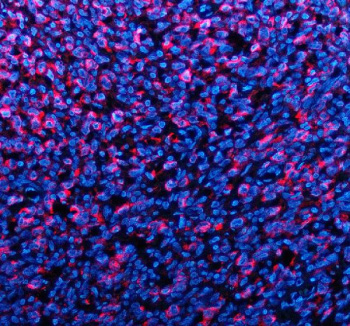
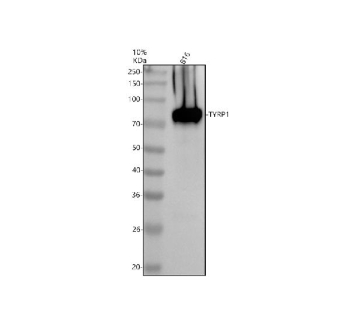
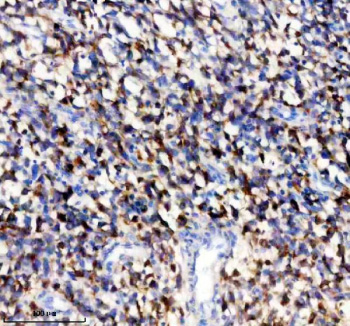
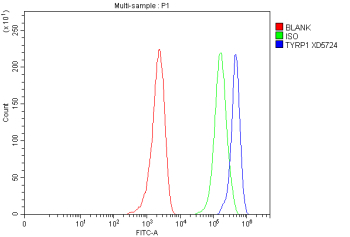
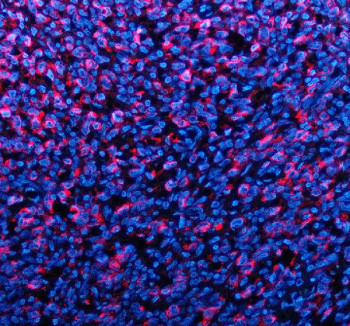
Adding 0.2 ml of distilled water will yield a concentration of 500 ug/ml. TYRP1 antibody detects Tyrosinase-related protein 1, a melanogenic enzyme that participates in the biosynthesis of melanin within pigment-producing cells. The UniProt recommended name is Tyrosinase-related protein 1 (TYRP1, TRP1). This enzyme functions in the melanosome maturation process, catalyzing oxidation reactions that determine the type and intensity of pigmentation in skin, hair, and eyes. TYRP1 is one of three core melanogenic enzymes, working in coordination with tyrosinase (TYR) and dopachrome tautomerase (DCT).Functionally, TYRP1 antibody identifies a 537-amino-acid type I transmembrane glycoprotein localized to melanosomal membranes. TYRP1 contributes to the oxidative conversion of 5,6-dihydroxyindole-2-carboxylic acid (DHICA) during eumelanin synthesis and stabilizes the activity of tyrosinase through protein-protein interactions. It plays a central role in regulating pigmentation intensity, melanosome biogenesis, and melanocyte survival. In addition, TYRP1 acts as an antioxidant enzyme, protecting pigment cells from oxidative stress generated during melanin production.The TYRP1 gene is located on chromosome 9p23 and is specifically expressed in melanocytes and retinal pigment epithelial cells. Its expression is tightly regulated by the microphthalmia-associated transcription factor (MITF), which coordinates the transcriptional program of melanogenesis. TYRP1 expression levels and genetic polymorphisms contribute to pigment variation among populations and species.Pathologically, mutations in TYRP1 cause oculocutaneous albinism type 3 (OCA3), characterized by reduced pigmentation and visual abnormalities. Altered TYRP1 expression has also been associated with melanoma progression, where it influences tumor cell differentiation and immune recognition. Research using TYRP1 antibody supports studies in pigmentation biology, melanosome formation, and melanoma immunology.TYRP1 antibody is validated for western blotting, immunohistochemistry, and immunofluorescence to detect melanosomal proteins. NSJ Bioreagents provides TYRP1 antibody reagents optimized for pigment biology, cell differentiation, and cancer research applications.Structurally, Tyrosinase-related protein 1 contains a luminal catalytic domain with two copper-binding sites and multiple glycosylation motifs that ensure enzymatic stability and trafficking. Its C-terminal transmembrane region anchors it to melanosomal membranes, while its N-terminal signal sequence directs localization to the secretory pathway. This antibody enables investigation of TYRP1's role in melanin biosynthesis, pigment cell regulation, and disease mechanisms affecting coloration.
| Keywords: | Anti-TYRP1, Anti-Catalase B, Anti-Glycoprotein 75, Anti-Melanoma antigen gp75, Anti-Tyrosinase-related protein 1, Anti-5,6-dihydroxyindole-2-carboxylic acid oxidase, TYRP1 Antibody / Tyrosinase-related protein 1 |
| Supplier: | NSJ Bioreagents |
| Supplier-Nr: | FY13200 |
Properties
| Application: | WB, IHC, IF, FC, ELISA |
| Antibody Type: | Polyclonal |
| Conjugate: | No |
| Host: | Rabbit |
| Species reactivity: | human, mouse, rat |
| Immunogen: | E.coli-derived human TYRP1 recombinant protein (Position: R131-V537) |
| Format: | Purified |
Database Information
| KEGG ID : | K00506 | Matching products |
| UniProt ID : | P17643 | Matching products |
| Gene ID : | GeneID 7306 | Matching products |
Handling & Safety
| Storage: | +4°C |
| Shipping: | +4°C (International: +4°C) |
Caution
Our products are for laboratory research use only: Not for administration to humans!
Our products are for laboratory research use only: Not for administration to humans!
Information about the product reference will follow.
more
You will get a certificate here
Viewed