
Cookie preferences
This website uses cookies, which are necessary for the technical operation of the website and are always set. Other cookies, which increase the comfort when using this website, are used for direct advertising or to facilitate interaction with other websites and social networks, are only set with your consent.
Configuration
Technically required
These cookies are necessary for the basic functions of the shop.
"Allow all cookies" cookie
"Decline all cookies" cookie
CSRF token
Cookie preferences
Currency change
Customer-specific caching
FACT-Finder tracking
Individual prices
Selected shop
Session
Comfort functions
These cookies are used to make the shopping experience even more appealing, for example for the recognition of the visitor.
Note
Show the facebook fanpage in the right blod sidebar
Statistics & Tracking
Affiliate program
Conversion and usertracking via Google Tag Manager
Track device being used

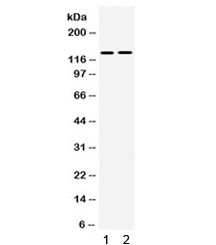
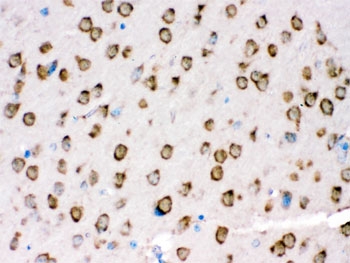
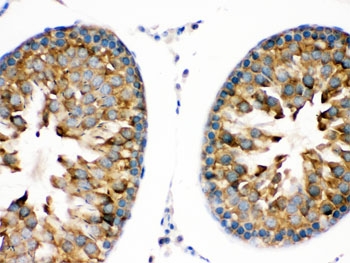
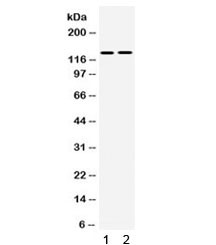


| Item number | Size | Datasheet | Manual | SDS | Delivery time | Quantity | Price |
|---|---|---|---|---|---|---|---|
| NSJ-R32340 | 100 µg | - | - |
3 - 10 business days* |
790.00€
|
If you have any questions, please use our Contact Form.
You can also order by e-mail: info@biomol.com
Larger quantity required? Request bulk
You can also order by e-mail: info@biomol.com
Larger quantity required? Request bulk
0.5mg/ml if reconstituted with 0.2ml sterile DI water. Transient receptor potential cation... more
Product information "Anti-TRPM5"
0.5mg/ml if reconstituted with 0.2ml sterile DI water. Transient receptor potential cation channel subfamily M member 5 (TRPM5) is a protein that in humans is encoded by the TRPM5 gene. This gene encodes a member of the transient receptor potential (TRP) protein family, which is a diverse group of proteins with structural features typical of ion channels. This protein plays an important role in taste transduction, and has characteristics of a calcium-activated, non-selective cation channel that carries Na+, K+, and Cs+ ions equally well, but not Ca(2+) ions. It is activated by lower concentrations of intracellular Ca(2+), and inhibited by higher concentrations. It is also a highly temperature-sensitive, heat activated channel showing a steep increase of inward currents at temperatures between 15 and 35 degrees Celsius. This gene is located within the Beckwith-Wiedemann syndrome critical region-1 on chromosome 11p15.5, and has been shown to be imprinted, with exclusive expression from the paternal allele. Protein function: Voltage-modulated Ca(2+)-activated, monovalent cation channel (VCAM) that mediates a transient membrane depolarization and plays a central role in taste transduction. Monovalent- specific, non-selective cation channel that mediates the transport of Na(+), K(+) and Cs(+) ions equally well. Activated directly by increases in intracellular Ca(2+), but is impermeable to it. Gating is voltage-dependent and displays rapid activation and deactivation kinetics upon channel stimulation even during sustained elevations in Ca(2+). Also activated by a fast intracellular Ca(2+) increase in response to inositol 1,4,5- triphosphate-producing receptor agonists. The channel is blocked by extracellular acidification. External acidification has 2 effects, a fast reversible block of the current and a slower irreversible enhancement of current inactivation. Is a highly temperature-sensitive, heat activated channel showing a steep increase of inward currents at temperatures between 15 and 35 degrees Celsius. Heat activation is due to a shift of the voltage- dependent activation curve to negative potentials. Activated by arachidonic acid in vitro. May be involved in perception of bitter, sweet and umami tastes. May also be involved in sensing semiochemicals. [The UniProt Consortium]
| Keywords: | Anti-LTrpC5, Anti-LTrpC-5, Anti-MLSN1- and TRP-related gene 1 protein, Anti-Long transient receptor potential channel 5, Anti-Transient receptor potential cation channel subfamily M member 5, TRPM5 Antibody |
| Supplier: | NSJ Bioreagents |
| Supplier-Nr: | R32340 |
Properties
| Application: | WB, IHC (paraffin) |
| Antibody Type: | Polyclonal |
| Conjugate: | No |
| Host: | Rabbit |
| Species reactivity: | human, mouse, rat |
| Immunogen: | Amino acids 1021-1108 of human TRPM5 were used as the immunogen for the TRPM5 antibody. |
| Format: | Purified |
Database Information
| KEGG ID : | K04980 | Matching products |
| UniProt ID : | Q9NZQ8 | Matching products |
| Gene ID : | GeneID 29850 | Matching products |
Handling & Safety
| Storage: | -20°C |
| Shipping: | -20°C (International: -20°C) |
Caution
Our products are for laboratory research use only: Not for administration to humans!
Our products are for laboratory research use only: Not for administration to humans!
Information about the product reference will follow.
more
You will get a certificate here


Viewed