
Cookie preferences
This website uses cookies, which are necessary for the technical operation of the website and are always set. Other cookies, which increase the comfort when using this website, are used for direct advertising or to facilitate interaction with other websites and social networks, are only set with your consent.
Configuration
Technically required
These cookies are necessary for the basic functions of the shop.
"Allow all cookies" cookie
"Decline all cookies" cookie
CSRF token
Cookie preferences
Currency change
Customer-specific caching
FACT-Finder tracking
Individual prices
Selected shop
Session
Comfort functions
These cookies are used to make the shopping experience even more appealing, for example for the recognition of the visitor.
Note
Show the facebook fanpage in the right blod sidebar
Statistics & Tracking
Affiliate program
Conversion and usertracking via Google Tag Manager
Track device being used

| Item number | Size | Datasheet | Manual | SDS | Delivery time | Quantity | Price |
|---|---|---|---|---|---|---|---|
| NSJ-FY12974 | 100 µl | - | - |
7 - 12 business days* |
790.00€
|
If you have any questions, please use our Contact Form.
You can also order by e-mail: info@biomol.com
Larger quantity required? Request bulk
You can also order by e-mail: info@biomol.com
Larger quantity required? Request bulk
Rabbit IgG in phosphate buffered saline, pH 7.4, 150mM NaCl, 0.02% sodium azide and 50% glycerol,... more
Product information "Anti-TRAIL R3 / DcR1, clone 31T28"
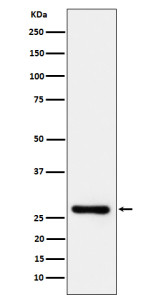
Rabbit IgG in phosphate buffered saline, pH 7.4, 150mM NaCl, 0.02% sodium azide and 50% glycerol, 0.4-0.5mg/ml BSA. TRAIL R3 antibody detects Decoy receptor 1, encoded by the TNFRSF10C gene. This protein is also referred to as TRAIL receptor 3 and DcR1, and it belongs to the tumor necrosis factor receptor superfamily. Unlike signaling TRAIL receptors, DcR1 lacks a functional cytoplasmic death domain and therefore does not induce apoptosis. Instead, it acts as a decoy receptor by binding TRAIL (tumor necrosis factor related apoptosis inducing ligand) and preventing it from activating apoptotic pathways through receptors such as TRAIL R1 and TRAIL R2. TRAIL R3 antibody provides a tool for researchers to investigate how apoptosis is regulated in normal tissues and tumors.Decoy receptor 1 is expressed in many normal tissues, particularly in the gastrointestinal tract, lungs, and liver, where it may help protect against inappropriate TRAIL mediated apoptosis. Studies using TRAIL R3 antibody have shown that its presence prevents excessive cell death, preserving tissue integrity under inflammatory conditions. In immune regulation, DcR1 may act as a safeguard, balancing the cytotoxic effects of TRAIL expressing immune cells with the need to maintain healthy tissue survival.In cancer biology, expression of Decoy receptor 1 has been reported in multiple tumor types. By competing for TRAIL binding, DcR1 enables malignant cells to resist TRAIL induced apoptosis, thereby promoting survival. Research with TRAIL R3 antibody has demonstrated that tumors expressing high levels of DcR1 show decreased sensitivity to TRAIL based therapies. This has made TNFRSF10C a focus of interest in understanding resistance mechanisms to immunotherapy and targeted apoptosis inducing drugs.TRAIL R3 antibody is useful in western blotting, immunohistochemistry, and flow cytometry. Western blotting confirms expression in cell lines and tissues, while immunohistochemistry demonstrates distribution across normal and cancerous tissues. Flow cytometry with TRAIL R3 antibody allows analysis of surface expression on live cells, aiding in functional studies of TRAIL signaling. These applications provide insights into how DcR1 balances death receptor signaling in health and disease.By providing validated TRAIL R3 antibody reagents, NSJ Bioreagents supports research into apoptosis, immune regulation, and cancer therapy resistance. Detecting Decoy receptor 1 enables researchers to explore mechanisms of cell survival, tumor evasion, and therapeutic response.
| Keywords: | Anti-TNFRSF10C, Anti-Decoy receptor 1, Anti-Lymphocyte inhibitor of TRAIL, Anti-Decoy TRAIL receptor without death domain, Anti-Antagonist decoy receptor for TRAIL/Apo-2L, Anti-TRAIL receptor without an intracellular domain, Anti-TNF-related apoptosis-ind |
| Supplier: | NSJ Bioreagents |
| Supplier-Nr: | FY12974 |
Properties
| Application: | WB, ICC, IF |
| Antibody Type: | Monoclonal |
| Clone: | 31T28 |
| Conjugate: | No |
| Host: | Rabbit |
| Species reactivity: | human, mouse, rat |
| Immunogen: | A synthesized peptide derived from human DcR1 / CD263 |
| Format: | Affinity Purified |
Database Information
| KEGG ID : | K22701 | Matching products |
| UniProt ID : | O14798 | Matching products |
| Gene ID : | GeneID 8794 | Matching products |
Handling & Safety
| Storage: | -20°C |
| Shipping: | -20°C (International: -20°C) |
Caution
Our products are for laboratory research use only: Not for administration to humans!
Our products are for laboratory research use only: Not for administration to humans!
Information about the product reference will follow.
more
You will get a certificate here
Viewed