
This website uses cookies, which are necessary for the technical operation of the website and are always set. Other cookies, which increase the comfort when using this website, are used for direct advertising or to facilitate interaction with other websites and social networks, are only set with your consent.
Configuration
Technically required
These cookies are necessary for the basic functions of the shop.
"Allow all cookies" cookie
"Decline all cookies" cookie
CSRF token
Cookie preferences
Currency change
Customer-specific caching
FACT-Finder tracking
Individual prices
Selected shop
Session
Comfort functions
These cookies are used to make the shopping experience even more appealing, for example for the recognition of the visitor.
Note
Show the facebook fanpage in the right blod sidebar
Statistics & Tracking
Affiliate program
Conversion and usertracking via Google Tag Manager
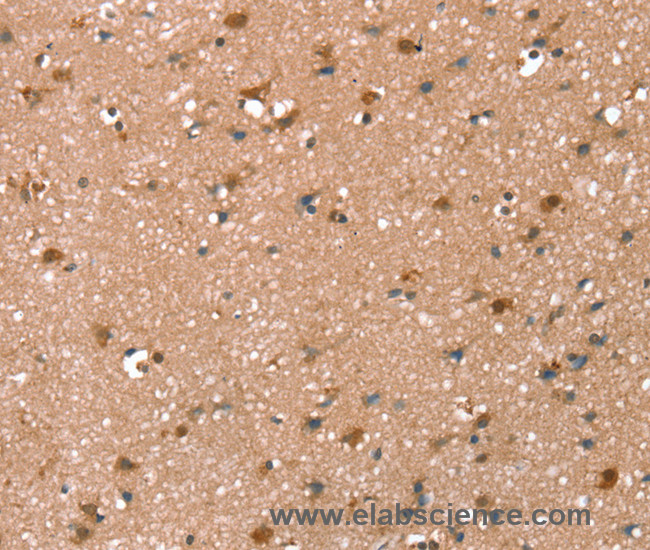
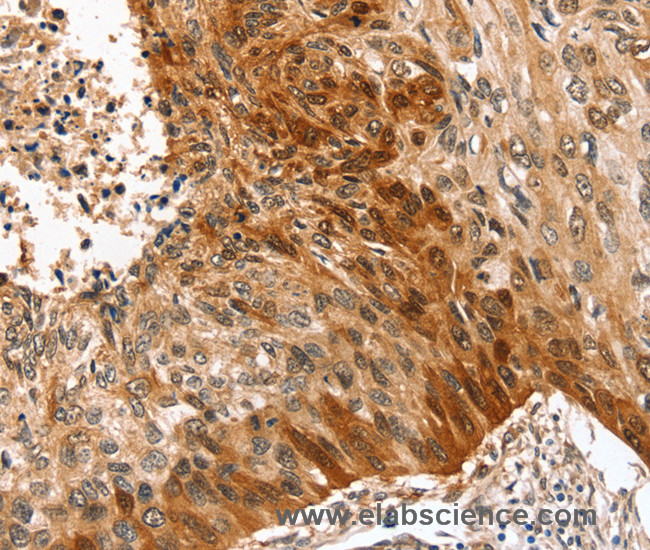
Synaptopodin-2 is a protein that in humans is encoded by the SYNPO2 gene. Has an actin-binding and actin-bundling activity. Synaptopodin is a proline-rich, actin-associated protein expressed in mature dendritic spines and renal podocytes. Synaptopodin appears to play a role in the actin-based plasticity of spines by linking actin to the spine apparatus. Protein function: Has an actin-binding and actin-bundling activity. Can induce the formation of F-actin networks in an isoform-specific manner (PubMed:24005909, PubMed:23225103). At the sarcomeric Z lines is proposed to act as adapter protein that links nascent myofibers to the sarcolemma via ZYX and may play a role in early assembly and stabilization of the Z lines. Involved in autophagosome formation. May play a role in chaperone-assisted selective autophagy (CASA) involved in Z lines maintenance in striated muscle under mechanical tension, may link the client- processing CASA chaperone machinery to a membrane-tethering and fusion complex providing autophagosome membranes. Involved in regulation of cell migration (PubMed:22915763, PubMed:25883213). May be a tumor suppressor (PubMed:16885336). [The UniProt Consortium]
This website uses cookies, which are necessary for the technical operation of the website and are always set. Other cookies, which increase the usability of this website, serve for direct advertising or simplify interaction with other websites and social networks, will only be used with your consent.
More information
