
Cookie preferences
This website uses cookies, which are necessary for the technical operation of the website and are always set. Other cookies, which increase the comfort when using this website, are used for direct advertising or to facilitate interaction with other websites and social networks, are only set with your consent.
Configuration
Technically required
These cookies are necessary for the basic functions of the shop.
"Allow all cookies" cookie
"Decline all cookies" cookie
CSRF token
Cookie preferences
Currency change
Customer-specific caching
FACT-Finder tracking
Individual prices
Selected shop
Session
Comfort functions
These cookies are used to make the shopping experience even more appealing, for example for the recognition of the visitor.
Note
Show the facebook fanpage in the right blod sidebar
Statistics & Tracking
Affiliate program
Conversion and usertracking via Google Tag Manager
Track device being used



| Item number | Size | Datasheet | Manual | SDS | Delivery time | Quantity | Price |
|---|---|---|---|---|---|---|---|
| NSJ-FY13399 | 100 µg | - | - |
3 - 10 business days* |
790.00€
|
If you have any questions, please use our Contact Form.
You can also order by e-mail: info@biomol.com
Larger quantity required? Request bulk
You can also order by e-mail: info@biomol.com
Larger quantity required? Request bulk
Adding 0.2 ml of distilled water will yield a concentration of 500 ug/ml. SRP72 antibody... more
Product information "Anti-SRP72 / Signal recognition particle 72 kDa protein"
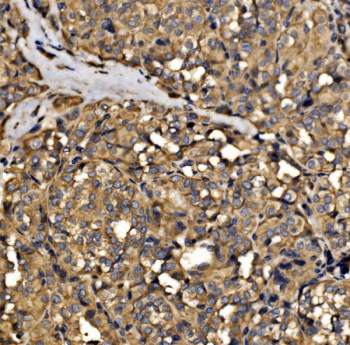
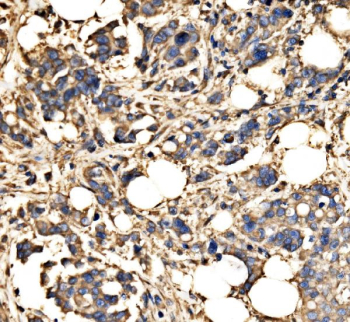
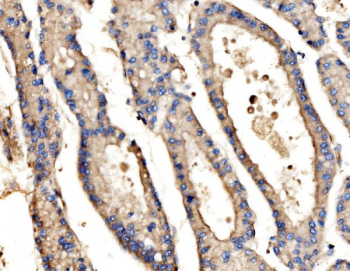
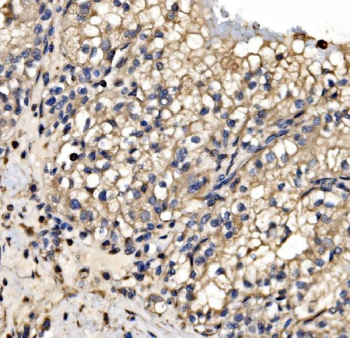
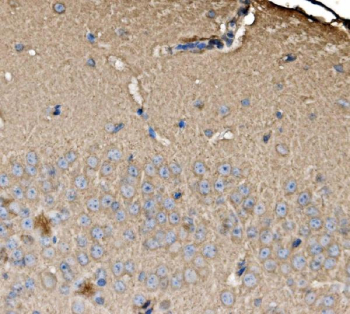
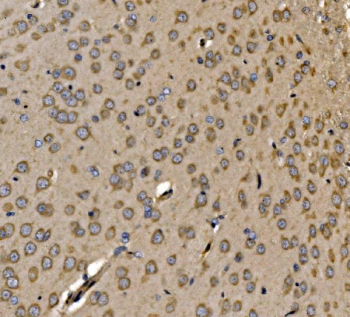
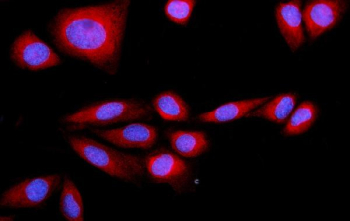
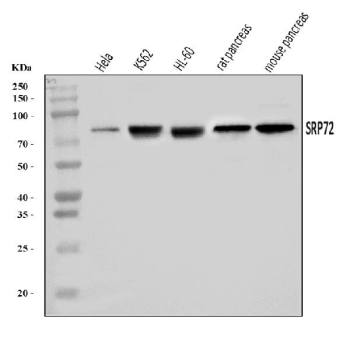
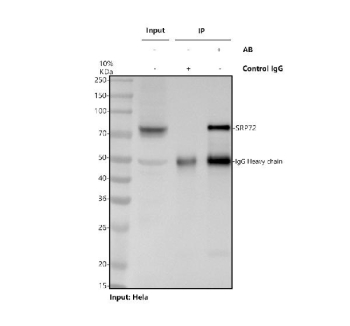
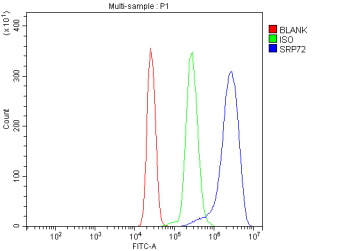
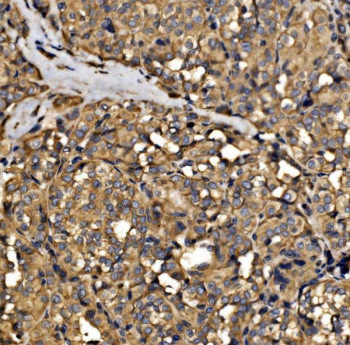
Adding 0.2 ml of distilled water will yield a concentration of 500 ug/ml. SRP72 antibody recognizes Signal recognition particle 72 kDa protein, a core component of the signal recognition particle (SRP) complex responsible for co-translational targeting of secretory and membrane proteins. Encoded by the SRP72 gene on chromosome 4q12, this protein forms part of the SRP heterodimer with SRP68 and contributes to binding ribosome-nascent chain complexes. SRP72 plays a central role in directing nascent polypeptides to the endoplasmic reticulum (ER) membrane, ensuring proper insertion, folding, and trafficking of secreted and transmembrane proteins. It is expressed in most tissues, with high levels found in cells with active secretory or membrane protein synthesis. SRP72 localizes primarily to the cytoplasm where it co-localizes with ribosomes, SRP RNA, and translational components.Signal recognition particle 72 kDa protein participates in a conserved pathway involving recognition of N-terminal signal peptides emerging from the ribosome. SRP72 stabilizes the SRP complex and contributes to structural rearrangements required for pausing translation and initiating ER targeting. Binding of SRP to the signal peptide-ribosome complex enables recruitment of the SRP receptor at the ER membrane, followed by transfer of the nascent chain to the Sec61 translocon. Through these steps, SRP72 supports accurate protein sorting, prevents mislocalization of secretory proteins, and maintains overall proteostasis within the secretory pathway.Dysfunction in SRP pathway components, including SRP72, can lead to defects in protein trafficking and ER stress. Mutations in SRP72 have been associated with a rare form of familial aplasia and myelodysplasia, where impaired SRP function disrupts hematopoietic stem cell viability and differentiation. Experimental studies suggest that SRP72 mutations alter ribosome-binding or structural integrity of the SRP complex, contributing to defective protein targeting. Altered SRP72 expression has also been linked to cancer biology, with evidence implicating the SRP machinery in supporting rapid protein synthesis and secretory demands of tumor cells. Additionally, SRP72 participates in stress-related translational responses, where modulation of SRP activity influences ER homeostasis and adaptive signaling pathways.At the subcellular level, SRP72 localizes to the cytoplasm and associates with ribosome-rich regions, ER membranes, and protein synthesis hubs. It co-localizes with SRP68, SRP54, and 7SL RNA, forming a functional SRP complex essential for co-translational targeting. Structural studies show that SRP72 contributes to the architecture required for ribosome interaction and SRP receptor engagement. Isoform variation resulting from alternative splicing may influence nucleo-cytoplasmic transport, RNA binding affinity, or interactions with other SRP components. Developmentally, SRP72 expression increases as secretory pathways mature and supports expanding protein synthesis demands in differentiating tissues.This SRP72 antibody is suitable for detecting Signal recognition particle 72 kDa protein in research focused on protein trafficking, ER targeting, translation regulation, hematopoietic disorders, and secretory pathway biology. It supports studies examining SRP complex function, co-translational sorting, and proteostasis under stress or disease conditions. NSJ Bioreagents provides this antibody as part of its protein synthesis and cell biology collection.
| Keywords: | Anti-SRP72, Anti-Signal recognition particle subunit SRP72, Anti-Signal recognition particle 72 kDa protein, SRP72 Antibody / Signal recognition particle 72 kDa protein |
| Supplier: | NSJ Bioreagents |
| Supplier-Nr: | FY13399 |
Properties
| Application: | WB, ICC/IF, IHC (paraffin), IP, FC |
| Antibody Type: | Polyclonal |
| Conjugate: | No |
| Host: | Rabbit |
| Species reactivity: | human, mouse, rat |
| Immunogen: | E.coli-derived human SRP72 recombinant protein (amino acids I40-Y460) |
| Format: | Purified |
Database Information
| KEGG ID : | K03108 | Matching products |
| UniProt ID : | O76094 | Matching products |
| Gene ID : | GeneID 6731 | Matching products |
Handling & Safety
| Storage: | +4°C |
| Shipping: | +4°C (International: +4°C) |
Caution
Our products are for laboratory research use only: Not for administration to humans!
Our products are for laboratory research use only: Not for administration to humans!
Information about the product reference will follow.
more
You will get a certificate here
Viewed