
Cookie preferences
This website uses cookies, which are necessary for the technical operation of the website and are always set. Other cookies, which increase the comfort when using this website, are used for direct advertising or to facilitate interaction with other websites and social networks, are only set with your consent.
Configuration
Technically required
These cookies are necessary for the basic functions of the shop.
"Allow all cookies" cookie
"Decline all cookies" cookie
CSRF token
Cookie preferences
Currency change
Customer-specific caching
FACT-Finder tracking
Individual prices
Selected shop
Session
Comfort functions
These cookies are used to make the shopping experience even more appealing, for example for the recognition of the visitor.
Note
Show the facebook fanpage in the right blod sidebar
Statistics & Tracking
Affiliate program
Conversion and usertracking via Google Tag Manager
Track device being used



| Item number | Size | Datasheet | Manual | SDS | Delivery time | Quantity | Price |
|---|---|---|---|---|---|---|---|
| NSJ-V6002-20UG | 20 µg | - | - |
7 - 12 business days* |
375.00€
|
||
| NSJ-V6002-100UG | 100 µg | - | - |
7 - 12 business days* |
810.00€
|
If you have any questions, please use our Contact Form.
You can also order by e-mail: info@biomol.com
Larger quantity required? Request bulk
You can also order by e-mail: info@biomol.com
Larger quantity required? Request bulk
0.2 mg/ml in 1X PBS with 0.05% BSA, 0.05% sodium azide. Basement Membrane Protein 40 antibody,... more
Product information "Anti-SPARC / Osteonectin, clone r15G12"
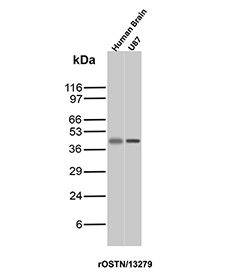
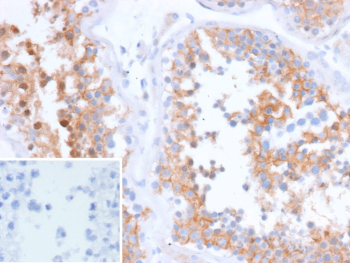
0.2 mg/ml in 1X PBS with 0.05% BSA, 0.05% sodium azide. Basement Membrane Protein 40 antibody, also known as SPARC antibody, recognizes Secreted protein acidic and rich in cysteine, a secreted matricellular glycoprotein that regulates extracellular matrix organization and cell-matrix communication. The human SPARC gene is located on chromosome 5q33.1 and encodes a protein widely referred to as Osteonectin and BM-40 in the literature. SPARC is secreted into the extracellular space and associates with basement membranes and stromal matrices, where it modulates cellular adhesion and matrix assembly rather than serving as a structural scaffold.Secreted protein acidic and rich in cysteine plays a central role in collagen binding, fibrillogenesis, and regulation of cell migration and proliferation. It is highly expressed in connective tissues, bone, endothelial cells, and activated fibroblasts. In skeletal biology, Osteonectin is abundant in osteoblasts and mineralizing bone matrix, contributing to collagen organization and tissue mineralization. A Basement Membrane Protein 40 antibody is commonly used in research examining extracellular matrix remodeling, tumor microenvironment dynamics, angiogenesis, and fibrotic disease because SPARC influences stromal activation and matrix composition.Structurally, SPARC contains an acidic N-terminal region, a follistatin-like domain, and a C-terminal extracellular calcium-binding domain with EF-hand motifs. These domains enable calcium binding and mediate interactions with collagens, albumin, and growth factors. Through these interactions, Secreted protein acidic and rich in cysteine participates in signaling pathways such as TGF-beta signaling and integrin-mediated adhesion cascades, supporting tissue remodeling and vascular responses.In cancer biology, SPARC expression is frequently detected in desmoplastic stroma associated with breast, pancreatic, colorectal, and ovarian carcinomas. Expression is often observed in tumor-associated fibroblasts and matrix-rich regions, where SPARC contributes to extracellular matrix reorganization. Depending on tumor context, SPARC may influence invasion, stromal remodeling, and growth factor responsiveness. Outside oncology, SPARC is upregulated during wound healing and in fibrotic conditions affecting liver, lung, and kidney, reflecting its broader role in tissue repair and matrix turnover. During embryonic development, SPARC expression is present in tissues undergoing active morphogenesis and vascular formation.Clone r15G12 is a recombinant monoclonal antibody developed to recognize SPARC for research applications. A Basement Membrane Protein 40 antibody supports investigation of extracellular matrix biology, stromal cell function, and connective tissue remodeling. This antibody targets SPARC in research settings and is suitable for studies of fibrosis, angiogenesis, skeletal biology, and tumor-associated stromal responses.
| Keywords: | Anti-SPARC, Anti-Osteonectin, Anti-Basement-membrane protein 40, Anti-Secreted protein acidic and rich in cysteine, SPARC Antibody / Osteonectin |
| Supplier: | NSJ Bioreagents |
| Supplier-Nr: | V6002 |
Properties
| Application: | IHC, WB |
| Antibody Type: | Monoclonal |
| Clone: | r15G12 |
| Conjugate: | No |
| Host: | Mouse |
| Species reactivity: | human |
| Immunogen: | Prokaryotic recombinant protein corresponding to a portion of the C-terminus of the human Osteonectin molecule |
| Format: | Purified |
Database Information
| KEGG ID : | K24262 | Matching products |
| UniProt ID : | P09486 | Matching products |
| Gene ID : | GeneID 6678 | Matching products |
Handling & Safety
| Storage: | -20°C |
| Shipping: | -20°C (International: -20°C) |
Caution
Our products are for laboratory research use only: Not for administration to humans!
Our products are for laboratory research use only: Not for administration to humans!
Information about the product reference will follow.
more
You will get a certificate here
Viewed