
Cookie preferences
This website uses cookies, which are necessary for the technical operation of the website and are always set. Other cookies, which increase the comfort when using this website, are used for direct advertising or to facilitate interaction with other websites and social networks, are only set with your consent.
Configuration
Technically required
These cookies are necessary for the basic functions of the shop.
"Allow all cookies" cookie
"Decline all cookies" cookie
CSRF token
Cookie preferences
Currency change
Customer-specific caching
FACT-Finder tracking
Individual prices
Selected shop
Session
Comfort functions
These cookies are used to make the shopping experience even more appealing, for example for the recognition of the visitor.
Note
Show the facebook fanpage in the right blod sidebar
Statistics & Tracking
Affiliate program
Conversion and usertracking via Google Tag Manager
Track device being used



| Item number | Size | Datasheet | Manual | SDS | Delivery time | Quantity | Price |
|---|---|---|---|---|---|---|---|
| NSJ-FY12837 | 100 µg | - | - |
7 - 12 business days* |
790.00€
|
If you have any questions, please use our Contact Form.
You can also order by e-mail: info@biomol.com
Larger quantity required? Request bulk
You can also order by e-mail: info@biomol.com
Larger quantity required? Request bulk
Adding 0.2 ml of distilled water will yield a concentration of 500 ug/ml. SNCA antibody detects... more
Product information "Anti-SNCA / Alpha Synuclein"
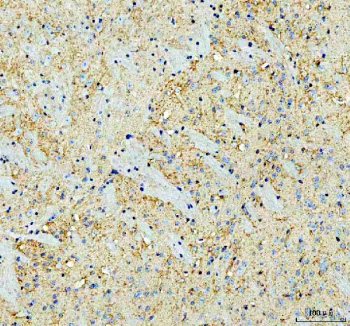
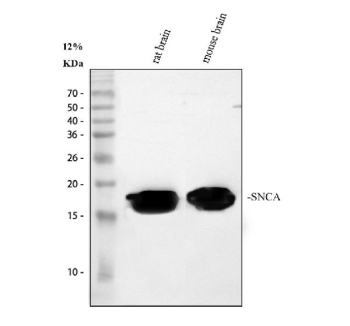
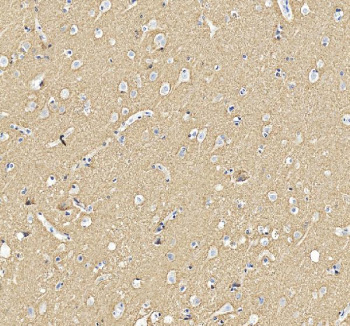
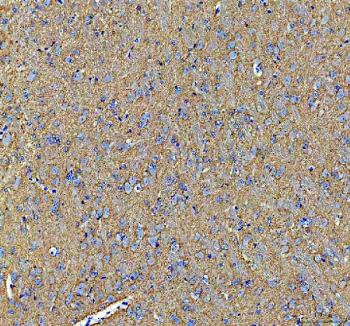
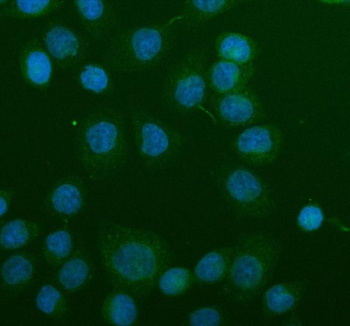
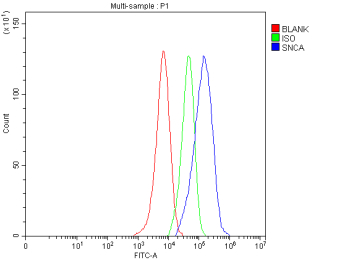
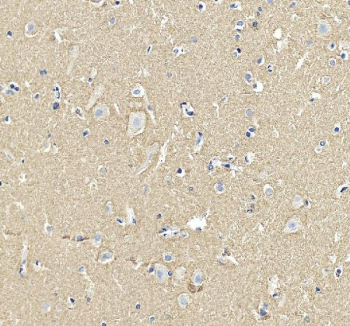
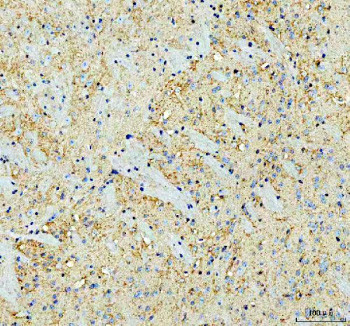
Adding 0.2 ml of distilled water will yield a concentration of 500 ug/ml. SNCA antibody detects Alpha-synuclein, a small neuronal protein central to synaptic regulation, vesicle trafficking, and neurodegenerative disease pathology. Encoded by the SNCA gene on chromosome 4q22.1, Alpha-synuclein is a 140-amino acid presynaptic protein that modulates neurotransmitter release, synaptic vesicle recycling, and membrane curvature. It is highly expressed in the central nervous system, particularly in presynaptic terminals of dopaminergic neurons, where it helps maintain synaptic homeostasis. Despite its physiological role in neurotransmission, misfolded or aggregated forms of Alpha-synuclein are strongly implicated in Parkinson's disease and other synucleinopathies.Alpha-synuclein belongs to the synuclein family, which also includes Beta- and Gamma-synuclein. Structurally, it consists of three domains: an amphipathic N-terminal region that binds lipid membranes, a hydrophobic central non-amyloid-beta component (NAC) domain that promotes aggregation, and a highly acidic C-terminal region that interacts with synaptic vesicle components. These domains allow Alpha-synuclein to reversibly associate with synaptic vesicle membranes and regulate vesicle clustering, docking, and fusion events required for neurotransmitter release.The SNCA antibody is widely used in neuroscience, neurodegenerative disease, and cellular biology research to study protein aggregation, synaptic function, and neuronal homeostasis. Western blot analysis identifies a 17 kilodalton band corresponding to Alpha-synuclein, while immunohistochemistry and immunofluorescence reveal diffuse cytoplasmic and presynaptic punctate staining in neurons. In pathological tissue, the antibody recognizes characteristic Lewy bodies and Lewy neurites formed by Alpha-synuclein aggregates, providing a valuable diagnostic marker for Parkinson's disease and dementia with Lewy bodies.Physiologically, Alpha-synuclein interacts with SNARE complex proteins such as VAMP2 and synaptobrevin to facilitate vesicle fusion, while regulating dopamine release and synaptic plasticity. However, environmental stress, oxidative damage, or genetic mutations (e.g., A53T, A30P, E46K) can cause Alpha-synuclein misfolding and fibril formation. These aggregates trigger mitochondrial dysfunction, ER stress, and neuronal death through toxic oligomer formation. The SNCA antibody is an essential tool for studying these mechanisms and evaluating therapeutic interventions aimed at reducing aggregation or promoting clearance via autophagy and proteasomal degradation.Alpha-synuclein also plays a role in non-neuronal systems, including erythrocytes and the enteric nervous system, where it may influence vesicular trafficking and lipid metabolism. Dysregulation of SNCA transcription and post-translational modifications such as phosphorylation (Ser129), nitration, or ubiquitination modulate its aggregation behavior and toxicity. The SNCA antibody supports high-resolution mapping of these biochemical changes, helping researchers understand disease progression and identify novel treatment strategies. NSJ Bioreagents validates this antibody for western blotting, immunohistochemistry, and immunofluorescence, ensuring reproducible and sensitive detection for neuroscience and neurodegenerative disease research.
| Keywords: | Anti-SNCA, Anti-Alpha-synuclein, Anti-Non-A beta component of AD amyloid, Anti-Non-A4 component of amyloid precursor, SNCA Antibody / Alpha Synuclein |
| Supplier: | NSJ Bioreagents |
| Supplier-Nr: | FY12837 |
Properties
| Application: | WB, IHC, ICC, IF, FC, ELISA |
| Antibody Type: | Polyclonal |
| Conjugate: | No |
| Host: | Rabbit |
| Species reactivity: | human, mouse, rat |
| Immunogen: | E.coli-derived human Alpha Synuclein/SNCA recombinant protein (Position: M1-D135) |
| Format: | Purified |
Database Information
| KEGG ID : | K04528 | Matching products |
| UniProt ID : | P37840 | Matching products |
| Gene ID : | GeneID 6622 | Matching products |
Handling & Safety
| Storage: | +4°C |
| Shipping: | +4°C (International: +4°C) |
Caution
Our products are for laboratory research use only: Not for administration to humans!
Our products are for laboratory research use only: Not for administration to humans!
Information about the product reference will follow.
more
You will get a certificate here
Viewed