
Cookie preferences
This website uses cookies, which are necessary for the technical operation of the website and are always set. Other cookies, which increase the comfort when using this website, are used for direct advertising or to facilitate interaction with other websites and social networks, are only set with your consent.
Configuration
Technically required
These cookies are necessary for the basic functions of the shop.
"Allow all cookies" cookie
"Decline all cookies" cookie
CSRF token
Cookie preferences
Currency change
Customer-specific caching
FACT-Finder tracking
Individual prices
Selected shop
Session
Comfort functions
These cookies are used to make the shopping experience even more appealing, for example for the recognition of the visitor.
Note
Show the facebook fanpage in the right blod sidebar
Statistics & Tracking
Affiliate program
Conversion and usertracking via Google Tag Manager
Track device being used



| Item number | Size | Datasheet | Manual | SDS | Delivery time | Quantity | Price |
|---|---|---|---|---|---|---|---|
| NSJ-FY13398 | 100 µg | - | - |
3 - 10 business days* |
790.00€
|
If you have any questions, please use our Contact Form.
You can also order by e-mail: info@biomol.com
Larger quantity required? Request bulk
You can also order by e-mail: info@biomol.com
Larger quantity required? Request bulk
Adding 0.2 ml of distilled water will yield a concentration of 500 ug/ml. SLC25A1 antibody... more
Product information "Anti-SLC25A1 / Solute carrier family 25 member 1"
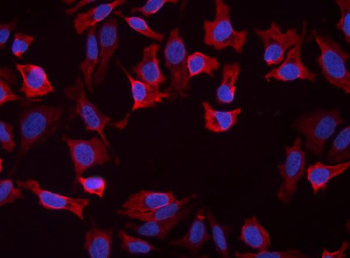
Adding 0.2 ml of distilled water will yield a concentration of 500 ug/ml. SLC25A1 antibody recognizes Solute carrier family 25 member 1, also known as the mitochondrial citrate transporter or tricarboxylate carrier. Encoded by the SLC25A1 gene on chromosome 22q11.21, this protein resides in the inner mitochondrial membrane and mediates the exchange of citrate and isocitrate with cytosolic malate. Through this transport activity, it links mitochondrial metabolism to cytosolic acetyl-CoA production, lipid synthesis, and cellular energy balance. SLC25A1 is expressed in metabolically active tissues including liver, muscle, adipose tissue, brain, and proliferating cell populations that require robust lipid and nucleotide biosynthesis. Structural studies place the transporter within the mitochondrial carrier family, characterized by transmembrane helices forming a central substrate translocation pore.Solute carrier family 25 member 1 is central to metabolic processes that couple mitochondrial activity to cytosolic biosynthetic pathways. By exporting citrate to the cytosol, SLC25A1 supports production of acetyl-CoA for fatty acid and cholesterol synthesis, regulates NADPH generation through the cytosolic isocitrate dehydrogenase pathway, and influences histone acetylation via acetyl-CoA availability. The transporter is also involved in the tricarboxylate cycle that integrates carbohydrate, lipid, and amino acid metabolism. Its function is critical for cells with high biosynthetic demand, such as developing neurons, activated immune cells, and cancer cells undergoing metabolic rewiring.Dysfunction of SLC25A1 is associated with a spectrum of metabolic and neurological disorders. Mutations in SLC25A1 cause combined D-2-hydroxyglutaric aciduria, a condition characterized by elevated levels of 2-hydroxyglutarate, neurodevelopmental delay, seizures, and metabolic acidosis. Reduced transporter activity disrupts mitochondrial to cytosolic metabolite flow, leading to impaired lipid synthesis, altered redox balance, and accumulation of tricarboxylic acid cycle intermediates. In cancer biology, SLC25A1 is frequently upregulated in tumors including lung, breast, prostate, and glioblastoma, where it supports anabolic metabolism, tumor growth, and resistance to metabolic stress. Increased transporter expression promotes lipid biosynthesis, nucleotide synthesis, mitochondrial integrity, and survival under hypoxic or nutrient limited conditions.At the subcellular level, SLC25A1 localizes exclusively to the inner mitochondrial membrane where it co-localizes with markers such as COX4 and TIMM23. Its transport activity depends on the proton motive force, and conformational changes within the transmembrane helices regulate substrate binding and release. Isoforms produced by alternative splicing may differ in stability or regulatory interactions, though the canonical isoform dominates in most tissues. Developmentally, SLC25A1 expression increases during periods of rapid growth or differentiation when biosynthetic demands rise, including neuronal maturation and early postnatal metabolic transitions.This SLC25A1 antibody is suitable for detecting Solute carrier family 25 member 1 expression in research focused on mitochondrial metabolism, lipid and nucleotide biosynthesis, metabolic disease models, neurodevelopmental disorders, and cancer metabolism. NSJ Bioreagents includes this reagent within its mitochondrial and metabolic biology antibody collection.
| Keywords: | Anti-SLC25A1, Anti-Citrate transport protein, Anti-Mitochondrial citrate carrier, Anti-Tricarboxylate carrier protein, Anti-Solute carrier family 25 member 1, Anti-Tricarboxylate transport protein, mitochondrial, SLC25A1 Antibody / Solute carrier family 2 |
| Supplier: | NSJ Bioreagents |
| Supplier-Nr: | FY13398 |
Properties
| Application: | WB, ICC/IF, IHC (paraffin) |
| Antibody Type: | Polyclonal |
| Conjugate: | No |
| Host: | Rabbit |
| Species reactivity: | human, mouse, rat |
| Immunogen: | E.coli-derived human Slc25a1 recombinant protein (amino acids I38-D311) |
| Format: | Purified |
Database Information
| KEGG ID : | K15100 | Matching products |
| UniProt ID : | P53007 | Matching products |
| Gene ID : | GeneID 6576 | Matching products |
Handling & Safety
| Storage: | +4°C |
| Shipping: | +4°C (International: +4°C) |
Caution
Our products are for laboratory research use only: Not for administration to humans!
Our products are for laboratory research use only: Not for administration to humans!
Information about the product reference will follow.
more
You will get a certificate here
Viewed