
Cookie preferences
This website uses cookies, which are necessary for the technical operation of the website and are always set. Other cookies, which increase the comfort when using this website, are used for direct advertising or to facilitate interaction with other websites and social networks, are only set with your consent.
Configuration
Technically required
These cookies are necessary for the basic functions of the shop.
"Allow all cookies" cookie
"Decline all cookies" cookie
CSRF token
Cookie preferences
Currency change
Customer-specific caching
FACT-Finder tracking
Individual prices
Selected shop
Session
Comfort functions
These cookies are used to make the shopping experience even more appealing, for example for the recognition of the visitor.
Note
Show the facebook fanpage in the right blod sidebar
Statistics & Tracking
Affiliate program
Conversion and usertracking via Google Tag Manager
Track device being used




| Item number | Size | Datasheet | Manual | SDS | Delivery time | Quantity | Price |
|---|---|---|---|---|---|---|---|
| NSJ-V5978-20UG | 20 µg | - | - |
3 - 10 business days* |
375.00€
|
||
| NSJ-V5978-100UG | 100 µg | - | - |
3 - 10 business days* |
810.00€
|
If you have any questions, please use our Contact Form.
You can also order by e-mail: info@biomol.com
Larger quantity required? Request bulk
You can also order by e-mail: info@biomol.com
Larger quantity required? Request bulk
0.2 mg/ml in 1X PBS with 0.05% BSA, 0.05% sodium azide. SLAMF7/CS1 antibody recognizes Signaling... more
Product information "Anti-SLAMF7 / Signaling lymphocytic activation molecule family member 7, clone SLAMF7/13123"
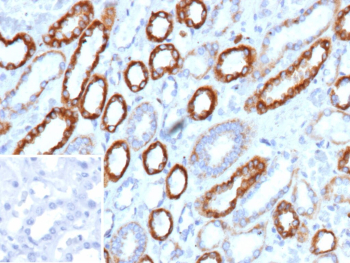
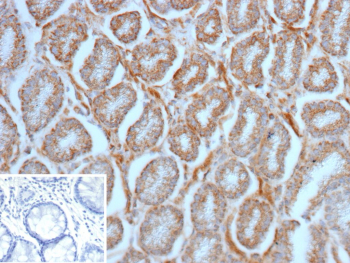
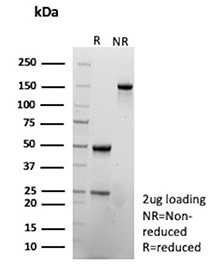
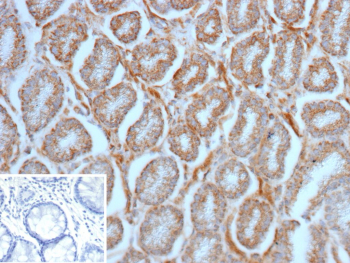
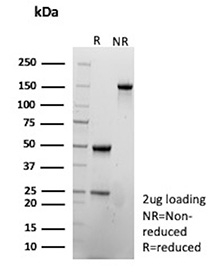
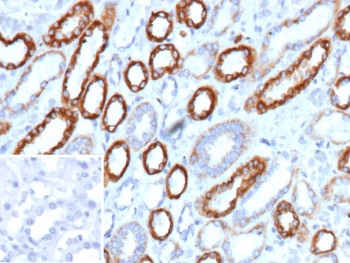
0.2 mg/ml in 1X PBS with 0.05% BSA, 0.05% sodium azide. SLAMF7/CS1 antibody recognizes Signaling Lymphocytic Activation Molecule Family Member 7, a type I transmembrane glycoprotein encoded by the SLAMF7 gene and commonly referred to as CD319 and CRACC. CS1 is a member of the SLAM family within the immunoglobulin superfamily and is primarily expressed on natural killer cells, subsets of activated T lymphocytes, mature dendritic cells, and plasma cells. The protein is localized to the plasma membrane, where it mediates homotypic interactions and immune cell signaling through immunoreceptor tyrosine-based switch motifs in its cytoplasmic domain. These motifs recruit adaptor proteins such as EAT-2, enabling downstream activation of cytotoxic and adhesion pathways.Functionally, CS1 plays a key role in regulating innate and adaptive immune responses. Engagement of SLAMF7 enhances natural killer cell cytotoxicity and cytokine production, contributing to immune surveillance and tumor cell elimination. In plasma cells, CS1 supports cell adhesion and survival signaling, which has important implications in plasma cell neoplasms. High and consistent expression of SLAMF7 in multiple myeloma has made CS1 antibody an important research and diagnostic tool in hematopathology and immuno-oncology. Targeting CS1 has demonstrated clinical relevance in antibody-based therapeutic strategies designed to induce antibody-dependent cellular cytotoxicity against malignant plasma cells.The SLAMF7 gene is located on chromosome 1q23 within a cluster of SLAM family genes involved in immune regulation. Expression is largely restricted to hematopoietic lineages, with minimal detection in most non-hematopoietic tissues. In formalin-fixed tissues, CS1 expression is typically observed as membranous staining in plasma cells and natural killer cell populations, consistent with its surface receptor localization. This restricted pattern supports its utility in distinguishing plasma cell neoplasms and evaluating immune cell subsets within lymphoid tissues.This CS1 antibody (clone SLAMF7/13123) targets SLAMF7 in research applications. By enabling detection of CS1 expression, this antibody supports studies of immune cell activation, tumor microenvironment characterization, and plasma cell biology in normal and malignant tissues. By enabling reliable detection of CS1, this antibody supports studies of immune cell activation, tumor microenvironment characterization, and plasma cell biology in normal and malignant tissues.
| Keywords: | Anti-SLAMF7, Anti-Novel Ly9, Anti-Protein 19A, Anti-CD2 subset 1, Anti-SLAM family member 7, Anti-Membrane protein FOAP-12, Anti-CD2-like receptor-activating cytotoxic cells, SLAMF7 Antibody / Signaling lymphocytic activation molecule family member 7 |
| Supplier: | NSJ Bioreagents |
| Supplier-Nr: | V5978 |
Properties
| Application: | IHC |
| Antibody Type: | Monoclonal |
| Clone: | SLAMF7/13123 |
| Conjugate: | No |
| Host: | Mouse |
| Species reactivity: | human |
| Immunogen: | Recombinant fragment (around amino acids 200-335) of human SLAMF7 protein (exact sequence is proprietary) |
| Format: | Purified |
Database Information
| KEGG ID : | K06733 | Matching products |
| UniProt ID : | Q9NQ25 | Matching products |
| Gene ID : | GeneID 57823 | Matching products |
Handling & Safety
| Storage: | -20°C |
| Shipping: | -20°C (International: -20°C) |
Caution
Our products are for laboratory research use only: Not for administration to humans!
Our products are for laboratory research use only: Not for administration to humans!
Information about the product reference will follow.
more
You will get a certificate here
Viewed