
Cookie preferences
This website uses cookies, which are necessary for the technical operation of the website and are always set. Other cookies, which increase the comfort when using this website, are used for direct advertising or to facilitate interaction with other websites and social networks, are only set with your consent.
Configuration
Technically required
These cookies are necessary for the basic functions of the shop.
"Allow all cookies" cookie
"Decline all cookies" cookie
CSRF token
Cookie preferences
Currency change
Customer-specific caching
FACT-Finder tracking
Individual prices
Selected shop
Session
Comfort functions
These cookies are used to make the shopping experience even more appealing, for example for the recognition of the visitor.
Note
Show the facebook fanpage in the right blod sidebar
Statistics & Tracking
Affiliate program
Conversion and usertracking via Google Tag Manager
Track device being used



| Item number | Size | Datasheet | Manual | SDS | Delivery time | Quantity | Price |
|---|---|---|---|---|---|---|---|
| NSJ-FY12464 | 100 µg | - | - |
3 - 10 business days* |
790.00€
|
If you have any questions, please use our Contact Form.
You can also order by e-mail: info@biomol.com
Larger quantity required? Request bulk
You can also order by e-mail: info@biomol.com
Larger quantity required? Request bulk
Adding 0.2 ml of distilled water will yield a concentration of 500 ug/ml. SHANK1 antibody... more
Product information "Anti-SHANK1 / SH3 and multiple ankyrin repeat domains protein 1"
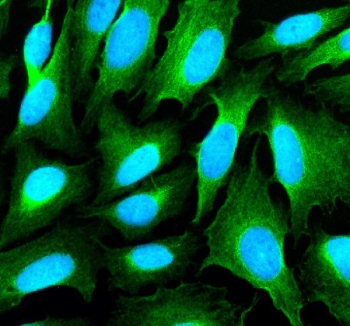
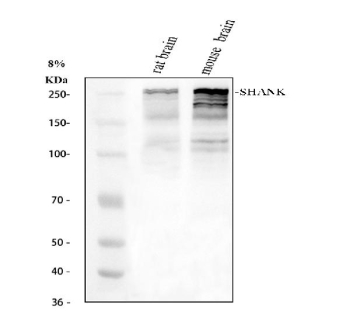
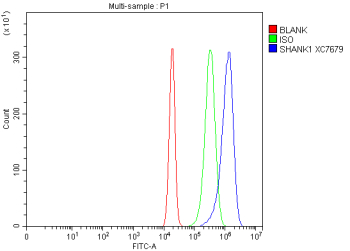
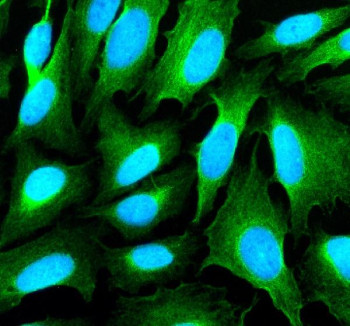
Adding 0.2 ml of distilled water will yield a concentration of 500 ug/ml. SHANK1 antibody recognizes SH3 and multiple ankyrin repeat domains protein 1, a large scaffolding protein of the postsynaptic density (PSD) essential for excitatory synapse organization and signaling. SHANK1 belongs to the SHANK family, which also includes SHANK2 and SHANK3, each coordinating complex protein-protein interactions that anchor neurotransmitter receptors and cytoskeletal elements at synapses. The SHANK1 antibody is a crucial reagent for studying synaptic plasticity, neurodevelopmental disorders, and molecular mechanisms underlying learning and memory.SHANK1 is encoded by the SHANK1 gene located on human chromosome 19q13.33. The protein exceeds 200 kDa and contains several structural domains: multiple ankyrin repeats, an SH3 domain, a PDZ domain, a proline-rich region that interacts with cortactin and Homer, and a sterile alpha motif (SAM) that mediates self-association. These domains enable SHANK1 to function as a scaffold linking glutamate receptors, adhesion molecules, and signaling enzymes into large PSD assemblies. In neurons, SHANK1 stabilizes AMPA and NMDA receptor complexes and regulates dendritic spine morphology.The SHANK1 antibody is commonly used to label postsynaptic structures, showing punctate localization in dendritic spines consistent with PSD distribution. Western blot analysis typically reveals a prominent band between 240-260 kDa. Functional studies demonstrate that SHANK1 promotes synapse maturation and coordinates actin cytoskeleton dynamics, thereby influencing neuronal connectivity and excitatory signaling. Mutations or deletions of SHANK family genes are associated with autism spectrum disorder and intellectual disability, underscoring the functional importance of these scaffolding proteins in brain development.Beyond the nervous system, SHANK1 expression has been observed in testis and other tissues where it may regulate cytoskeletal organization. Interaction partners include PSD-95, GKAP, Homer, and cortactin, forming a structural network essential for synaptic signal transduction. Loss of SHANK1 disrupts synaptic transmission and reduces spine density, while overexpression alters synaptic scaling and excitatory balance. NSJ Bioreagents supplies a validated SHANK1 antibody optimized for western blot, immunocytochemistry, and confocal imaging, supporting high-resolution studies of synaptic architecture, neurodevelopment, and psychiatric disease mechanisms.
| Keywords: | Anti-SHANK1, Anti-Somatostatin receptor-interacting protein, Anti-SH3 and multiple ankyrin repeat domains protein 1, SHANK1 Antibody / SH3 and multiple ankyrin repeat domains protein 1 |
| Supplier: | NSJ Bioreagents |
| Supplier-Nr: | FY12464 |
Properties
| Application: | WB, ICC/IF, FC, ELISA |
| Antibody Type: | Polyclonal |
| Conjugate: | No |
| Host: | Rabbit |
| Species reactivity: | human, mouse, rat |
| Immunogen: | E.coli-derived human SHANK1 recombinant protein (Position: D66-R2161) |
| Format: | Purified |
Database Information
| KEGG ID : | K15009 | Matching products |
| UniProt ID : | Q9Y566 | Matching products |
| Gene ID : | GeneID 50944 | Matching products |
Handling & Safety
| Storage: | +4°C |
| Shipping: | +4°C (International: +4°C) |
Caution
Our products are for laboratory research use only: Not for administration to humans!
Our products are for laboratory research use only: Not for administration to humans!
Information about the product reference will follow.
more
You will get a certificate here
Viewed