
Cookie preferences
This website uses cookies, which are necessary for the technical operation of the website and are always set. Other cookies, which increase the comfort when using this website, are used for direct advertising or to facilitate interaction with other websites and social networks, are only set with your consent.
Configuration
Technically required
These cookies are necessary for the basic functions of the shop.
"Allow all cookies" cookie
"Decline all cookies" cookie
CSRF token
Cookie preferences
Currency change
Customer-specific caching
FACT-Finder tracking
Individual prices
Selected shop
Session
Comfort functions
These cookies are used to make the shopping experience even more appealing, for example for the recognition of the visitor.
Note
Show the facebook fanpage in the right blod sidebar
Statistics & Tracking
Affiliate program
Conversion and usertracking via Google Tag Manager
Track device being used


| Item number | Size | Datasheet | Manual | SDS | Delivery time | Quantity | Price |
|---|---|---|---|---|---|---|---|
| NSJ-V5990SAF-100UG | 100 µg | - | - |
3 - 10 business days* |
810.00€
|
If you have any questions, please use our Contact Form.
You can also order by e-mail: info@biomol.com
Larger quantity required? Request bulk
You can also order by e-mail: info@biomol.com
Larger quantity required? Request bulk
1 mg/ml in 1X PBS, BSA free, sodium azide free. SELE antibody, also known as E-selectin antibody,... more
Product information "Anti-SELE / E-selectin, clone r16G4"
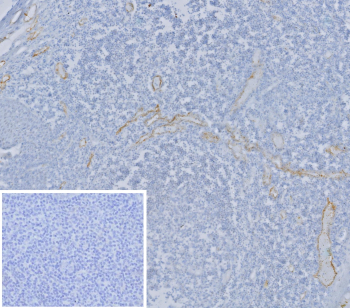
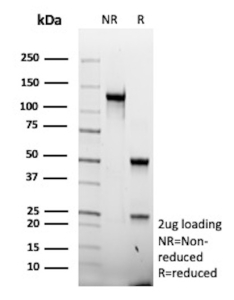
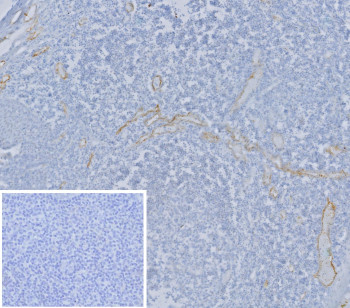
1 mg/ml in 1X PBS, BSA free, sodium azide free. SELE antibody, also known as E-selectin antibody, recognizes E-selectin, a type I transmembrane adhesion molecule encoded by the SELE gene and commonly referred to as CD62E and endothelial-leukocyte adhesion molecule 1. E-selectin is primarily localized to the plasma membrane of activated endothelial cells and is a member of the selectin family of calcium-dependent lectins. Under basal conditions, SELE expression is low or absent, however, it is rapidly induced in endothelial cells in response to inflammatory cytokines such as interleukin-1 and tumor necrosis factor alpha, linking vascular activation to immune cell recruitment.SELE antibody detects a glycoprotein composed of an N-terminal C-type lectin domain, an epidermal growth factor-like domain, multiple short consensus repeat units, a single transmembrane region, and a short cytoplasmic tail. The lectin domain mediates binding to sialylated carbohydrate ligands, including sialyl Lewis x structures on neutrophils, monocytes, and subsets of lymphocytes. Through these interactions, E-selectin supports leukocyte tethering and rolling along the vascular endothelium under shear flow conditions, representing a critical early step in extravasation during inflammation.Functionally, E-selectin plays a central role in acute and chronic inflammatory responses by regulating leukocyte trafficking into tissues. Because its expression is tightly controlled and transient following cytokine stimulation, SELE is widely used as a marker of endothelial activation in experimental models of vascular inflammation. Elevated E-selectin levels have been associated with atherosclerosis, cardiovascular disease, autoimmune disorders, and other inflammatory conditions. In oncology research, endothelial E-selectin can contribute to adhesion of circulating tumor cells, implicating SELE in metastatic dissemination and tumor-vascular interactions.The SELE gene is located on chromosome 1 and is transcriptionally regulated by inflammatory signaling pathways, including those downstream of nuclear factor kappa B activation. The endothelial-restricted and inducible nature of E-selectin expression makes detection of this protein valuable for studying cytokine signaling, vascular biology, and immune-endothelial interactions.This recombinant monoclonal SELE antibody (clone r16G4) targets E-selectin protein in research applications. SELE antibody supports investigation of endothelial activation, leukocyte recruitment mechanisms, and disease-associated inflammatory signaling.
| Keywords: | Anti-SELE, Anti-E-selectin, Anti-CD62 antigen-like family member E, Anti-Endothelial leukocyte adhesion molecule 1, Anti-Leukocyte-endothelial cell adhesion molecule 2, SELE Antibody / E-selectin |
| Supplier: | NSJ Bioreagents |
| Supplier-Nr: | V5990SAF |
Properties
| Application: | IHC |
| Antibody Type: | Monoclonal |
| Clone: | r16G4 |
| Conjugate: | No |
| Host: | Mouse |
| Species reactivity: | human |
| Immunogen: | Prokaryotic recombinant fusion protein corresponding to the cysteine-rich complement control protein domains of the CD62E molecule |
| Format: | Purified |
Database Information
| KEGG ID : | K06494 | Matching products |
| UniProt ID : | P16581 | Matching products |
| Gene ID : | GeneID 6401 | Matching products |
Handling & Safety
| Storage: | -20°C |
| Shipping: | -20°C (International: -20°C) |
Caution
Our products are for laboratory research use only: Not for administration to humans!
Our products are for laboratory research use only: Not for administration to humans!
Information about the product reference will follow.
more
You will get a certificate here
Viewed