
Cookie preferences
This website uses cookies, which are necessary for the technical operation of the website and are always set. Other cookies, which increase the comfort when using this website, are used for direct advertising or to facilitate interaction with other websites and social networks, are only set with your consent.
Configuration
Technically required
These cookies are necessary for the basic functions of the shop.
"Allow all cookies" cookie
"Decline all cookies" cookie
CSRF token
Cookie preferences
Currency change
Customer-specific caching
FACT-Finder tracking
Individual prices
Selected shop
Session
Comfort functions
These cookies are used to make the shopping experience even more appealing, for example for the recognition of the visitor.
Note
Show the facebook fanpage in the right blod sidebar
Statistics & Tracking
Affiliate program
Conversion and usertracking via Google Tag Manager
Track device being used

| Item number | Size | Datasheet | Manual | SDS | Delivery time | Quantity | Price |
|---|---|---|---|---|---|---|---|
| NSJ-RQ8870 | 100 µg | - | - |
3 - 10 business days* |
790.00€
|
If you have any questions, please use our Contact Form.
You can also order by e-mail: info@biomol.com
Larger quantity required? Request bulk
You can also order by e-mail: info@biomol.com
Larger quantity required? Request bulk
0.5mg/ml if reconstituted with 0.2ml sterile DI water. RPE antibody targets Ribulose-phosphate... more
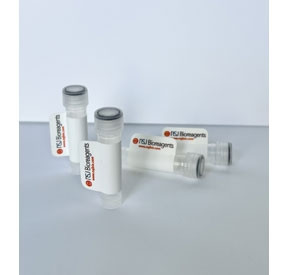
Product information "Anti-RPE / Ribulose-phosphate 3-epimerase"
0.5mg/ml if reconstituted with 0.2ml sterile DI water. RPE antibody targets Ribulose-phosphate 3-epimerase, encoded by the RPE gene. Ribulose-phosphate 3-epimerase is a cytosolic enzyme that plays an essential role in the non-oxidative phase of the pentose phosphate pathway. This metabolic pathway is critical for generating ribose-5-phosphate for nucleotide synthesis and for maintaining cellular redox balance through coordinated flux with NADPH-producing reactions. RPE catalyzes the reversible epimerization of ribulose-5-phosphate to xylulose-5-phosphate, enabling flexible carbon rearrangement to meet cellular biosynthetic demands.Functionally, Ribulose-phosphate 3-epimerase supports cellular metabolism by facilitating the interconversion of pentose phosphates that feed into glycolysis and nucleotide biosynthesis. Through its enzymatic activity, RPE helps balance carbon flow between energy production and anabolic processes, particularly in rapidly dividing or metabolically active cells. The enzyme operates in concert with other pentose phosphate pathway components to adapt metabolic output in response to oxidative stress, nutrient availability, and proliferative signals. An RPE antibody supports studies focused on metabolic regulation and central carbon metabolism.RPE is broadly expressed across tissues, reflecting the universal requirement for pentose phosphate pathway activity in mammalian cells. Expression is particularly relevant in tissues with high biosynthetic or detoxification capacity, such as liver and proliferative cell populations. As a housekeeping metabolic enzyme, RPE expression is relatively stable but can be modulated by metabolic state, cellular growth conditions, and stress responses that alter flux through the pentose phosphate pathway.From a disease-relevance perspective, Ribulose-phosphate 3-epimerase has been studied in the context of cancer metabolism and cellular adaptation to oxidative stress. Altered pentose phosphate pathway activity is a hallmark of many tumors, where increased nucleotide demand and redox control support uncontrolled proliferation. Changes in RPE expression or regulation have therefore been examined as part of broader investigations into metabolic reprogramming in cancer and other diseases characterized by disrupted cellular metabolism.At the molecular level, Ribulose-phosphate 3-epimerase is a conserved enzyme that functions as part of a tightly regulated metabolic network. Post-translational modifications, protein conformation, and cellular context can influence its enzymatic activity and electrophoretic behavior on SDS-PAGE without indicating changes in primary sequence. An RPE antibody supports research applications focused on metabolic enzyme expression, pentose phosphate pathway regulation, and disease-associated changes in cellular metabolism, with NSJ Bioreagents providing reagents intended for research use.
| Keywords: | Anti-RPE, Anti-Ribulose-phosphate 3-epimerase, Anti-Ribulose-5-phosphate-3-epimerase, RPE Antibody / Ribulose-phosphate 3-epimerase |
| Supplier: | NSJ Bioreagents |
| Supplier-Nr: | RQ8870 |
Properties
| Application: | WB`, ELISA |
| Antibody Type: | Polyclonal |
| Conjugate: | No |
| Host: | Rabbit |
| Species reactivity: | human, mouse, rat |
| Immunogen: | An E.coli-derived human recombinant protein (amino acids D68-E110) |
| Format: | Purified |
Database Information
| KEGG ID : | K01783 | Matching products |
| UniProt ID : | Q96AT9 | Matching products |
| Gene ID : | GeneID 6120 | Matching products |
Handling & Safety
| Storage: | +4°C |
| Shipping: | +4°C (International: +4°C) |
Caution
Our products are for laboratory research use only: Not for administration to humans!
Our products are for laboratory research use only: Not for administration to humans!
Information about the product reference will follow.
more
You will get a certificate here
Viewed