
Cookie preferences
This website uses cookies, which are necessary for the technical operation of the website and are always set. Other cookies, which increase the comfort when using this website, are used for direct advertising or to facilitate interaction with other websites and social networks, are only set with your consent.
Configuration
Technically required
These cookies are necessary for the basic functions of the shop.
"Allow all cookies" cookie
"Decline all cookies" cookie
CSRF token
Cookie preferences
Currency change
Customer-specific caching
FACT-Finder tracking
Individual prices
Selected shop
Session
Comfort functions
These cookies are used to make the shopping experience even more appealing, for example for the recognition of the visitor.
Note
Show the facebook fanpage in the right blod sidebar
Statistics & Tracking
Affiliate program
Conversion and usertracking via Google Tag Manager
Track device being used



| Item number | Size | Datasheet | Manual | SDS | Delivery time | Quantity | Price |
|---|---|---|---|---|---|---|---|
| NSJ-FY13017 | 100 µg | - | - |
7 - 12 business days* |
790.00€
|
If you have any questions, please use our Contact Form.
You can also order by e-mail: info@biomol.com
Larger quantity required? Request bulk
You can also order by e-mail: info@biomol.com
Larger quantity required? Request bulk
Adding 0.2 ml of distilled water will yield a concentration of 500 ug/ml. REST antibody detects... more
Product information "Anti-REST / RE1-silencing transcription factor"
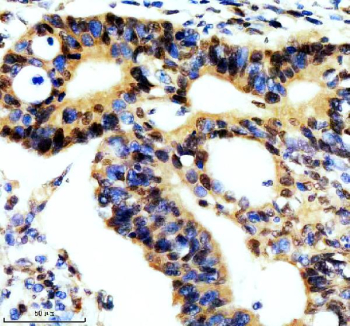
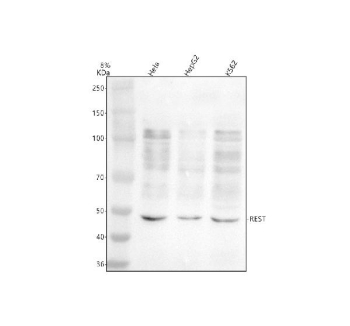
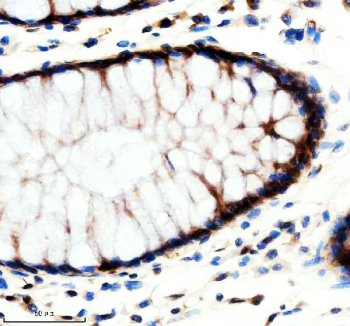
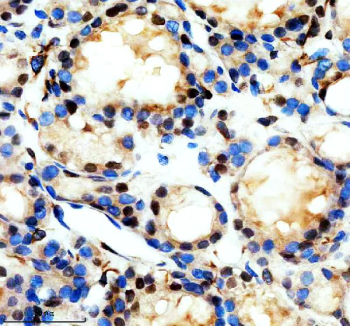
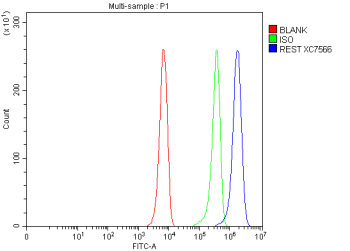
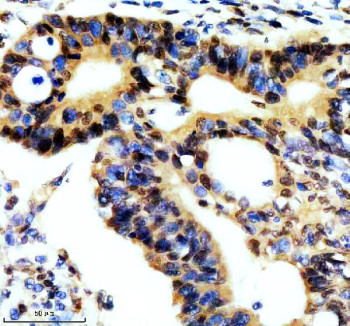
Adding 0.2 ml of distilled water will yield a concentration of 500 ug/ml. REST antibody detects RE1-silencing transcription factor, a zinc finger DNA-binding protein that represses neuronal gene expression in non-neuronal cells. The UniProt recommended name is RE1-silencing transcription factor (REST). Also known as neuron-restrictive silencer factor (NRSF), this protein plays a pivotal role in epigenetic regulation of gene expression by binding to RE1/NRSE motifs and recruiting chromatin-modifying complexes.Functionally, REST antibody identifies a 1097-amino-acid nuclear protein that suppresses transcription by forming repressive chromatin structures. REST recognizes RE1 sites present in the promoters of neuronal genes and recruits corepressors such as CoREST, mSin3, and histone deacetylases (HDAC1/2). These interactions promote chromatin condensation and transcriptional silencing, preventing inappropriate neuronal gene expression in non-neuronal tissues.The REST gene is located on chromosome 4q12 and encodes a multi-zinc finger transcription factor with eight C2H2 zinc finger motifs that mediate sequence-specific DNA binding. REST acts as a master regulator of neurogenesis, ensuring proper timing of neuronal differentiation. During development, REST levels decline in differentiating neurons, allowing the expression of genes required for synaptic function, ion channel activity, and neurotransmitter release.In addition to developmental regulation, REST participates in neural plasticity, stem cell maintenance, and stress response pathways. Dysregulation of REST has been linked to neurological disorders, including epilepsy, Huntington's disease, and Alzheimer's disease. Elevated REST expression in non-neuronal cancers such as medulloblastoma and neuroblastoma suggests a role in tumorigenesis through repression of differentiation pathways.REST antibody is widely used in neuroscience, epigenetics, and cancer research. It is suitable for chromatin immunoprecipitation (ChIP), immunoblotting, and immunofluorescence to study REST localization, DNA binding, and interaction networks. This antibody aids in exploring transcriptional silencing mechanisms and neurodevelopmental regulation. In oncology, REST serves as a biomarker of altered differentiation and epigenetic reprogramming.Structurally, REST contains an N-terminal repression domain that recruits mSin3-HDAC complexes and a C-terminal domain that binds CoREST and associated enzymes such as LSD1. REST-mediated repression involves coordinated histone deacetylation and demethylation, establishing a transcriptionally repressive chromatin environment. NSJ Bioreagents provides REST antibody reagents validated for use in transcriptional repression, neuronal gene regulation, and chromatin remodeling studies.
| Keywords: | Anti-REST, Anti-X2 box repressor, Anti-RE1-silencing transcription factor, Anti-Neural-restrictive silencer factor, REST Antibody / RE1-silencing transcription factor |
| Supplier: | NSJ Bioreagents |
| Supplier-Nr: | FY13017 |
Properties
| Application: | WB, IHC, FC, ELISA |
| Antibody Type: | Polyclonal |
| Conjugate: | No |
| Host: | Rabbit |
| Species reactivity: | human |
| Immunogen: | E.coli-derived human REST recombinant protein (Position: E110-E1097) |
| Format: | Purified |
Database Information
| KEGG ID : | K09222 | Matching products |
| UniProt ID : | Q13127 | Matching products |
| Gene ID : | GeneID 5978 | Matching products |
Handling & Safety
| Storage: | +4°C |
| Shipping: | +4°C (International: +4°C) |
Caution
Our products are for laboratory research use only: Not for administration to humans!
Our products are for laboratory research use only: Not for administration to humans!
Information about the product reference will follow.
more
You will get a certificate here
Viewed