
Cookie preferences
This website uses cookies, which are necessary for the technical operation of the website and are always set. Other cookies, which increase the comfort when using this website, are used for direct advertising or to facilitate interaction with other websites and social networks, are only set with your consent.
Configuration
Technically required
These cookies are necessary for the basic functions of the shop.
"Allow all cookies" cookie
"Decline all cookies" cookie
CSRF token
Cookie preferences
Currency change
Customer-specific caching
FACT-Finder tracking
Individual prices
Selected shop
Session
Comfort functions
These cookies are used to make the shopping experience even more appealing, for example for the recognition of the visitor.
Note
Show the facebook fanpage in the right blod sidebar
Statistics & Tracking
Affiliate program
Conversion and usertracking via Google Tag Manager
Track device being used


| Item number | Size | Datasheet | Manual | SDS | Delivery time | Quantity | Price |
|---|---|---|---|---|---|---|---|
| NSJ-FY13031 | 100 µl | - | - |
3 - 10 business days* |
790.00€
|
If you have any questions, please use our Contact Form.
You can also order by e-mail: info@biomol.com
Larger quantity required? Request bulk
You can also order by e-mail: info@biomol.com
Larger quantity required? Request bulk
Rabbit IgG in phosphate buffered saline, pH 7.4, 150mM NaCl, 0.02% sodium azide and 50% glycerol,... more
Product information "Anti-RALA / Ras-related protein Ral-A, clone 31R04"
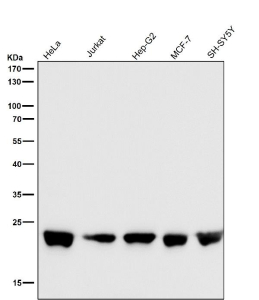
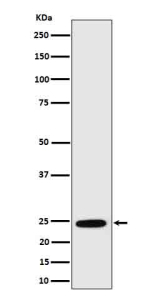
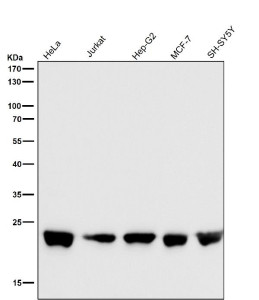
Rabbit IgG in phosphate buffered saline, pH 7.4, 150mM NaCl, 0.02% sodium azide and 50% glycerol, 0.4-0.5mg/ml BSA. RALA antibody detects Ras-related protein Ral-A, encoded by the RALA gene. Ral-A is a small GTPase belonging to the Ras superfamily that regulates vesicle trafficking, cytoskeletal organization, and signal transduction. Like other GTPases, Ras-related protein Ral-A cycles between an active GTP-bound state and an inactive GDP-bound state, acting as a molecular switch downstream of Ras signaling. RALA antibody provides a crucial tool for studying cell growth, vesicle exocytosis, and oncogenic pathways where Ral signaling contributes.Ras-related protein Ral-A functions downstream of Ral guanine nucleotide exchange factors, which activate it in response to Ras and RalGDS signaling. Active Ral-A interacts with effectors such as Sec5 and Exo84, components of the exocyst complex, to regulate polarized exocytosis and vesicle trafficking. Research with RALA antibody has demonstrated that loss of Ral-A disrupts vesicle docking at the plasma membrane, impairing processes such as neurotransmitter release, insulin secretion, and epithelial polarity. This highlights its importance in fundamental cellular logistics.In cancer biology, Ral-A has been shown to contribute to tumorigenesis independently of Ras. Research using RALA antibody has revealed that Ral-A promotes anchorage-independent growth, invasion, and metastasis in pancreatic and bladder cancers. Unlike Ral-B, which is more closely linked to cell survival, Ral-A is particularly involved in tumor initiation and vesicle trafficking related to oncogenic signaling. Its role as a Ras effector highlights the complexity of Ras-driven oncogenesis and the potential of targeting Ral pathways for therapy.Beyond cancer, Ras-related protein Ral-A participates in endocytosis, cytoskeletal dynamics, and mitochondrial fission. Studies with RALA antibody have confirmed its localization to the plasma membrane and intracellular vesicles, supporting its roles in trafficking and morphology. Dysregulation of Ral-A has been implicated in metabolic disease and neurological conditions, expanding its significance across multiple fields of study.RALA antibody is widely used in western blotting, immunohistochemistry, and immunofluorescence. Western blotting detects Ral-A expression across tissues, immunohistochemistry highlights tissue-specific expression patterns, and immunofluorescence reveals colocalization with vesicle markers and actin structures. Functional assays with RALA antibody enable researchers to link GTPase activation with trafficking, signaling, and cell behavior.By providing validated RALA antibody reagents, NSJ Bioreagents supports research into small GTPase biology, vesicle dynamics, and oncogenesis. Detection of Ras-related protein Ral-A provides a reliable tool for dissecting how this signaling switch integrates growth and trafficking pathways in both normal and diseased states.
| Keywords: | Anti-RALA, Anti-Ras-related protein Ral-A, RALA Antibody / Ras-related protein Ral-A |
| Supplier: | NSJ Bioreagents |
| Supplier-Nr: | FY13031 |
Properties
| Application: | WB, IHC |
| Antibody Type: | Monoclonal |
| Clone: | 31R04 |
| Conjugate: | No |
| Host: | Rabbit |
| Species reactivity: | human |
| Immunogen: | A synthesized peptide derived from human RalA |
| Format: | Affinity Purified |
Database Information
| KEGG ID : | K07834 | Matching products |
| UniProt ID : | P11233 | Matching products |
| Gene ID : | GeneID 5898 | Matching products |
Handling & Safety
| Storage: | -20°C |
| Shipping: | -20°C (International: -20°C) |
Caution
Our products are for laboratory research use only: Not for administration to humans!
Our products are for laboratory research use only: Not for administration to humans!
Information about the product reference will follow.
more
You will get a certificate here
Viewed