
Cookie preferences
This website uses cookies, which are necessary for the technical operation of the website and are always set. Other cookies, which increase the comfort when using this website, are used for direct advertising or to facilitate interaction with other websites and social networks, are only set with your consent.
Configuration
Technically required
These cookies are necessary for the basic functions of the shop.
"Allow all cookies" cookie
"Decline all cookies" cookie
CSRF token
Cookie preferences
Currency change
Customer-specific caching
FACT-Finder tracking
Individual prices
Selected shop
Session
Comfort functions
These cookies are used to make the shopping experience even more appealing, for example for the recognition of the visitor.
Note
Show the facebook fanpage in the right blod sidebar
Statistics & Tracking
Affiliate program
Conversion and usertracking via Google Tag Manager
Track device being used



| Item number | Size | Datasheet | Manual | SDS | Delivery time | Quantity | Price |
|---|---|---|---|---|---|---|---|
| NSJ-V5981-20UG | 20 µg | - | - |
3 - 10 business days* |
375.00€
|
||
| NSJ-V5981-100UG | 100 µg | - | - |
3 - 10 business days* |
810.00€
|
If you have any questions, please use our Contact Form.
You can also order by e-mail: info@biomol.com
Larger quantity required? Request bulk
You can also order by e-mail: info@biomol.com
Larger quantity required? Request bulk
0.2 mg/ml in 1X PBS with 0.05% BSA, 0.05% sodium azide. PVALB antibody, also known as Parvalbumin... more
Product information "Anti-PVALB / Parvalbumin, clone r2E11"
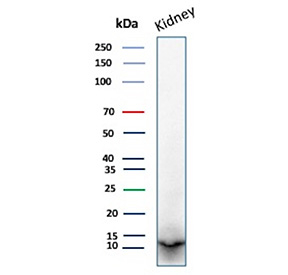
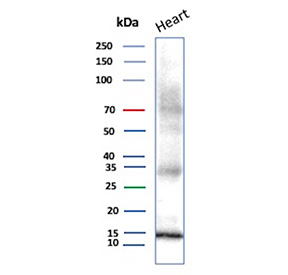
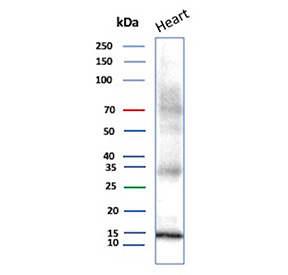
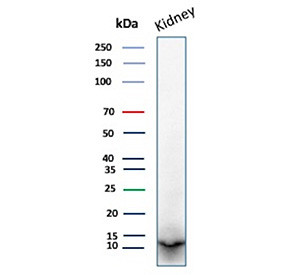
0.2 mg/ml in 1X PBS with 0.05% BSA, 0.05% sodium azide. PVALB antibody, also known as Parvalbumin antibody, recognizes a small cytosolic EF-hand calcium-binding protein commonly referred to as Parvalbumin. Encoded by the human PVALB gene on chromosome 22q12.3, Parvalbumin is predominantly localized to the cytoplasm and is highly expressed in fast-twitch skeletal muscle fibers and in distinct populations of inhibitory GABAergic interneurons in the cerebral cortex, hippocampus, and cerebellum. Within the central nervous system, Parvalbumin-positive interneurons are widely studied for their role in fast-spiking activity and synchronization of neuronal networks.Parvalbumin functions as an intracellular calcium buffer. It contains three EF-hand motifs, two of which are functional calcium-binding domains that bind calcium with high affinity. By rapidly sequestering calcium following depolarization, Parvalbumin accelerates muscle relaxation in fast-twitch fibers and shapes the timing and precision of synaptic transmission in inhibitory neurons. This buffering activity contributes to gamma oscillations and tight control of excitatory signaling. During postnatal brain development, Parvalbumin expression increases as inhibitory circuits mature, making it a useful marker of interneuron differentiation and circuit refinement.In skeletal muscle, Parvalbumin levels correlate with fiber type specification and metabolic specialization. Its expression is enriched in glycolytic, fast-contracting fibers and is lower in slow-twitch oxidative fibers. In the kidney and other peripheral tissues, Parvalbumin expression is more restricted but detectable in specific epithelial populations. Dysregulation of Parvalbumin-positive interneurons has been associated with neurological and psychiatric disorders including epilepsy, schizophrenia, and autism spectrum disorders, where altered inhibitory tone and network synchronization are implicated.PVALB antibody is commonly used to identify Parvalbumin-expressing interneurons in brain tissue and to characterize muscle fiber composition. Recombinant monoclonal clone r2E11 is generated by recombinant expression systems to ensure consistent antibody production and batch-to-batch reproducibility. A Parvalbumin antibody such as clone r2E11 is suitable for detecting Parvalbumin expression in neurobiological, developmental, and muscle physiology research applications.
| Keywords: | Anti-PVALB, Anti-Parvalbumin alpha, Anti-Alpha-parvalbumin, PVALB Antibody / Parvalbumin |
| Supplier: | NSJ Bioreagents |
| Supplier-Nr: | V5981 |
Properties
| Application: | IHC, WB |
| Antibody Type: | Monoclonal |
| Clone: | r2E11 |
| Conjugate: | No |
| Host: | Mouse |
| Species reactivity: | human |
| Immunogen: | Prokaryotic recombinant fusion protein corresponding to the majority of the parvalbumin alpha molecule |
| Format: | Purified |
Database Information
| KEGG ID : | K23926 | Matching products |
| UniProt ID : | P20472 | Matching products |
| Gene ID : | GeneID 5816 | Matching products |
Handling & Safety
| Storage: | -20°C |
| Shipping: | -20°C (International: -20°C) |
Caution
Our products are for laboratory research use only: Not for administration to humans!
Our products are for laboratory research use only: Not for administration to humans!
Information about the product reference will follow.
more
You will get a certificate here
Viewed