
Cookie preferences
This website uses cookies, which are necessary for the technical operation of the website and are always set. Other cookies, which increase the comfort when using this website, are used for direct advertising or to facilitate interaction with other websites and social networks, are only set with your consent.
Configuration
Technically required
These cookies are necessary for the basic functions of the shop.
"Allow all cookies" cookie
"Decline all cookies" cookie
CSRF token
Cookie preferences
Currency change
Customer-specific caching
FACT-Finder tracking
Individual prices
Selected shop
Session
Comfort functions
These cookies are used to make the shopping experience even more appealing, for example for the recognition of the visitor.
Note
Show the facebook fanpage in the right blod sidebar
Statistics & Tracking
Affiliate program
Conversion and usertracking via Google Tag Manager
Track device being used


| Item number | Size | Datasheet | Manual | SDS | Delivery time | Quantity | Price |
|---|---|---|---|---|---|---|---|
| NSJ-FY13021 | 100 µl | - | - |
7 - 12 business days* |
790.00€
|
If you have any questions, please use our Contact Form.
You can also order by e-mail: info@biomol.com
Larger quantity required? Request bulk
You can also order by e-mail: info@biomol.com
Larger quantity required? Request bulk
Rabbit IgG in phosphate buffered saline, pH 7.4, 150mM NaCl, 0.02% sodium azide and 50% glycerol,... more
Product information "Anti-PSMC5 / 26S proteasome regulatory subunit 8, clone 29P84"
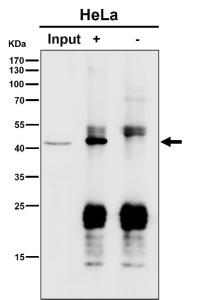
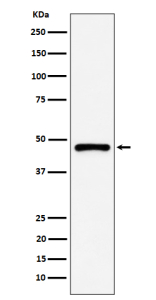
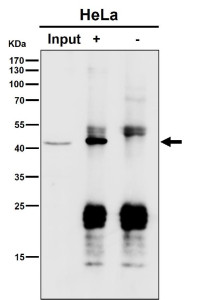
Rabbit IgG in phosphate buffered saline, pH 7.4, 150mM NaCl, 0.02% sodium azide and 50% glycerol, 0.4-0.5mg/ml BSA. PSMC5 antibody detects 26S proteasome regulatory subunit 8, encoded by the PSMC5 gene. This protein is one of the six ATPases of the AAA family that form the base of the 19S regulatory particle of the proteasome. PSMC5, also known as TBP1, provides ATP hydrolysis required for unfolding and translocating ubiquitinated substrates into the 20S core particle for degradation. PSMC5 antibody provides researchers with a reliable tool to study protein homeostasis, cell cycle regulation, and signaling pathways dependent on proteasomal degradation.The 26S proteasome is responsible for the majority of regulated intracellular protein degradation in eukaryotic cells. By removing misfolded proteins, damaged proteins, and short lived regulatory proteins, the proteasome maintains proteostasis and controls key signaling events. Research using PSMC5 antibody has shown that 26S proteasome regulatory subunit 8 contributes to ATP driven unfolding, ensuring substrate entry into the proteolytic chamber. This function is essential for turnover of cell cycle regulators, transcription factors, and signal transduction intermediates.Dysfunction of the proteasome contributes to numerous diseases, including neurodegenerative disorders such as Parkinson and Alzheimer disease, where accumulation of protein aggregates is a hallmark. Research with PSMC5 antibody has demonstrated that altered proteasome activity leads to impaired clearance of aggregation prone proteins. In cancer, hyperactivation of the proteasome allows degradation of tumor suppressors and cell cycle inhibitors, promoting unchecked proliferation. PSMC5 has also been implicated in immune regulation, where proteasomal processing generates antigenic peptides presented on MHC class I molecules.PSMC5 antibody is widely used in western blotting, immunoprecipitation, and immunohistochemistry. Western blotting demonstrates abundance in metabolically active tissues, while immunoprecipitation allows isolation of 19S regulatory complexes containing PSMC5. Immunohistochemistry highlights proteasome distribution in brain, muscle, and immune organs. These applications make PSMC5 antibody versatile in both fundamental and translational research.By supplying validated PSMC5 antibody reagents, NSJ Bioreagents supports research into proteasome biology, neurodegeneration, and oncology. Detection of 26S proteasome regulatory subunit 8 ensures that researchers can examine how protein degradation maintains cellular health and contributes to disease when dysregulated.
| Keywords: | Anti-PSMC5, Anti-p45/SUG, Anti-Proteasome subunit p45, Anti-Proteasome 26S subunit ATPase 5, Anti-26S proteasome regulatory subunit 8, Anti-26S proteasome AAA-ATPase subunit RPT6, Anti-Thyroid hormone receptor-interacting protein 1, PSMC5 Antibody / 26S p |
| Supplier: | NSJ Bioreagents |
| Supplier-Nr: | FY13021 |
Properties
| Application: | WB, IHC, ICC, IF, IP, FC |
| Antibody Type: | Monoclonal |
| Clone: | 29P84 |
| Conjugate: | No |
| Host: | Rabbit |
| Species reactivity: | human, mouse, rat |
| Immunogen: | A synthesized peptide derived from human PSMC5 |
| Format: | Affinity Purified |
Database Information
| KEGG ID : | K03066 | Matching products |
| UniProt ID : | P62195 | Matching products |
| Gene ID : | GeneID 5705 | Matching products |
Handling & Safety
| Storage: | -20°C |
| Shipping: | -20°C (International: -20°C) |
Caution
Our products are for laboratory research use only: Not for administration to humans!
Our products are for laboratory research use only: Not for administration to humans!
Information about the product reference will follow.
more
You will get a certificate here
Viewed