
Cookie preferences
This website uses cookies, which are necessary for the technical operation of the website and are always set. Other cookies, which increase the comfort when using this website, are used for direct advertising or to facilitate interaction with other websites and social networks, are only set with your consent.
Configuration
Technically required
These cookies are necessary for the basic functions of the shop.
"Allow all cookies" cookie
"Decline all cookies" cookie
CSRF token
Cookie preferences
Currency change
Customer-specific caching
FACT-Finder tracking
Individual prices
Selected shop
Session
Comfort functions
These cookies are used to make the shopping experience even more appealing, for example for the recognition of the visitor.
Note
Show the facebook fanpage in the right blod sidebar
Statistics & Tracking
Affiliate program
Conversion and usertracking via Google Tag Manager
Track device being used



| Item number | Size | Datasheet | Manual | SDS | Delivery time | Quantity | Price |
|---|---|---|---|---|---|---|---|
| NSJ-RQ6506 | 100 µg | - | - |
3 - 10 business days* |
790.00€
|
If you have any questions, please use our Contact Form.
You can also order by e-mail: info@biomol.com
Larger quantity required? Request bulk
You can also order by e-mail: info@biomol.com
Larger quantity required? Request bulk
0.5mg/ml if reconstituted with 0.2ml sterile DI water. The protein encoded by this gene is a... more
Product information "Anti-Protein PML"
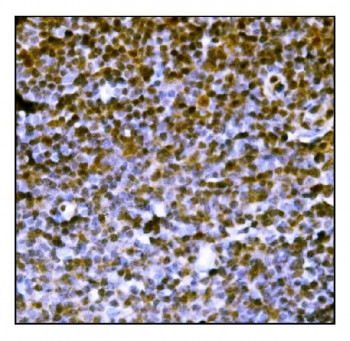
0.5mg/ml if reconstituted with 0.2ml sterile DI water. The protein encoded by this gene is a member of the tripartite motif (TRIM) family. The TRIM motif includes three zinc-binding domains, a RING, a B-box type 1 and a B-box type 2, and a coiled-coil region. This phosphoprotein localizes to nuclear bodies where it functions as a transcription factor and tumor suppressor. Its expression is cell-cycle related and it regulates the p53 response to oncogenic signals. The gene is often involved in the translocation with the retinoic acid receptor alpha gene associated with acute promyelocytic leukemia (APL). Extensive alternative splicing of this gene results in several variations of the protein's central and C-terminal regions, all variants encode the same N-terminus. Alternatively spliced transcript variants encoding different isoforms have been identified. Protein function: Functions via its association with PML-nuclear bodies (PML- NBs) in a wide range of important cellular processes, including tumor suppression, transcriptional regulation, apoptosis, senescence, DNA damage response, and viral defense mechanisms. Acts as the scaffold of PML-NBs allowing other proteins to shuttle in and out, a process which is regulated by SUMO-mediated modifications and interactions. Positively regulates p53/TP53 by acting at different levels (by promoting its acetylation and phosphorylation and by inhibiting its MDM2-dependent degradation). Regulates phosphorylation of ITPR3 and plays a role in the regulation of calcium homeostasis at the endoplasmic reticulum. Regulates RB1 phosphorylation and activity. Acts as both a negative regulator of PPARGC1A acetylation and a potent activator of PPAR signaling and fatty acid oxidation. Regulates translation of HIF1A by sequestering MTOR, and thereby plays a role in neoangiogenesis and tumor vascularization. Regulates PER2 nuclear localization and circadian function. Cytoplasmic PML is involved in the regulation of the TGF-beta signaling pathway. Required for normal development of the brain cortex during embryogenesis. Plays a role in granulopoiesis or monopoiesis of myeloid progenitor cells. May play a role regulating stem and progenitor cell fate in tissues as diverse as blood, brain and breast. Shows antiviral activity towards lymphocytic choriomeningitis virus (LCMV) and the vesicular stomatitis virus (VSV). [The UniProt Consortium]
| Keywords: | Anti-Pml, Anti-Protein PML, Protein PML Antibody |
| Supplier: | NSJ Bioreagents |
| Supplier-Nr: | RQ6506 |
Properties
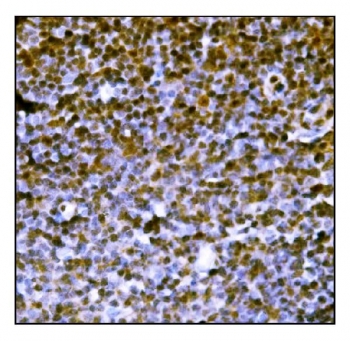
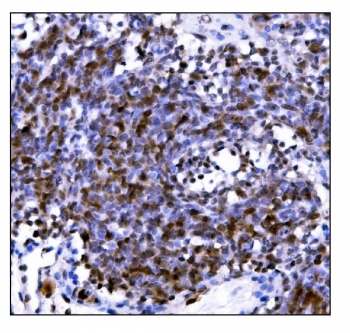
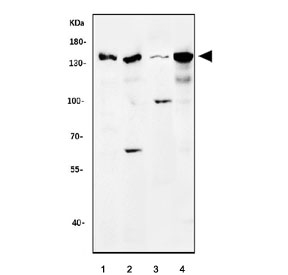
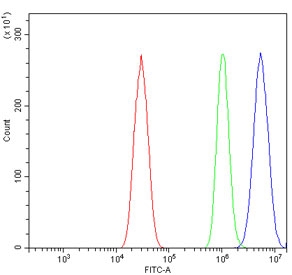
| Application: | WB, IHC (paraffin), FC, Direct ELISA |
| Antibody Type: | Polyclonal |
| Conjugate: | No |
| Host: | Rabbit |
| Species reactivity: | mouse, rat |
| Immunogen: | An E. coli-derived mouse protein (amino acids E107-A857) |
| Format: | Posttranslational Mod. |
Database Information
| KEGG ID : | K10054 | Matching products |
| UniProt ID : | Q60953 | Matching products |
| Gene ID : | GeneID 18854 | Matching products |
Handling & Safety
| Storage: | +4°C |
| Shipping: | +4°C (International: +4°C) |
Caution
Our products are for laboratory research use only: Not for administration to humans!
Our products are for laboratory research use only: Not for administration to humans!
Information about the product reference will follow.
more
You will get a certificate here
Viewed