
Cookie preferences
This website uses cookies, which are necessary for the technical operation of the website and are always set. Other cookies, which increase the comfort when using this website, are used for direct advertising or to facilitate interaction with other websites and social networks, are only set with your consent.
Configuration
Technically required
These cookies are necessary for the basic functions of the shop.
"Allow all cookies" cookie
"Decline all cookies" cookie
CSRF token
Cookie preferences
Currency change
Customer-specific caching
FACT-Finder tracking
Individual prices
Selected shop
Session
Comfort functions
These cookies are used to make the shopping experience even more appealing, for example for the recognition of the visitor.
Note
Show the facebook fanpage in the right blod sidebar
Statistics & Tracking
Affiliate program
Conversion and usertracking via Google Tag Manager
Track device being used



| Item number | Size | Datasheet | Manual | SDS | Delivery time | Quantity | Price |
|---|---|---|---|---|---|---|---|
| NSJ-RQ5595 | 100 µg | - | - |
3 - 10 business days* |
790.00€
|
If you have any questions, please use our Contact Form.
You can also order by e-mail: info@biomol.com
Larger quantity required? Request bulk
You can also order by e-mail: info@biomol.com
Larger quantity required? Request bulk
0.5mg/ml if reconstituted with 0.2ml sterile DI water. Polycystin-2 is a protein that in humans... more
Product information "Anti-Polycystin 2"
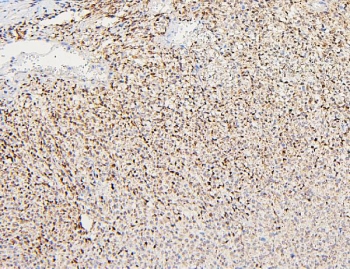
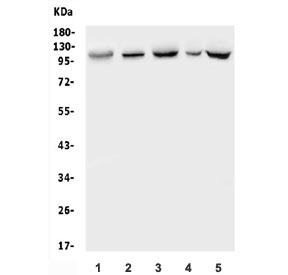
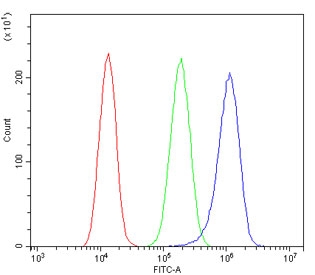
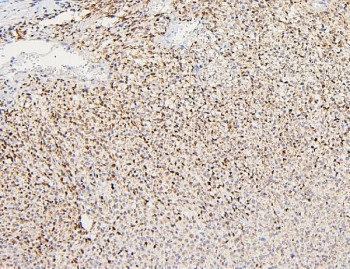
0.5mg/ml if reconstituted with 0.2ml sterile DI water. Polycystin-2 is a protein that in humans is encoded by the PKD2 gene. It is mapped to 4q22.1. This gene encodes a member of the polycystin protein family. The encoded protein is a multi-pass membrane protein that functions as a calcium permeable cation channel, and is involved in calcium transport and calcium signaling in renal epithelial cells. This protein interacts with polycystin 1, and they may be partners in a common signaling cascade involved in tubular morphogenesis. Mutations in this gene are associated with autosomal dominant polycystic kidney disease type 2. Protein function: Component of a heteromeric calcium-permeable ion channel formed by PKD1 and PKD2 that is activated by interaction between PKD1 and a Wnt family member, such as WNT3A and WNT9B (PubMed:27214281). Can also form a functional, homotetrameric ion channel (PubMed:29899465). Functions as a cation channel involved in fluid-flow mechanosensation by the primary cilium in renal epithelium (PubMed:18695040). Functions as outward-rectifying K(+) channel, but is also permeable to Ca(2+), and to a much lesser degree also to Na(+) (PubMed:11854751, PubMed:15692563, PubMed:27071085, PubMed:27991905). May contribute to the release of Ca(2+) stores from the endoplasmic reticulum (PubMed:11854751, PubMed:20881056). Together with TRPV4, forms mechano- and thermosensitive channels in cilium (PubMed:18695040). PKD1 and PKD2 may function through a common signaling pathway that is necessary to maintain the normal, differentiated state of renal tubule cells. Acts as a regulator of cilium length, together with PKD1. The dynamic control of cilium length is essential in the regulation of mechanotransductive signaling. The cilium length response creates a negative feedback loop whereby fluid shear-mediated deflection of the primary cilium, which decreases intracellular cAMP, leads to cilium shortening and thus decreases flow-induced signaling. Also involved in left-right axis specification via its role in sensing nodal flow, forms a complex with PKD1L1 in cilia to facilitate flow detection in left- right patterning. Detection of asymmetric nodal flow gives rise to a Ca(2+) signal that is required for normal, asymmetric expression of genes involved in the specification of body left-right laterality. [The UniProt Consortium]
| Keywords: | Anti-PC2, Anti-R48321, Anti-Polycystwin, Anti-Polycystin-2, Anti-Polycystic kidney disease 2 protein, Anti-Autosomal dominant polycystic kidney disease type II protein, Anti-Transient receptor potential cation channel subfamily P member 2, Polycystin 2 An |
| Supplier: | NSJ Bioreagents |
| Supplier-Nr: | RQ5595 |
Properties
| Application: | WB, IHC (paraffin), FC, Direct ELISA |
| Antibody Type: | Polyclonal |
| Conjugate: | No |
| Host: | Rabbit |
| Species reactivity: | human, mouse, rat |
| Immunogen: | A human recombinant protein (amino acids S829-R893) |
| Format: | Purified |
Database Information
| KEGG ID : | K04986 | Matching products |
| UniProt ID : | Q13563 | Matching products |
| Gene ID : | GeneID 5311 | Matching products |
Handling & Safety
| Storage: | +4°C |
| Shipping: | +4°C (International: +4°C) |
Caution
Our products are for laboratory research use only: Not for administration to humans!
Our products are for laboratory research use only: Not for administration to humans!
Information about the product reference will follow.
more
You will get a certificate here
Viewed