
Cookie preferences
This website uses cookies, which are necessary for the technical operation of the website and are always set. Other cookies, which increase the comfort when using this website, are used for direct advertising or to facilitate interaction with other websites and social networks, are only set with your consent.
Configuration
Technically required
These cookies are necessary for the basic functions of the shop.
"Allow all cookies" cookie
"Decline all cookies" cookie
CSRF token
Cookie preferences
Currency change
Customer-specific caching
FACT-Finder tracking
Individual prices
Selected shop
Session
Comfort functions
These cookies are used to make the shopping experience even more appealing, for example for the recognition of the visitor.
Note
Show the facebook fanpage in the right blod sidebar
Statistics & Tracking
Affiliate program
Conversion and usertracking via Google Tag Manager
Track device being used



| Item number | Size | Datasheet | Manual | SDS | Delivery time | Quantity | Price |
|---|---|---|---|---|---|---|---|
| NSJ-FY12925 | 100 µg | - | - |
3 - 10 business days* |
790.00€
|
If you have any questions, please use our Contact Form.
You can also order by e-mail: info@biomol.com
Larger quantity required? Request bulk
You can also order by e-mail: info@biomol.com
Larger quantity required? Request bulk
Adding 0.2 ml of distilled water will yield a concentration of 500 ug/ml. PLS1 antibody detects... more
Product information "Anti-PLS1 / Plastin-1"
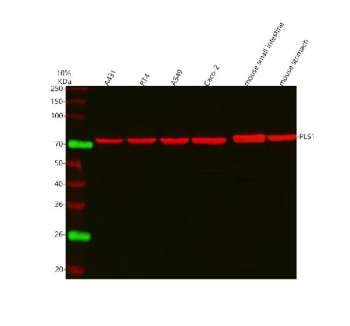
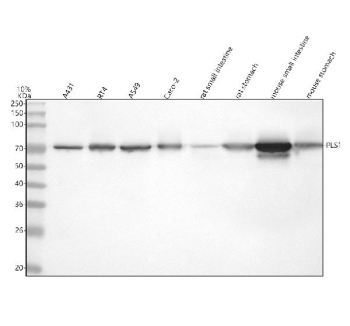
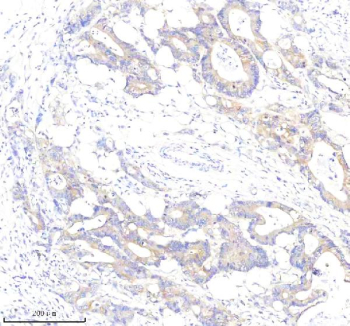
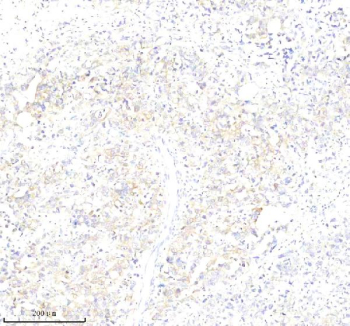
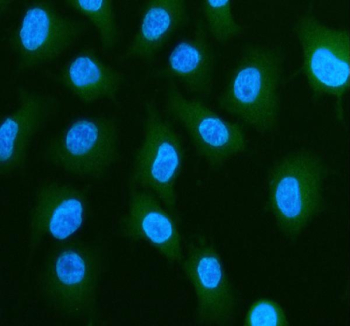
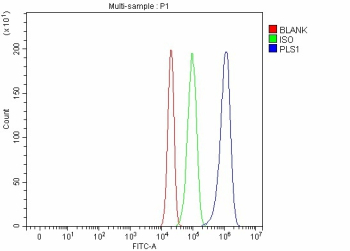
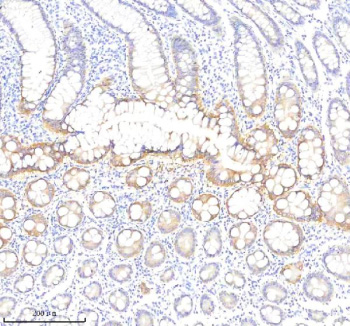
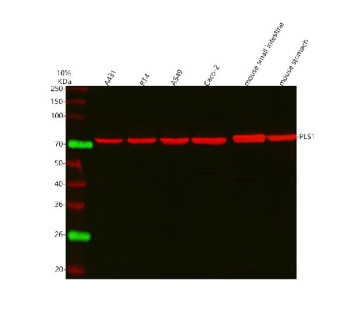
Adding 0.2 ml of distilled water will yield a concentration of 500 ug/ml. PLS1 antibody detects Plastin-1, an actin-bundling protein that stabilizes and crosslinks actin filaments in epithelial and sensory cells. Encoded by the PLS1 gene on chromosome 3q23, this protein belongs to the plastin family of actin-bundling proteins, which includes isoforms expressed in hematopoietic, ubiquitous, and epithelial tissues. Plastin-1 plays an essential structural role in maintaining brush border microvilli in the intestinal epithelium and stereocilia in the inner ear, contributing to cellular rigidity and signal transduction.Structurally, Plastin-1 is a 630-amino-acid cytoskeletal protein of approximately 68 kilodaltons containing two tandem calponin homology (CH) domains responsible for actin binding and two EF-hand calcium-binding motifs that regulate its activity. The protein localizes predominantly to actin-rich structures such as microvilli and adherens junctions, where it bundles filamentous actin into parallel arrays that reinforce cell shape and polarity.The PLS1 antibody is widely used in cell biology, auditory physiology, and epithelial research to study cytoskeletal architecture, microvillar dynamics, and actin filament regulation. Western blot analysis detects a 68 kilodalton band corresponding to Plastin-1, while immunofluorescence demonstrates strong staining along apical membranes in epithelial cells. This antibody provides a reliable tool for investigating actin organization and microvillar maintenance.Functionally, Plastin-1 is critical for maintaining the structural stability of brush border and sensory epithelia by linking actin filaments into tightly packed bundles. Mutations in PLS1 cause autosomal recessive nonsyndromic hearing loss due to disruption of stereocilia structure and function in cochlear hair cells. In intestinal cells, PLS1 supports nutrient absorption and epithelial resilience under mechanical stress. The PLS1 antibody supports studies of cytoskeletal integrity, epithelial morphogenesis, and hereditary hearing loss. NSJ Bioreagents validates this antibody for its applications, ensuring accurate detection of Plastin-1 in cytoskeletal research.
| Keywords: | Anti-PLS1, Anti-Plastin-1, Anti-Intestine-specific plastin, PLS1 Antibody / Plastin-1 |
| Supplier: | NSJ Bioreagents |
| Supplier-Nr: | FY12925 |
Properties
| Application: | WB, IHC, ICC, IF, FC, ELISA |
| Antibody Type: | Polyclonal |
| Conjugate: | No |
| Host: | Rabbit |
| Species reactivity: | human, mouse, rat |
| Immunogen: | E.coli-derived human PLS1 recombinant protein (Position: E14-L581) |
| Format: | Purified |
Database Information
| KEGG ID : | K17275 | Matching products |
| UniProt ID : | Q14651 | Matching products |
| Gene ID : | GeneID 5357 | Matching products |
Handling & Safety
| Storage: | +4°C |
| Shipping: | +4°C (International: +4°C) |
Caution
Our products are for laboratory research use only: Not for administration to humans!
Our products are for laboratory research use only: Not for administration to humans!
Information about the product reference will follow.
more
You will get a certificate here
Viewed