
Cookie preferences
This website uses cookies, which are necessary for the technical operation of the website and are always set. Other cookies, which increase the comfort when using this website, are used for direct advertising or to facilitate interaction with other websites and social networks, are only set with your consent.
Configuration
Technically required
These cookies are necessary for the basic functions of the shop.
"Allow all cookies" cookie
"Decline all cookies" cookie
CSRF token
Cookie preferences
Currency change
Customer-specific caching
FACT-Finder tracking
Individual prices
Selected shop
Session
Comfort functions
These cookies are used to make the shopping experience even more appealing, for example for the recognition of the visitor.
Note
Show the facebook fanpage in the right blod sidebar
Statistics & Tracking
Affiliate program
Conversion and usertracking via Google Tag Manager
Track device being used

| Item number | Size | Datasheet | Manual | SDS | Delivery time | Quantity | Price |
|---|---|---|---|---|---|---|---|
| BOT-BNC680093-100 | 100 µl | - |
5 - 10 business days* |
284.00€
|
|||
| BOT-BNC680093-500 | 500 µl | - |
5 - 10 business days* |
787.00€
|
If you have any questions, please use our Contact Form.
You can also order by e-mail: info@biomol.com
Larger quantity required? Request bulk
You can also order by e-mail: info@biomol.com
Larger quantity required? Request bulk
The onset of angiogenesis is believed to be an early event in tumorigenesis and may facilitate... more
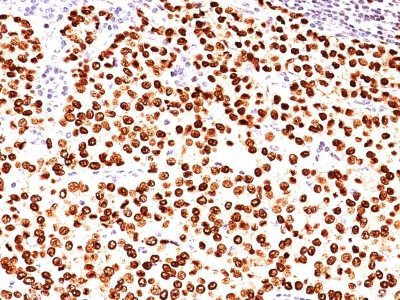
Product information "Anti-PLGF(PLGF93), CF568 conjugate, 0.1mg/mL"
The onset of angiogenesis is believed to be an early event in tumorigenesis and may facilitate tumor progression and metastasis. Several growth factors with angiogenic activity have been described. These include Fibroblast Growth Factor (FGF), Platelet Derived Growth Factor (PDGF), Vascular Endothelial Growth Factor (VEGF) and Placenta Growth Factor (PLGF). Placenta growth factor (PLGF) is a secreted protein primarily produced by placental trophoblasts but also expressed in other endothelial cells and tumors. There are three isoforms, PLGF-1, PLGF-2, and PLGF-3. PLGF-2 is expressed up until week 8 in the placenta, the placental tissues continuously express PLGF-1 and PLGF-3 but only PLGF-1 is found in colon and mammary carcinomas. PLGF acts to stimulate angiogenesis, endothelial growth and migration. PLGF is a powerful promoter of tumor growth and is upregulated in some cancers, and PLGF is thought to aid in atherosclerotic lesions and neovascular growth surrounding the lesion. Also, PLGF appears to aid aldosterone mediated atherosclerosis. Serum levels of PLGF in some cases are used as a potential biomarker for disease or genetic defect. Recent research indicates that PLGF levels are lower in mothers with Down syndrome fetuses. Evidence has suggested VEGF to be an obligatory component in PLGF signaling. While VEGF homodimers and VEGF/PLGF heterodimers function as potent mediators of mitogenic and chemotactic responses in endothelial cells, PLGF homodimers are effectual only at extremely high concentrations. Indeed, many of the physiological effects attributed to VEGF may actually be a result of VEGF/PLGF. VEGF and PLGF share a common receptor, Flt-1, and may also activate Flk-1/KDR.Primary antibodies are available purified, or with a selection of fluorescent CF(R) Dyes and other labels. CF(R) Dyes offer exceptional brightness and photostability. Note: Conjugates of blue fluorescent dyes like CF(R)405S and CF(R)405M are not recommended for detecting low abundance targets, because blue dyes have lower fluorescence and can give higher non-specific background than other dye colors. Concentration: 0.1 mg/mL Storage buffer: PBS, 0.1% BSA, 0.05% azide
| Keywords: | PLGF(PLGF93), CF568 conjugate, 0.1mg/mL, |
| Supplier: | Biotium |
| Supplier-Nr: | BNC680093 |
Properties
| Conjugate: | CF568 |
| Format: | Solution |
Database Information
Handling & Safety
| Storage: | +20°C |
| Shipping: | +20°C (International: °C) |
Caution
Our products are for laboratory research use only: Not for administration to humans!
Our products are for laboratory research use only: Not for administration to humans!
You will get a certificate here
Viewed