
This website uses cookies, which are necessary for the technical operation of the website and are always set. Other cookies, which increase the comfort when using this website, are used for direct advertising or to facilitate interaction with other websites and social networks, are only set with your consent.
Configuration
Technically required
These cookies are necessary for the basic functions of the shop.
"Allow all cookies" cookie
"Decline all cookies" cookie
CSRF token
Cookie preferences
Currency change
Customer-specific caching
FACT-Finder tracking
Individual prices
Selected shop
Session
Comfort functions
These cookies are used to make the shopping experience even more appealing, for example for the recognition of the visitor.
Note
Show the facebook fanpage in the right blod sidebar
Statistics & Tracking
Affiliate program
Conversion and usertracking via Google Tag Manager
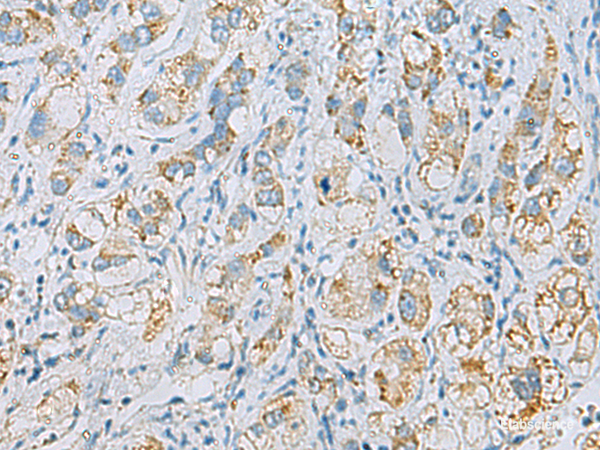
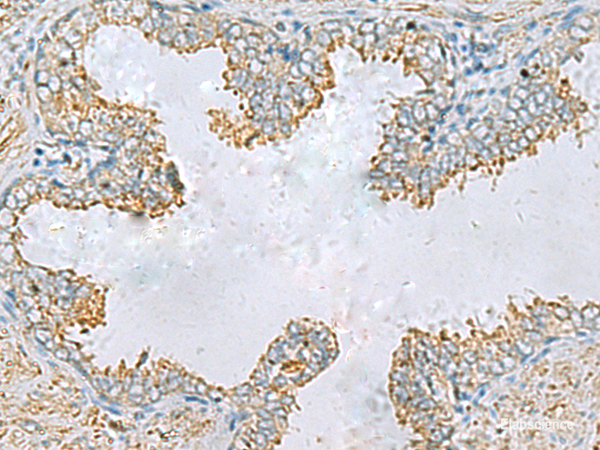
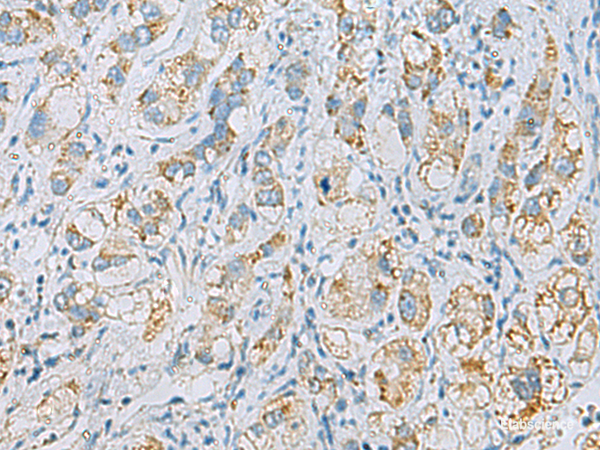
Lysophospholipases are enzymes that act on biological membranes to regulate the multifunctional lysophospholipids. The protein encoded by this gene hydrolyzes lysophosphatidylcholine to glycerophosphorylcholine and a free fatty acid. This enzyme is present in the plasma and thought to be associated with high-density lipoprotein. A later paper contradicts the function of this gene. It demonstrates that this gene encodes a lysosomal enzyme instead of a lysophospholipase and has both calcium-independent phospholipase A2 and transacylase activities. Protein function: Has transacylase and calcium-independent phospholipase A2 activity (PubMed:20410020, PubMed:23958596). Catalyzes the formation of 1-O-acyl-N-acetylsphingosine and the concomitant release of a lyso- phospholipid (PubMed:11790796, PubMed:25727495). Has high activity with 1-palmitoyl-2-oleoyl-sn-glycero-3-phosphocholine (POPC) and 1,2- dioleoyl-sn-glycero-3-phosphocholine (DOPC), catalyzing the transfer of oleic acid to N-acetyl-sphingosine. Required for normal phospholipid degradation in alveolar and peritoneal macrophages and in spleen. May have weak lysophospholipase activity (PubMed:10092508). [The UniProt Consortium]
This website uses cookies, which are necessary for the technical operation of the website and are always set. Other cookies, which increase the usability of this website, serve for direct advertising or simplify interaction with other websites and social networks, will only be used with your consent.
More information